Congress Demands HHS Remove Barriers to DOT Oral Fluid Drug Testing: What Employers Must Know
Six members of Congress have formally urged HHS Secretary Kennedy to eliminate FDA regulatory barriers blocking oral fluid drug testing for DOT-regulated employers. Here is what the push means for transportation safety compliance.

Three years after the Department of Transportation authorized oral fluid drug testing as an alternative to urine specimens, not a single U.S. laboratory has been certified to perform the analysis. The reason is not scientific — it is regulatory. And on April 16, 2026, six members of Congress formally demanded that the Department of Health and Human Services fix it.
The Congressional letter to HHS Secretary Robert F. Kennedy, Jr. represents the most significant legislative pressure yet on a bureaucratic bottleneck that has left more than 6.5 million DOT-regulated workers stuck with a testing method increasingly vulnerable to cheating — while a scientifically validated, directly observed alternative sits unused on the shelf.
For motor carriers, transit agencies, pipeline operators, and every employer subject to 49 CFR Part 40, this development signals that oral fluid testing may finally be approaching operational reality. Here is what happened, why it matters, and what your compliance team should be doing now.
The Three-Year Delay: How We Got Here
The DOT published a final rule in May 2023 amending 49 CFR Part 40 to authorize oral fluid (saliva) as an accepted specimen type for all DOT-mandated drug tests — pre-employment, random, reasonable suspicion, post-accident, return-to-duty, and follow-up. The rule was the product of years of scientific review and industry advocacy.
However, the DOT rule included a critical prerequisite: employers cannot use oral fluid testing until the Department of Health and Human Services certifies at least two laboratories under the National Laboratory Certification Program (NLCP) — one to serve as the primary testing lab and one to handle split specimens.
As of May 2026, that certification has not happened. The reason traces to a regulatory conflict between two federal agencies.
The FDA 510(k) Barrier
The core problem is the FDA's 510(k) medical device clearance requirement. Under the Employment and Insurance exemption published at 82 Fed. Reg. 31,976, the FDA excluded federally regulated workplace drug testing from its direct oversight — but routed any new test, specimen type, or drug panel update through the 510(k) medical device clearance pathway.
This pathway was designed for clinical patient diagnostics. It requires extensive review processes, clinical validation studies, and device classification determinations that do not account for the forensic and occupational standards governing workplace drug testing. The result: a structural regulatory mismatch that has prevented any U.S. laboratory from achieving NLCP oral fluid certification for more than three years.
The situation has become so acute that, according to the National Drug and Alcohol Screening Association (NDASA), the only laboratory to have applied for NLCP oral fluid certification is based in Canada — meaning U.S. employers might eventually need to send specimens internationally to use a testing method their own government authorized three years ago.
What Congress Is Demanding
The April 16, 2026 letter — signed by Representatives Andy Harris, M.D. (R-MD), Ben Cline (R-VA), Pete Sessions (R-TX), Mike Bost (R-IL), Mike Collins (R-GA), and Claudia Tenney (R-NY) — makes four specific demands of HHS:
- Affirm that laboratory-based workplace drug testing is non-clinical and falls outside FDA medical device authority
- Recognize SAMHSA as the sole governing oversight body for federally regulated workplace drug testing programs
- Designate SAMHSA's Division of Workplace Programs as the authoritative body for future updates to drug panels, cutoffs, testing technologies, and specimen types
- Finalize hair testing guidelines originally mandated by Congress in the FAST Act of 2015 (P.L. 114-94) and reaffirmed in the FY2026 Consolidated Appropriations Act
The letter requests a formal HHS response with specific steps and a timeline within 30 days — setting a mid-May 2026 deadline for action.
Why This Matters: The Urine Testing Subversion Crisis
The push for oral fluid testing is not merely about convenience or modernization. It is about maintaining the integrity of a drug testing program that protects public safety.
The Congressional letter cites Quest Diagnostics data showing alarming increases in urine testing subversion among DOT-regulated employees:
- Substituted specimens (where the sample is replaced entirely) increased 370% between 2022 and 2023
- Invalid specimens (where adulterants are added to defeat the test) increased 36% over the same period
These are not isolated incidents. A niche industry of sophisticated products — synthetic urine kits, prosthetic delivery devices, chemical adulterants — has developed specifically to help safety-sensitive employees defeat urine-based drug tests. Every subverted test represents a potentially impaired commercial vehicle operator, airline mechanic, pipeline worker, or transit employee who remains on the job despite drug use.
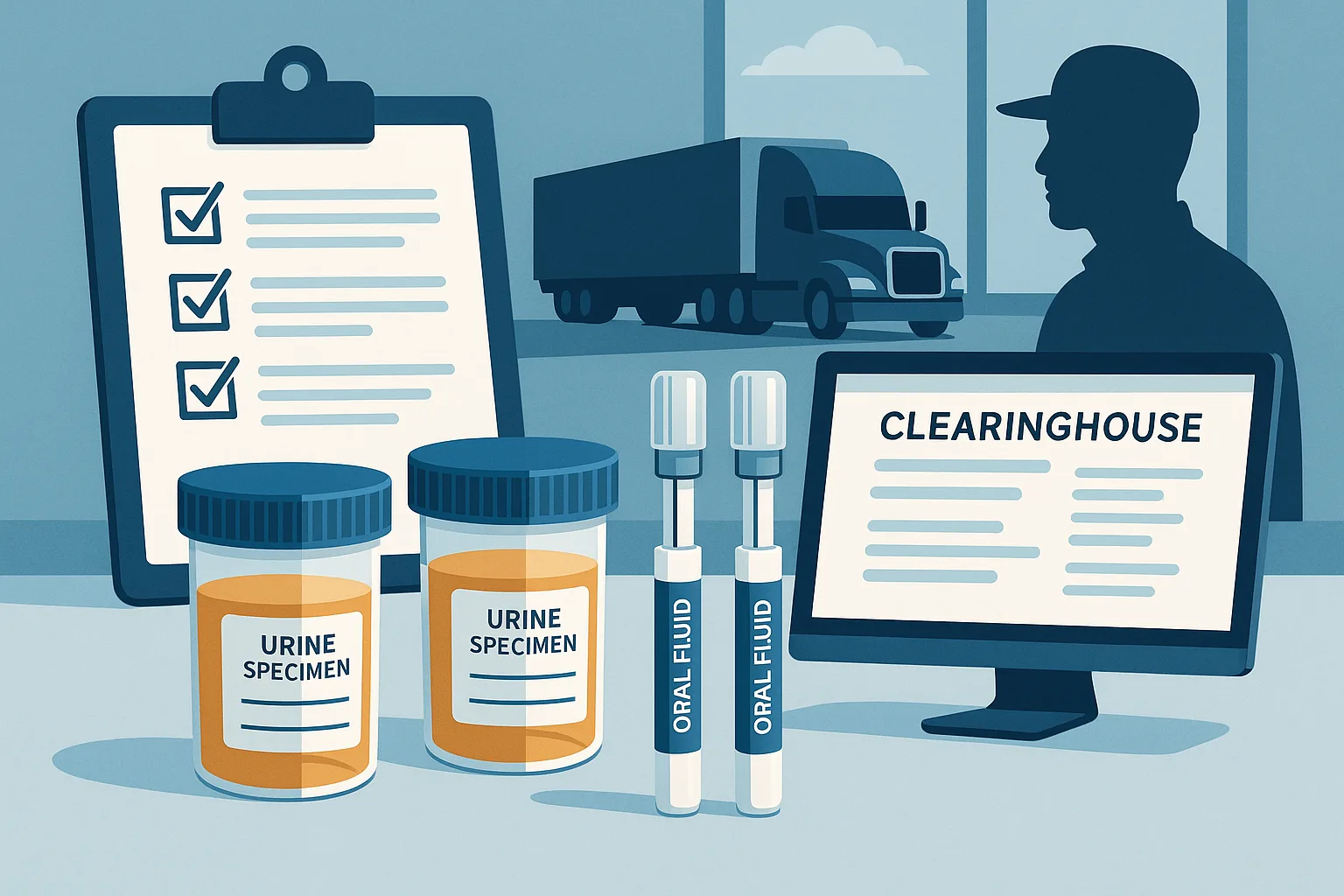
Oral fluid testing addresses this vulnerability directly. The specimen is collected under direct observation — an observer watches the collection device placed in the donor's mouth — making substitution or adulteration functionally impossible without detection.
As American Trucking Associations President & CEO Chris Spear stated: "For far too long, HHS has dragged its feet on implementing science-based drug testing policy, and these bureaucratic delays have come at the expense of safety."
The SAMHSA vs. FDA Oversight Question
A central element of the Congressional demand is shifting oversight authority from the FDA to SAMHSA for workplace drug testing programs. This is not a proposal to reduce oversight — it is a proposal to apply the correct type of oversight.
SAMHSA's Division of Workplace Programs already administers the NLCP, which includes:
- Semi-annual laboratory inspections
- Strict method validation requirements
- Proficiency testing programs
- Chain of custody requirements
- Specimen validity testing standards
These forensic-grade oversight mechanisms are specifically designed for workplace drug testing and are arguably more rigorous than what the FDA's 510(k) process adds for this non-clinical use case. SAMHSA has already removed references to FDA clearance requirements from its Mandatory Guidelines for Federal Workplace Drug Testing Programs, signaling the agency's own readiness to assume full authority.
Hair Testing: The Other Stalled Mandate
The Congressional letter also addresses hair testing — another alternative specimen type that has been stuck in regulatory limbo for over a decade.
Congress first directed HHS to develop mandatory guidelines for hair drug testing in the Fixing America's Surface Transportation (FAST) Act of 2015 (P.L. 114-94). More than ten years later, HHS has not finalized those guidelines. Congress reaffirmed the directive in the FY2026 Consolidated Appropriations Act, yet progress remains stalled.
Hair testing offers a longer detection window (up to 90 days vs. 1–3 days for urine) and is highly resistant to subversion. Many private-sector employers already use hair testing voluntarily, but DOT-regulated employers cannot substitute it for federally mandated tests until HHS acts.
The removal of FDA regulatory barriers would clear the path for both oral fluid and hair testing implementation in DOT programs.
What This Means for Employers
Immediate Implications
The 30-day response deadline in the Congressional letter means employers should see clarity from HHS by mid-May 2026. While it remains uncertain whether HHS will fully comply with the Congressional demands on that timeline, the political pressure — combined with industry advocacy from organizations including NDASA, the American Trucking Associations, and laboratory stakeholders — creates genuine momentum toward resolution.
If HHS acts to remove the FDA barrier:
- Laboratory certification could proceed within 3–6 months after the regulatory change
- DOT would publish a Federal Register notice when the first certifications are completed
- A transition period for collector training and procedural updates would follow
What Employers Should Do Now
Even though oral fluid testing is not yet available, DOT-regulated employers should begin preparation:
-
Monitor official announcements — Check the SAMHSA certified laboratory list and Federal Register notices monthly for certification updates
-
Review and update drug testing policies — Draft policy language that authorizes oral fluid testing as an alternative specimen type, conditional on HHS certification. This prevents delays once testing becomes available
-
Identify oral fluid collection providers — Contact your current drug testing consortium or third-party administrator about their oral fluid collection readiness. Determine whether your collection sites will offer oral fluid services
-
Plan supervisor and collector training — Oral fluid collection procedures differ from urine collection. Identify training resources and budget for collector certification once DOT publishes implementation guidance
-
Evaluate your current program's vulnerability — If your organization has experienced suspected specimen subversion (substituted or invalid results), document these incidents. Oral fluid testing may become a preferred method for reasonable suspicion and follow-up testing scenarios where observation integrity is critical
-
Continue full urine testing compliance — Until oral fluid testing is operationally available, all existing DOT drug testing requirements under 49 CFR Part 40 remain in full effect. Random testing rates (50% for drugs, 10% for alcohol under FMCSA), Clearinghouse queries, and documentation requirements are unchanged
For Consortium and TPA Providers
Third-party administrators and drug testing consortiums should accelerate their operational planning:
- Establish relationships with laboratories pursuing NLCP oral fluid certification
- Develop collector training programs aligned with 49 CFR Part 40 oral fluid collection requirements
- Update client communication templates to notify employer clients when testing becomes available
- Ensure electronic chain of custody systems can accommodate oral fluid specimen tracking
Timeline: What to Watch For
| Timeframe | Expected Development |
|---|---|
| Mid-May 2026 | HHS response to Congressional letter due (30-day deadline) |
| Summer 2026 | Potential regulatory action to remove FDA 510(k) barrier |
| Late 2026 | First U.S. laboratory certifications possible if barrier removed |
| Early 2027 | Operational oral fluid testing for DOT employers (earliest realistic estimate) |
These timelines assume HHS responds positively to Congressional pressure. If the regulatory barrier persists, further legislative action — including potential statutory changes — may be required, which could extend the timeline significantly.
The Bigger Picture: Drug Testing Program Modernization
The oral fluid testing delay is symptomatic of a broader challenge in federal workplace drug testing: the regulatory framework has not kept pace with evolving drug threats or testing technology.
The current DOT drug testing panel still does not include fentanyl — the synthetic opioid responsible for roughly 70% of all U.S. overdose fatalities — though a proposed rule to add it is pending. The Clearinghouse system has revealed over 200,000 CDL holders in prohibited status, with the majority having taken no steps toward return-to-duty compliance. And the testing technology authorized by DOT three years ago remains operationally blocked by an interagency regulatory conflict.
The Congressional letter signals that lawmakers view the current pace of modernization as unacceptable — particularly when public safety is at stake. For employers, the message is clear: prepare for change, because the political will to force it now exists.
Sources
- NDASA Press Release: Congressional Support for DOT Oral Fluid Testing — National Drug and Alcohol Screening Association, April 17, 2026
- Congressional Letter to HHS Secretary Kennedy — American Trucking Associations hosted document, April 16, 2026
- Lawmakers Push for Oral Fluid and Hair Drug Testing — Commercial Carrier Journal, April 2026
- DOT Part 40 Final Rule Summary of Changes — U.S. Department of Transportation, Office of Drug and Alcohol Policy and Compliance
- 49 CFR Part 40 — Procedures for Transportation Workplace Drug and Alcohol Testing Programs — Electronic Code of Federal Regulations
- Current List of HHS-Certified Laboratories — Federal Register, May 1, 2026
- SAMHSA Certified Laboratory List — Substance Abuse and Mental Health Services Administration
- As Date for DOT Oral Fluid Testing Rule Nears, Will Labs Be Ready? — Safety+Health Magazine
Frequently Asked Questions
Not yet. Although the DOT finalized rules authorizing oral fluid testing in 2023, employers cannot use it until HHS certifies at least two laboratories under the National Laboratory Certification Program. As of May 2026, no U.S. laboratory has achieved this certification due to FDA regulatory barriers.
The primary obstacle is the FDA's 510(k) medical device clearance requirement. This clinical diagnostic pathway was not designed for forensic workplace drug testing, creating a structural misalignment that has prevented any U.S. laboratory from achieving certification. Congress has now formally demanded HHS remove this barrier.
Six members of Congress sent a letter to HHS Secretary Kennedy on April 16, 2026, requesting four specific actions: affirm that workplace drug testing is non-clinical and outside FDA device authority, recognize SAMHSA as the sole oversight body, designate SAMHSA's Division of Workplace Programs as the authority for testing updates, and finalize hair testing guidelines mandated by Congress in 2015.
Oral fluid specimens are collected under direct observation, making substitution or adulteration extremely difficult. According to Quest Diagnostics data cited in the Congressional letter, substituted and invalid urine specimens among federally regulated employees jumped 370% and 36% respectively between 2022 and 2023, underscoring the need for directly observed testing methods.
Employers should monitor HHS and SAMHSA announcements for laboratory certification updates, begin reviewing and updating drug testing policies to include oral fluid provisions, identify oral fluid collection service providers in their area, train supervisors on the new collection process, and ensure their third-party administrators are prepared to support oral fluid testing once it becomes available.