The EEO-1 Report May Be Going Away — But Your Workforce Data Obligations Are Not
The EEOC has proposed rescinding EEO-1 reporting requirements, but state-level pay data mandates and anti-discrimination recordkeeping remain. Here's how HR teams should adapt their data operations.


For decades, the EEO-1 report has been one of the most recognizable compliance obligations in HR. Every year, private employers with 100 or more employees submit workforce demographic data to the Equal Employment Opportunity Commission — a process that has shaped how organizations collect, categorize, and store employee information. Now, that obligation may be coming to an end.
On July 23, 2026, the EEOC published a proposed rule in the Federal Register (91 FR 46332) to rescind EEO-1 reporting and five related reporting requirements under 29 CFR part 1602, following a 2–1 Commission vote on July 21. The Commission stated that these reports are "inconsistent with equal employment opportunity law" and that their costs outweigh their benefits. A public comment period closed on August 24, 2026, and a public hearing was held on August 11. As of September 22, 2026, no final rule has been published, and the EEOC's data-collections page still says updates on the 2025 EEO-1 collection will be posted as they become available.
For HR operations teams, this is not simply a compliance deadline being removed from the calendar. It is a trigger to rethink how your organization collects, manages, and reports workforce data — because while federal EEO-1 reporting may go away, the underlying data obligations are not going anywhere.
What the EEOC Proposed
The proposed rule would eliminate the requirement for six categories of employer reports:
- EEO-1 (private employers with 100+ employees and federal contractors with 50+ employees)
- EEO-2 (joint labor-management committees that control apprenticeship programs — not collected since 1981)
- EEO-3 (local unions)
- EEO-4 (state and local governments)
- EEO-5 (elementary and secondary school systems)
- EEO-6 (higher education institutions — not collected since 1993)
The EEOC argued that the data collected through these reports is not necessary for enforcement of Title VII or the Equal Pay Act, and that the reporting burden — roughly 110,000 filing employers and about 2.2 million reports a year — is not justified by the limited use the Commission has made of the data. The NPRM also asserts that mandatory race and sex data collection is "potentially unconstitutional" and "not narrowly tailored" to the agency's enforcement needs.
It is important to note that the rule is proposed, not final. OIRA review concluded in June, and the public comment period closed August 24; what remains is the Commission's review of the roughly 2,600 comments received and publication of a final rule before reporting requirements are officially removed. Until that happens, employers should assume the obligation remains in effect.
Why This Is an HR Operations Problem, Not Just a Compliance Question
Many HR teams have built their demographic data collection workflows around the EEO-1 report. The annual filing has served as both the deadline and the forcing function for gathering employee data by job category, race, ethnicity, and sex. Remove that forcing function, and the risk is not that organizations collect too much data — it is that they stop collecting it altogether.
That would be a mistake. Here is why:
State Reporting Requirements Are Expanding
Even if the federal EEO-1 requirement disappears, state-level workforce data reporting is growing more detailed and more enforceable. The most significant example is California.
California's Pay Data Reporting requires employers with 100 or more employees (including at least one California employee) to file annual reports with the California Civil Rights Department. The reporting-year 2025 template (due May 13, 2026) covers:
- Pay data broken down by job category, race, ethnicity, and sex
- Median and mean hourly pay rates
- Employee exemption status (exempt vs. non-exempt)
- Employment type (full-time, part-time, intermittent)
- Total annual weeks worked per employee
Penalties are now mandatory: $100 per employee for a first violation and $200 per employee for subsequent violations. Beginning with the 2027 filing cycle, California will require jobs to be reported by Standard Occupational Category rather than EEO-1 categories — a change that will require updates to HRIS classification systems.
Illinois requires businesses with 100 or more Illinois employees to obtain an Equal Pay Registration Certificate and recertify every two years, submitting wage records by gender, race, and ethnicity. Other states are actively considering their own reporting mandates, creating a patchwork of requirements that HR teams must track independently of any federal changes.
Anti-Discrimination Recordkeeping Persists
Federal anti-discrimination statutes — including Title VII of the Civil Rights Act, the Americans with Disabilities Act, and the Age Discrimination in Employment Act — require employers to create and retain employment records, and the NPRM leaves the general record-preservation rules in 29 CFR 1602.14 in place. These obligations do not depend on EEO-1 reporting. Employers must still be able to produce workforce demographic data in response to EEOC investigations, litigation discovery, and compliance audits.
As the Shaw Law Group noted, "The EEO-1 report may be going away, but your workforce data still matters." Eliminating the report does not eliminate the laws that make the underlying data necessary.
Internal Pay Equity and Risk Management
Organizations that use EEO-1 data for internal benchmarking, pay equity analysis, or diversity metrics will lose a standardized framework for those activities if reporting ends. Without the annual filing discipline, data quality may degrade over time — introducing risk precisely when the information is needed most, such as during a discrimination claim or government investigation.
What Employers Should Do Now
Whether the proposed rule is finalized in 2026 or takes longer to work through the rulemaking process, HR operations teams should take the following steps:
1. Audit Your Current Data Collection Workflows
Map every point in your HR processes where demographic data is collected, stored, and reported. Identify which workflows are triggered by the EEO-1 filing cycle and which exist independently. If removing the EEO-1 deadline would cause any data collection to stop, build replacement triggers — such as quarterly data quality reviews or automated HRIS validation checks.
2. Inventory All Federal and State Reporting Obligations
Create a comprehensive matrix of every workforce data reporting requirement that applies to your organization. Include federal requirements (even if they may be rescinded), state-level pay data reports, and any local mandates. For multi-state employers, this inventory is critical — California, Illinois, and other states operate on different deadlines, with different data fields and different enforcement mechanisms.
3. Upgrade Your HRIS for State-Specific Reporting
If your human resource information system was configured primarily to produce EEO-1 reports, it may not be set up to generate the more granular data that states like California now require. Review your system's ability to:
- Classify employees by Standard Occupational Category (for California's 2027 transition)
- Calculate median and mean hourly pay rates by demographic group
- Track exemption status, employment type, and weeks worked
- Generate separate reports for each state jurisdiction
Integrated compliance platforms that automate data flows between HR, payroll, and reporting systems can reduce the risk of errors and missed deadlines. As BlueHive's guide on seamless data flow notes, eliminating manual data transfers between systems is one of the most effective ways to reduce compliance risk in workforce reporting.
4. Maintain Demographic Recordkeeping Regardless
Even if federal EEO-1 reporting is eliminated, continue collecting and retaining employee demographic data. This information remains essential for:
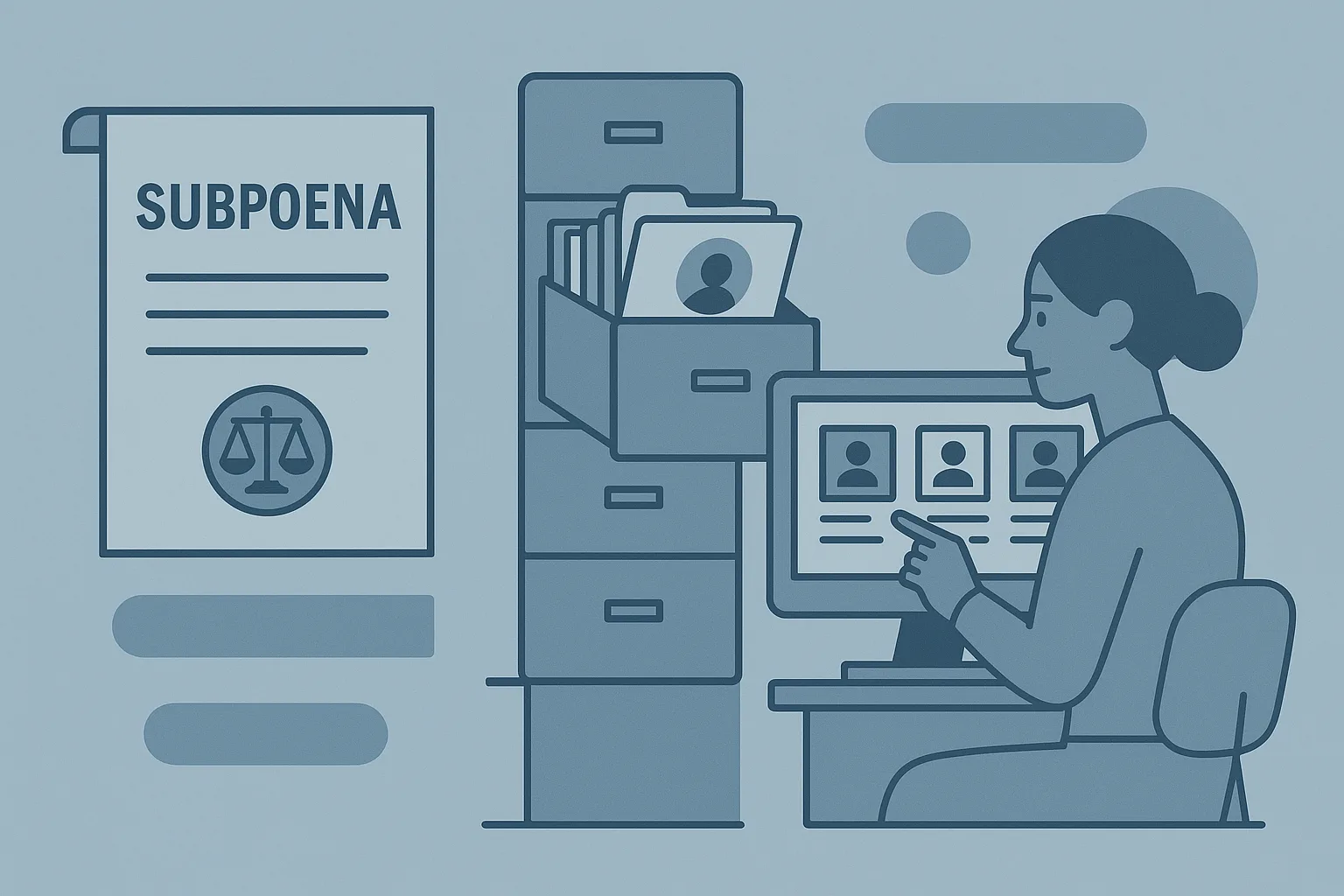
- Responding to EEOC investigations and subpoenas
- Defending against discrimination claims
- Conducting internal pay equity audits
- Meeting state reporting requirements
- Meeting Section 503 and VEVRAA affirmative action obligations (for federal contractors). Note that the race/sex affirmative action plans formerly required under Executive Order 11246 end with DOL's August 21, 2026 final rule, effective October 26, 2026.
5. Monitor the Rulemaking Process
The proposed rule must still be finalized before it takes effect. Track developments at the Federal eRulemaking Portal under docket EEOC-2026-0034 (RIN 3046-AB37) and on the EEOC's data-collections page. Consult legal counsel before making any changes to your reporting processes based on the proposed — not finalized — rule.
The Bigger Picture: Data Governance as a Core HR Competency
The potential end of EEO-1 reporting is a useful case study in a broader trend: the shift from compliance-driven data collection to risk-driven data governance. For years, many organizations treated workforce demographic data as something they collected because they had to file a report. The better approach — and the one that protects organizations regardless of what happens at the federal level — is to treat workforce data as a strategic asset that requires consistent collection, secure storage, and reliable retrieval.
This means investing in the systems and processes that support workforce data quality not because a specific report demands it, but because the organization's exposure to discrimination claims, pay equity litigation, and regulatory investigations demands it.
The organizations that will navigate this transition smoothly are the ones that already collect workforce data as part of their standard HR operations — not as an annual compliance exercise.
Sources
- EEOC Proposed Rule: Removal of Reporting Requirements — Federal Register (July 23, 2026, 91 FR 46332)
- EEOC Proposes Rescission of Annual Race and Sex Reporting Requirements — EEOC Newsroom
- EEO Data Collections — EEOC
- Rescission of Executive Order 11246 Implementing Regulations — DOL Final Rule (Aug. 21, 2026)
- EEOC Votes to Scrap EEO-1 and Other Demographic Reporting — Fisher Phillips
- The EEO-1 Report May Be Going Away, But Your Workforce Data Still Matters — Shaw Law Group
- 2026 Employee Data Reporting Requirements: Are Employers Ready? — Jackson Lewis
- California Pay Data Reporting — California Civil Rights Department
- 820 ILCS 112/11 — Equal Pay Registration Certificate Requirements (Illinois General Assembly)
- Title VII of the Civil Rights Act of 1964 — EEOC
- Titles I and V of the Americans with Disabilities Act of 1990 — EEOC
- No More Copy-Paste: How Seamless Data Flow Redefines Compliance — BlueHive
Tags
Frequently Asked Questions
Not yet. The EEOC published a proposed rule on July 23, 2026 (91 FR 46332) to rescind EEO-1 and related reporting requirements; the comment period closed August 24 and no final rule had been published as of September 22, 2026. The EEOC also has not opened the 2025 EEO-1 data collection, so employers should maintain data readiness and watch for an official announcement.
Several states have independent workforce data reporting mandates. California requires annual pay data reports with demographic breakdowns and mandatory penalties for noncompliance. Illinois requires pay data disclosures and equal pay certifications. Other states are considering similar legislation.
No. Anti-discrimination laws under Title VII, the ADA, and ADEA still require employers to maintain employment records. State reporting obligations continue independently, and workforce data remains essential for defending against discrimination claims and conducting internal pay equity audits.
HR teams should audit their current data collection workflows, map all federal and state reporting obligations, ensure HRIS systems can produce state-specific reports, and maintain demographic recordkeeping practices regardless of whether the federal requirement is finalized.
As of 2026, California imposes mandatory penalties of $100 per employee for a first violation and $200 per employee for subsequent violations of pay data reporting requirements, according to the California Civil Rights Department.