EEOC Subpoena Enforcement Is Surging: How HR Teams Should Prepare for Government Data Requests
The EEOC has filed multiple subpoena enforcement actions demanding detailed employee data from major employers. Here's how HR teams can build the data governance and document production processes needed to respond effectively.
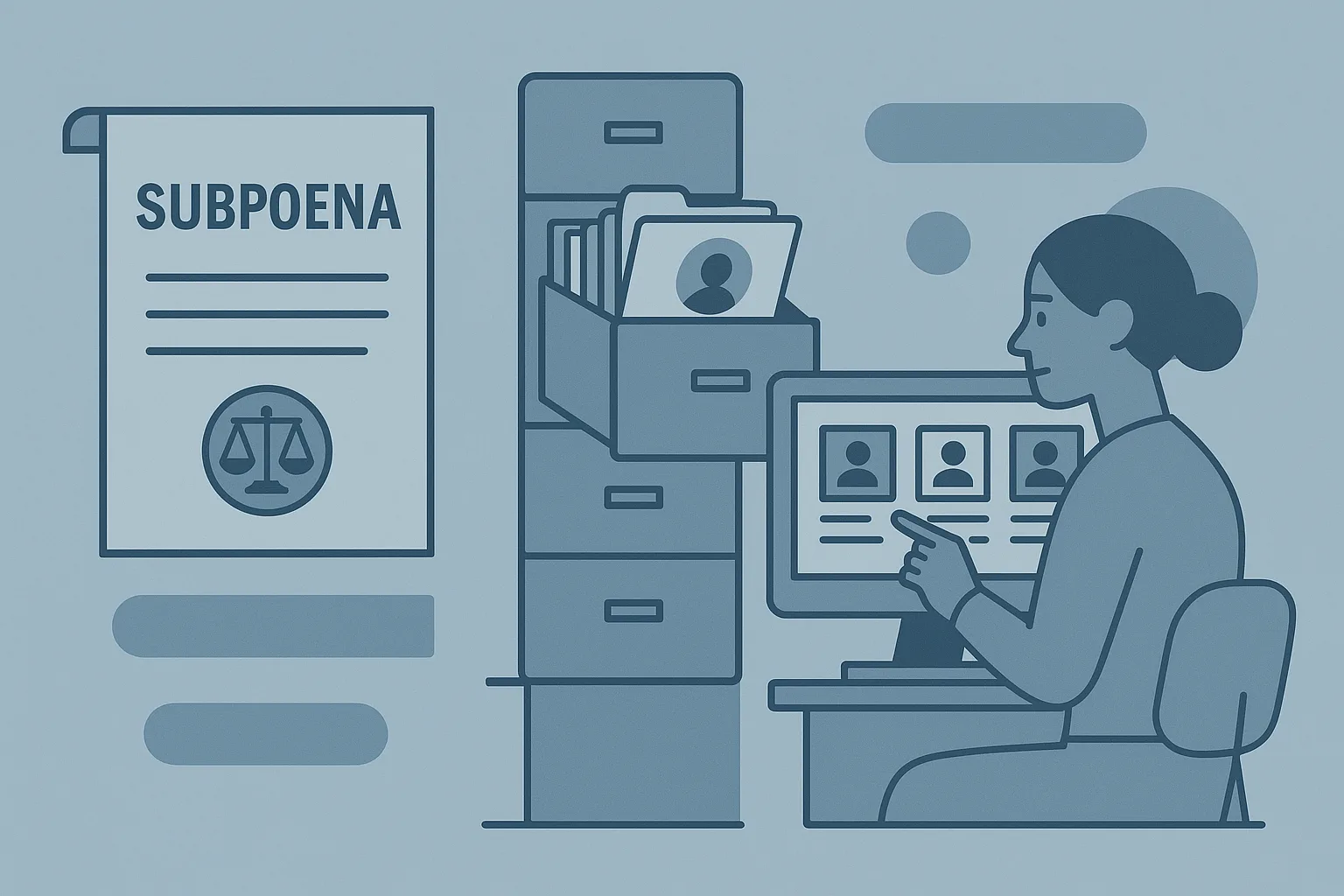

If the EEOC issued a subpoena to your organization tomorrow demanding seven years of employee demographic data, promotion records, training participation lists, and executive compensation metrics tied to workforce composition goals — could your HR team produce it?
For most organizations, the honest answer is no. And that gap between what the government is now demanding and what HR teams can actually deliver has become one of the most urgent operational risks in employment compliance.
In early 2026, the U.S. Equal Employment Opportunity Commission filed subpoena enforcement actions against Nike, Northwestern Mutual, and Genuine Parts Company (NAPA Auto Parts) — all in federal court — after the companies did not fully comply with sweeping information requests. These are not routine charge investigations. They represent a new scale of government data demands that most HR departments are not operationally prepared to handle.
This is not an article about whether DEI programs are legal. It is about the operational reality that the EEOC is now requesting employee data at a scope and volume that exposes serious gaps in how most organizations manage, store, and retrieve workforce information. Regardless of what the EEOC is investigating, the HR team that receives the subpoena needs a process to respond — and building that process after the subpoena arrives is too late.
What the EEOC Is Actually Requesting
The scope of recent EEOC subpoenas goes far beyond what HR teams have traditionally encountered in single-charge investigations. A detailed analysis by DirectEmployers reveals the breadth of what the agency is demanding:
Organizational and Workforce Data
- Organizational structure documents spanning five to eight years
- Complete lists of employees by department, role, and demographic characteristics
- Data from human resources information systems (HRIS) including performance management metrics
- Layoff selection criteria and documentation going back to 2024
Program-Specific Documentation
- Participation records for training, mentoring, leadership development, and internship programs — including applicant names, demographics, selection criteria, and outcomes
- Employee resource group membership and event attendance records
- Documents related to any program where race, sex, national origin, or sexual orientation was a criterion or consideration for participation
Compensation and Performance Metrics
- Executive compensation structures tied to workforce diversity metrics
- Performance evaluation data linked to diversity and inclusion goals
- Financial reward systems connected to diversity-related outcomes
Policy and Communications
- All affirmative action plans, in some cases going back to 2020
- Internal analyses of workforce demographic composition
- Public statements, SEC filings, and corporate reports referencing diversity targets
- Communications with other federal agencies, including OFCCP
The Nike subpoena alone sought data going back to 2018 in some categories. The Northwestern Mutual investigation requested detailed demographic breakdowns of every employee who participated in specific programs — names, contact information, race, national origin, sex, and sexual orientation.
For any HR team, assembling this volume of data across multiple systems, spanning years of records, under the time pressure of a federal subpoena, is a massive operational challenge.
Why This Is an HR Operations Problem
It is tempting to treat a government subpoena as purely a legal matter — something that gets handed to outside counsel and managed by the legal department. But the reality is that HR is the department that owns the data. Legal can advise on privilege, objections, and strategy. HR has to actually find, compile, verify, and produce the records.
That means the operational burden falls on HR teams who may be working with:
- Fragmented data systems. Employee records may be spread across an HRIS, a separate learning management system (LMS), applicant tracking system (ATS), payroll platform, and legacy spreadsheets maintained by individual departments.
- Inconsistent retention practices. If your organization does not have a clear data retention policy, records from 2018 or 2020 may no longer exist — or may exist in formats that are difficult to search and produce.
- Incomplete demographic data. Self-identification data for race, ethnicity, sex, and other characteristics is often voluntarily reported and may be incomplete, inconsistent, or stored in different systems for different purposes.
- No document production workflow. Most HR departments have never had to assemble a litigation-style document production. The skills and processes required — legal holds, search protocols, privilege review, redaction, chain of custody documentation — are not standard HR operations.
As EEOC Chair Andrea Lucas stated in the Nike enforcement action: "The EEOC will take all necessary steps — including subpoena enforcement actions — to ensure the opportunity to fully and comprehensively investigate." That language signals the agency's willingness to go to court when employers cannot or do not produce what is requested.
What Employers Should Do Now
The time to build your data governance and subpoena response capabilities is before the subpoena arrives. Here is a practical framework for HR operations teams.
1. Conduct a Data Inventory
Map where all employee data lives across your organization. This includes:
- HRIS platforms (core employee records, demographics, job history)
- Learning management systems (training enrollment, completion, certifications)
- Applicant tracking systems (candidate data, hiring decisions, interview notes)
- Payroll and compensation systems (salary data, bonus structures, equity grants)
- Separate departmental records (manager files, program participation spreadsheets, event sign-in sheets)
- Email and collaboration tools (communications about programs, policies, and decisions)
Document what data each system contains, how long records are retained, and who has access. If you discover that critical records are stored in individual manager files or department-level spreadsheets, that is a red flag that needs to be addressed.
2. Establish a Document Retention Policy
If your organization does not already have a comprehensive document retention policy that covers HR records, create one now. Key elements include:
- Minimum retention periods aligned with federal and state requirements (Title VII requires retention of personnel and employment records for one year from the date of termination; OFCCP requires federal contractors to retain records for two years)
- Consistent destruction schedules that apply organization-wide
- Legal hold procedures that can pause normal destruction when litigation or investigation is anticipated
- Clear ownership of retention decisions for each category of records
The EEOC's recent requests going back to 2018 suggest that retaining records for the statutory minimum may not be sufficient if your organization has any elevated compliance risk.
3. Build a Subpoena Response Playbook
Create a documented process for responding to government data requests that includes:
- Immediate notification protocols — who gets notified when a subpoena or information request arrives (legal, HR leadership, IT, relevant business units)
- Legal hold implementation — how to issue and track litigation holds across all relevant systems and custodians
- Data collection procedures — who is responsible for pulling records from each system, with checklists and timelines
- Quality control steps — how to verify that produced data is complete, accurate, and consistent across sources
- Redaction and privilege review — processes for removing information that is privileged, protected, or outside the scope of the request
- Secure transmission — how to securely deliver documents to the requesting agency
- Documentation — maintaining a detailed log of everything produced, to whom, and when
4. Protect Employee Confidentiality Throughout the Process
Responding to a government investigation creates significant employee confidentiality obligations that HR must manage carefully. The EEOC's own confidentiality rules protect information obtained during investigations from public disclosure before litigation. But employers also have obligations under the ADA, HIPAA (for group health plan data), and state privacy laws.
Key confidentiality practices during a data production include:
- Limit internal access to the investigation and produced documents to those with a legitimate need to know
- Redact information that is outside the scope of the request, particularly medical information, Social Security numbers, and other sensitive personal data
- Do not disclose the identity of the charging party or investigation details to managers or employees who are not directly involved
- Monitor for retaliation — ensure that no adverse action is taken against any employee connected to the investigation
- Brief senior leaders on their confidentiality obligations without sharing unnecessary details about specific employee records
5. Audit Your Program Documentation
The EEOC's recent subpoenas focus heavily on programs — training, mentoring, leadership development, internships, and employee resource groups. For each program your organization operates, ensure you can answer:
- What are the eligibility criteria, and are they documented?
- Is participation tracked in a centralized system with demographic data?
- Who makes selection decisions, and is the decision-making process documented?
- Are there written policies governing the program, and are they current?
- Can you produce a complete participant list with demographics for any given time period?
If the answer to any of these questions is no, you have a documentation gap that could become a significant problem in an investigation — not because the program is unlawful, but because you cannot demonstrate what it actually does.
6. Invest in Centralized Data Infrastructure
The underlying problem exposed by these enforcement actions is that most organizations have not invested in the data infrastructure needed to respond to modern government investigations. Employee data is often siloed across dozens of systems, with no single source of truth and no easy way to pull cross-system reports.
Consider investing in:
- Integrated HRIS platforms that consolidate employee records, training data, and program participation in a single system
- Data warehousing or analytics tools that can aggregate information from multiple sources for reporting
- Automated retention and archival systems that enforce consistent policies across the organization
- Access controls and audit trails that document who accessed what data and when
As BlueHive explores in its white paper Compliance Isn't Paperwork. It's Performance, treating compliance as an operational capability rather than a paperwork exercise is the key to building sustainable processes that hold up under regulatory scrutiny.
The Bigger Picture: Data Governance Is Compliance Infrastructure
The EEOC's enforcement surge is a wake-up call, but the lesson extends beyond any single agency or investigation. Federal agencies across the board — OSHA, DOL, OFCCP, and state regulators — are becoming more data-driven in their enforcement. The employer that can quickly and accurately produce organized, verified workforce data in response to a government request is in a fundamentally better position than the employer that scrambles to reconstruct records from fragmented systems under deadline pressure.
For HR operations leaders, this means that data governance is no longer a "nice to have" IT initiative. It is core compliance infrastructure — as essential as your safety programs, your anti-harassment policies, and your I-9 procedures. The organizations that invest in it now will be better positioned not only to respond to subpoenas, but to make better workforce decisions, identify risks earlier, and demonstrate compliance proactively.
The EEOC has made clear that it will use the full extent of its subpoena authority to obtain the data it needs. The question for every HR team is not whether you agree with what the agency is investigating — it is whether you can respond when the request arrives.
Sources
- EEOC News Release: Subpoena Enforcement Action Against Nike (February 2026)
- EEOC News Release: Subpoena Enforcement Action Against Northwestern Mutual (November 2025)
- DirectEmployers: What Do Recent EEOC Subpoena Enforcement Actions Tell Us About the Kinds of Data and Documents the EEOC Will Use to Investigate (March 2026)
- EEOC: What You Should Know About DEI-Related Discrimination at Work
- EEOC: Confidentiality
- BlueHive White Paper: Compliance Isn't Paperwork. It's Performance: Why HR and Operations Should Care Right Now
Tags
Frequently Asked Questions
An EEOC subpoena enforcement action occurs when the EEOC files a motion in federal court to compel an employer to produce documents or information that the employer has not provided in response to an administrative subpoena. In 2026, the EEOC filed enforcement actions against Nike, Northwestern Mutual, and Genuine Parts Company after these employers did not fully comply with sweeping data requests related to discrimination investigations.
Recent EEOC subpoenas have demanded organizational structure documents spanning five to eight years, employee demographic data, training and mentoring program participation records with participant names and demographics, executive compensation metrics tied to diversity goals, layoff selection criteria, affirmative action plans, HRIS and performance management system data, and communications with other federal agencies.
HR teams should conduct a comprehensive data inventory mapping where all employee records are stored, establish a document retention policy with legal hold procedures, build a subpoena response playbook with clear notification protocols and data collection procedures, audit program documentation for completeness, and invest in centralized data infrastructure that can support rapid and accurate document production.
When producing employee data in response to an EEOC investigation, employers must limit internal access to investigation details to those with a legitimate need to know, redact information outside the scope of the request such as medical records and Social Security numbers, protect the identity of the charging party, monitor for and prevent retaliation against employees connected to the investigation, and comply with ADA, HIPAA, and state privacy law requirements for sensitive employee information.
Recent EEOC subpoenas have requested records going back as far as 2018 — spanning seven or more years. While Title VII requires employers to retain personnel records for one year from termination and OFCCP requires federal contractors to retain records for two years, the EEOC's recent data requests significantly exceed these minimums, suggesting that organizations with elevated compliance risk should consider longer retention periods.