Healthcare Workplace Violence Reaches a Tipping Point: Court Rulings, State Laws, and What Employers Must Do Now
A landmark 10th Circuit ruling backs OSHA's authority to cite healthcare employers for workplace violence under the General Duty Clause, while a wave of state laws creates new compliance obligations. Here's what healthcare employers need to know to protect workers and stay compliant in 2026.
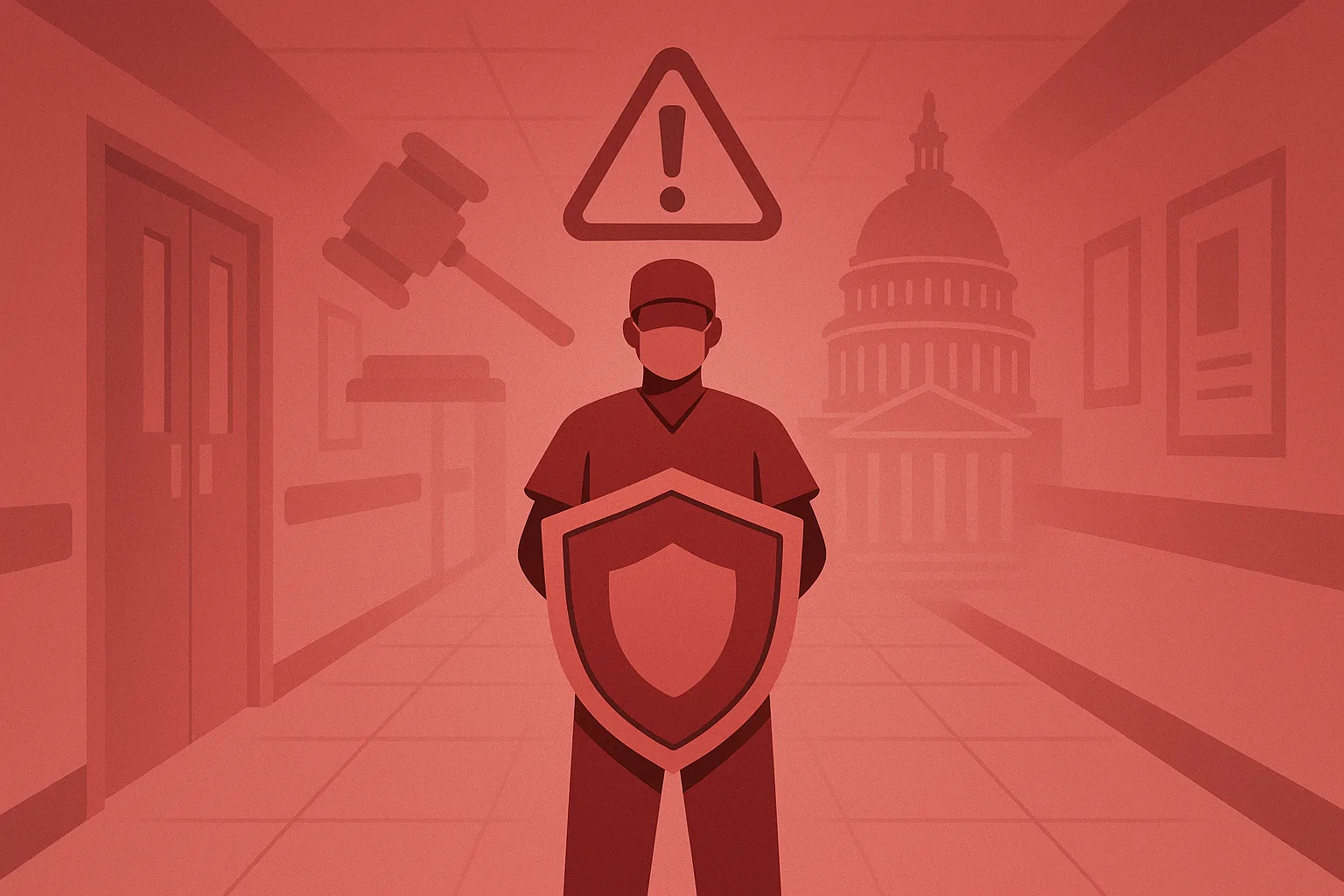

Violence against healthcare workers has been called a crisis for years. In 2026, the legal and regulatory landscape is finally catching up to the scale of the problem — and the consequences for employers who have not acted are growing sharply.
In February 2026, the 10th Circuit Court of Appeals upheld OSHA's authority to cite a psychiatric hospital and its management company for failing to protect workers from workplace violence, even without a dedicated federal standard. States from New York to Kentucky are passing increasingly prescriptive workplace violence prevention laws targeting healthcare employers specifically. And the data continues to show that healthcare remains the most dangerous sector in America for workplace violence — by a wide margin.
For occupational health professionals and healthcare compliance leaders, the message is clear: the era of treating workplace violence as an unavoidable part of the job is over.
The Numbers: A Disproportionate Crisis
The scale of workplace violence in healthcare is staggering, and it has only worsened in recent years.
According to Bureau of Labor Statistics data, the rate of nonfatal workplace violence cases in healthcare was 14.2 per 10,000 full-time equivalent workers in 2024–2025 — nearly five times the private industry average of 3.1 per 10,000. Healthcare accounts for roughly 10% of the U.S. workforce but suffers nearly 48% of all nonfatal workplace violence injuries.
The risk is not distributed evenly. Psychiatric aides face workplace violence injury rates of 543.6 per 10,000 full-time equivalents — orders of magnitude above the national average. Nursing assistants experience violence-related injuries at 21.2 per 10,000 workers. Emergency departments, psychiatric units, and long-term care facilities are the highest-risk settings.
A National Nurses United survey found that 81.6% of nurses reported experiencing at least one type of workplace violence — verbal or physical — in the past year. Forty-one percent reported physical violence specifically, and 76% reported daily verbal abuse.
The financial toll matches the human one. Industry estimates place the annual cost of workplace violence in U.S. healthcare at more than $18 billion, factoring in staffing disruptions, lost time, legal costs, and prevention expenditures. Workers who experience violence miss an average of 7.3 workdays per injury, and nearly two in five healthcare workers report considering leaving the profession due to safety concerns.
The 10th Circuit Ruling: A Legal Turning Point
The February 2026 decision in UHS of Delaware, Inc. v. Occupational Safety and Health Review Commission represents a significant moment for workplace violence enforcement in healthcare.
The case arose from OSHA's inspection of Cedar Springs Hospital, a psychiatric care facility in Colorado Springs managed by UHS of Delaware, Inc. OSHA investigators found that the hospital had failed to implement adequate measures to protect staff from violent patients despite workplace violence being a well-documented hazard in psychiatric care. Specific deficiencies included:
- Failure to provide staff with communication devices for emergencies
- Insufficient staffing levels
- Not implementing the facility's own existing workplace violence prevention program
- Inadequate security of patient belongings that could be used as weapons
- Lack of trained security personnel
- No systematic post-incident investigation process
OSHA cited both the hospital and its management company under the General Duty Clause — Section 5(a)(1) of the OSH Act — issuing a $13,494 penalty.
Key Holdings
The 10th Circuit's decision addressed several arguments that healthcare employers have relied on to resist OSHA workplace violence citations:
Management company liability. The court applied a three-part test examining whether UHS of Delaware and the hospital shared a worksite, whether their safety operations were integrated, and whether they shared common management or ownership. Finding all three factors satisfied, the court held that the management company was properly liable as an employer under the OSH Act.
CMS preemption rejected. The hospital argued that compliance with Centers for Medicare and Medicaid Services (CMS) regulations should shield it from OSHA enforcement. The 10th Circuit rejected this argument, holding that CMS regulations address patient safety, not employee safety, and do not preempt OSHA's authority.
General Duty Clause sufficiency. The court rejected the argument that OSHA's requirements were too vague without a formal workplace violence standard, affirming that the General Duty Clause provides adequate legal basis for enforcement.
For healthcare employers, the ruling sends an unambiguous signal: you cannot wait for a specific OSHA standard to address workplace violence, and existing regulatory compliance in other areas does not substitute for worker safety obligations.
OSHA's Enforcement Framework
While OSHA has not yet finalized a dedicated workplace violence standard — the agency moved its proposed rule on Workplace Violence in Health Care and Social Assistance to "Long-Term Action" status in its Spring 2025 regulatory agenda — its enforcement posture is anything but passive.
OSHA's primary enforcement tool is CPL 02-01-058, the agency's enforcement directive for occupational exposure to workplace violence. Issued in 2017, the directive provides inspectors with detailed guidance on when and how to inspect and cite employers for workplace violence hazards. It applies across all industries but focuses particular attention on healthcare, social assistance, and settings where workers interact with volatile individuals.
Under the directive, OSHA evaluates whether an employer:
- Recognized the hazard — Was workplace violence a known risk in the employer's industry or specific workplace?
- Had feasible means of abatement — Were there reasonable steps the employer could have taken to reduce the risk?
- Failed to act — Did the employer neglect to implement those feasible controls?
OSHA also publishes Guidelines for Preventing Workplace Violence for Healthcare and Social Service Workers (Publication 3148), which outlines recommended program elements including management commitment, worksite analysis, hazard prevention and control, safety and health training, and recordkeeping.
Critically, as the 10th Circuit case demonstrates, OSHA may use an employer's own documented policies against them. If a facility has a written workplace violence prevention program but fails to follow it, that gap can support a citation.
A Wave of State Legislation
The federal regulatory delay has prompted states to act on their own. More than 20 states now require some form of workplace violence prevention in healthcare, and the pace of new legislation is accelerating in 2026.
California
California has among the most comprehensive requirements in the nation. Cal/OSHA has enforced healthcare-specific workplace violence prevention regulations since 2017, requiring hospitals and healthcare facilities to maintain written prevention plans, conduct annual training, log incidents, and report violent events.
In 2024, Senate Bill 553 extended workplace violence prevention plan requirements to nearly all California employers, not just healthcare. Employers must implement a written Workplace Violence Prevention Plan (WVPP), conduct hazard assessments, train employees, maintain a violent incident log for five years, and establish reporting procedures. Cal/OSHA is also developing an expanded general-industry workplace violence standard with a target implementation date of December 31, 2026.
New York
New York enacted legislation effective December 12, 2025, requiring hospitals and nursing homes to establish formal workplace violence prevention programs. Beginning in 2027, facilities must conduct annual facility-specific safety and security assessments that evaluate previous incident logs, employee and patient complaints, facility layout, engineering controls, and security policies. Employers must update their plans as new threats emerge and maintain documentation of all assessments and prevention activities.
Kentucky
Kentucky passed HB 176 in 2023, requiring healthcare facilities to perform workplace safety assessments, create violence prevention plans, train staff annually, maintain records, and establish internal reporting systems with yearly compliance audits. In February 2026, new legislation (HB 713) was introduced to strengthen these obligations further, including mandatory signage about consequences of violence against healthcare workers and enhanced notification requirements.
Kentucky also maintains enhanced criminal penalties for assaults on healthcare professionals under Ky. Rev. Stat. § 508.25.
Other States
The National Law Review reports that additional states including Missouri, Oregon, and Washington are pursuing or expanding workplace violence prevention legislation in 2026, with requirements that may exceed current OSHA guidance.
What This Means for Healthcare Employers
The convergence of the 10th Circuit ruling, accelerating state legislation, and OSHA's active enforcement posture creates an environment where healthcare employers must treat workplace violence prevention as a core compliance obligation — not a discretionary safety initiative.
1. Implement a Written Workplace Violence Prevention Program
If your facility does not have a formal, written workplace violence prevention plan, developing one is the single most important step you can take. OSHA's Guidelines for Preventing Workplace Violence for Healthcare and Social Service Workers provides a comprehensive framework. Your program should include:
- Management commitment and employee involvement — Establish leadership accountability and create mechanisms for frontline workers to report hazards and participate in program development
- Worksite analysis — Conduct a thorough assessment of your facility for risk factors, including patient populations, facility layout, staffing patterns, and history of incidents
- Hazard prevention and control — Implement engineering controls (panic buttons, security cameras, controlled access), administrative controls (staffing ratios, de-escalation protocols, restricted visitor policies), and work practice controls
- Safety and health training — Train all staff in recognizing warning signs, de-escalation techniques, emergency response procedures, and incident reporting
- Recordkeeping and program evaluation — Maintain detailed incident logs, track trends, and review and update the program at least annually
2. Follow Your Own Policies
The UHS of Delaware case underscores a critical vulnerability: having a workplace violence prevention program on paper but failing to implement it can be worse than having no program at all. OSHA inspectors will review your documented policies and evaluate whether you are following them. Ensure that:
- Training documented in your plan is actually being delivered on schedule
- Staffing levels match what your risk assessment requires
- Security equipment specified in your plan is maintained and operational
- Post-incident investigations are conducted and documented consistently
3. Know Your State Requirements
Multi-state healthcare organizations must track and comply with the specific requirements in each jurisdiction where they operate. Key variables include:
- Whether a written prevention plan is mandatory
- Annual training and assessment requirements
- Incident logging and retention periods
- Reporting obligations to state agencies
- Enhanced criminal penalties for assaults on healthcare workers
Use resources like OSHA's state plan directory to identify whether your state operates its own occupational safety program with potentially stricter requirements than federal OSHA.
4. Address the Root Causes
Prevention programs are most effective when they address the organizational factors that contribute to violence risk. Evidence-based strategies include:
- Adequate staffing — Understaffing is consistently identified as a top risk factor for workplace violence in healthcare settings
- Environmental design — Ensure adequate lighting, sight lines, secure entry points, and safe rooms for staff
- De-escalation training — Equip all patient-facing staff with skills to manage agitated or potentially violent individuals
- Behavioral threat assessment — Develop protocols for identifying and managing patients with known histories of violence
- Culture of reporting — Create a system where staff feel safe reporting threats and near-misses without fear of retaliation, and demonstrate that reports lead to meaningful action
5. Prepare for OSHA Inspections
Given OSHA's active enforcement, healthcare employers should be inspection-ready. This means:
- Maintaining current documentation of your prevention program, training records, and incident logs
- Ensuring that all staff know how to respond to an OSHA inspector's visit
- Conducting internal audits to identify gaps between your written program and actual practice
- Documenting the feasibility analysis for any controls you have chosen not to implement
The BlueHive 2026 Occupational Health Compliance Timeline and Checklist provides additional guidance for employers navigating these evolving requirements.
Looking Ahead
The trajectory is unmistakable. While a dedicated federal OSHA workplace violence standard for healthcare remains in long-term development, enforcement through the General Duty Clause is intensifying, courts are backing OSHA's authority, and states are filling the regulatory gap with increasingly detailed requirements of their own.
Healthcare employers who view workplace violence prevention as a compliance checkbox rather than an operational imperative are exposing themselves to legal liability, regulatory penalties, and — most importantly — preventable harm to their workforce. The workers who care for patients deserve the same level of protection that every other hazard in the workplace receives.
On this Workers' Memorial Day, April 28, 2026, that principle deserves more than acknowledgment. It demands action.
Sources
- 10th Circuit Backs OSHA on Hospital Workplace Violence Citation — Safety Law Matters (February 2026)
- UHS of Delaware, Inc. v. Occupational Safety and Health Review Commission, No. 24-9521 (10th Cir. 2026)
- Tenth Circuit Affirms OSHA Authority to Cite Health Care Employers for Workplace Violence Incidents Under the General Duty Clause — Hall Render (March 2026)
- Healthcare — Workplace Violence — OSHA
- Enforcement Procedures and Scheduling for Occupational Exposure to Workplace Violence (CPL 02-01-058) — OSHA
- Guidelines for Preventing Workplace Violence for Healthcare and Social Service Workers (Publication 3148) — OSHA
- General Duty Clause — Section 5(a)(1) of the OSH Act — OSHA
- Injury, Illness, and Fatality Data — Bureau of Labor Statistics
- Violence and Work — CDC/NIOSH
- OSHA and NY Workplace Violence Update in Health Care — OSHA Chronicle (April 2026)
- Health Care Workplace Violence Legislation Heats Up in 2026 — National Law Review
- Cal/OSHA Workplace Violence Prevention Guidance and Resources — California DIR
- Senate Bill 553 (California) — California Legislative Information
- OSHA State Plans — OSHA
- 2026 Occupational Health Compliance Timeline and Checklist — BlueHive
Tags
Frequently Asked Questions
Yes. OSHA enforces workplace violence protections in healthcare under the General Duty Clause of the OSH Act (Section 5(a)(1)), which requires employers to maintain a workplace free from recognized hazards likely to cause death or serious physical harm. The 10th Circuit Court of Appeals affirmed this authority in its February 2026 ruling in UHS of Delaware v. OSHRC.
Healthcare workers are approximately five times more likely to experience workplace violence than workers in other industries. According to federal data, the healthcare sector accounts for about 10% of the U.S. workforce but suffers nearly 48% of all nonfatal workplace violence injuries. Over 81% of nurses report experiencing at least one type of workplace violence in the past year.
More than 20 states now require some degree of workplace violence prevention in healthcare. Notable examples include California (Cal/OSHA regulations and SB 553), New York (hospital and nursing home prevention programs required as of December 2025), and Kentucky (HB 176 requiring safety assessments and prevention plans, with strengthening legislation introduced in 2026).
OSHA's enforcement directive (CPL 02-01-058) and agency guidelines recommend a written prevention plan that includes a worksite hazard analysis, engineering and administrative controls, staff training, an incident reporting and response system, post-incident investigation procedures, and regular program evaluation. States like California and New York have additional specific requirements.
No. The 10th Circuit explicitly rejected this argument in the UHS of Delaware case, ruling that CMS regulations address patient safety — not employee safety — and do not preempt OSHA's authority to enforce workplace violence protections for healthcare workers under the General Duty Clause.