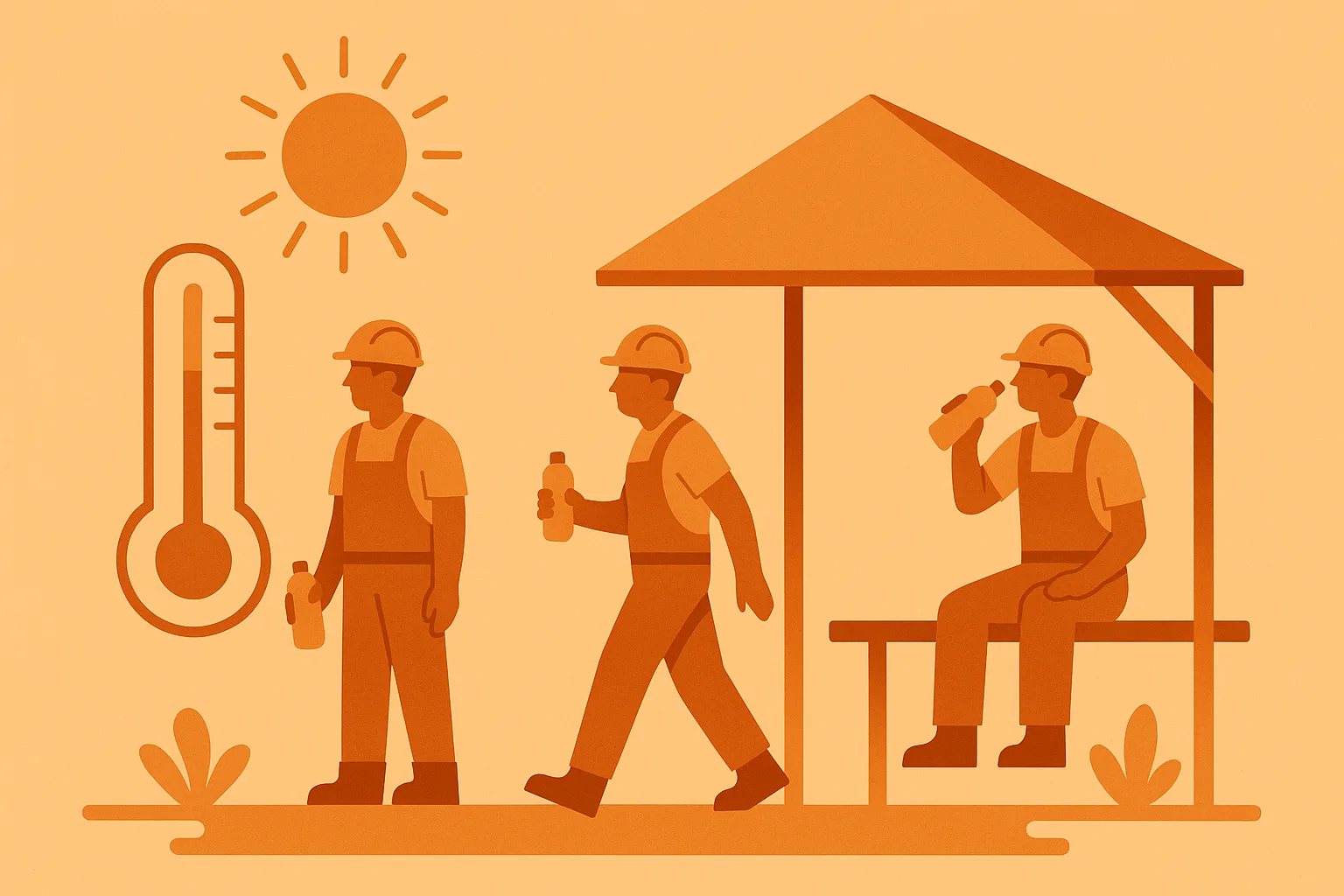
Heat Illness Prevention in 2026: What Employers Must Know as OSHA Advances Toward a Federal Heat Standard
With OSHA's Heat National Emphasis Program expiring in April 2026 and a proposed federal heat standard under review, employers should prepare now for summer heat season. Here's what the proposed rule requires and how to protect your workers.
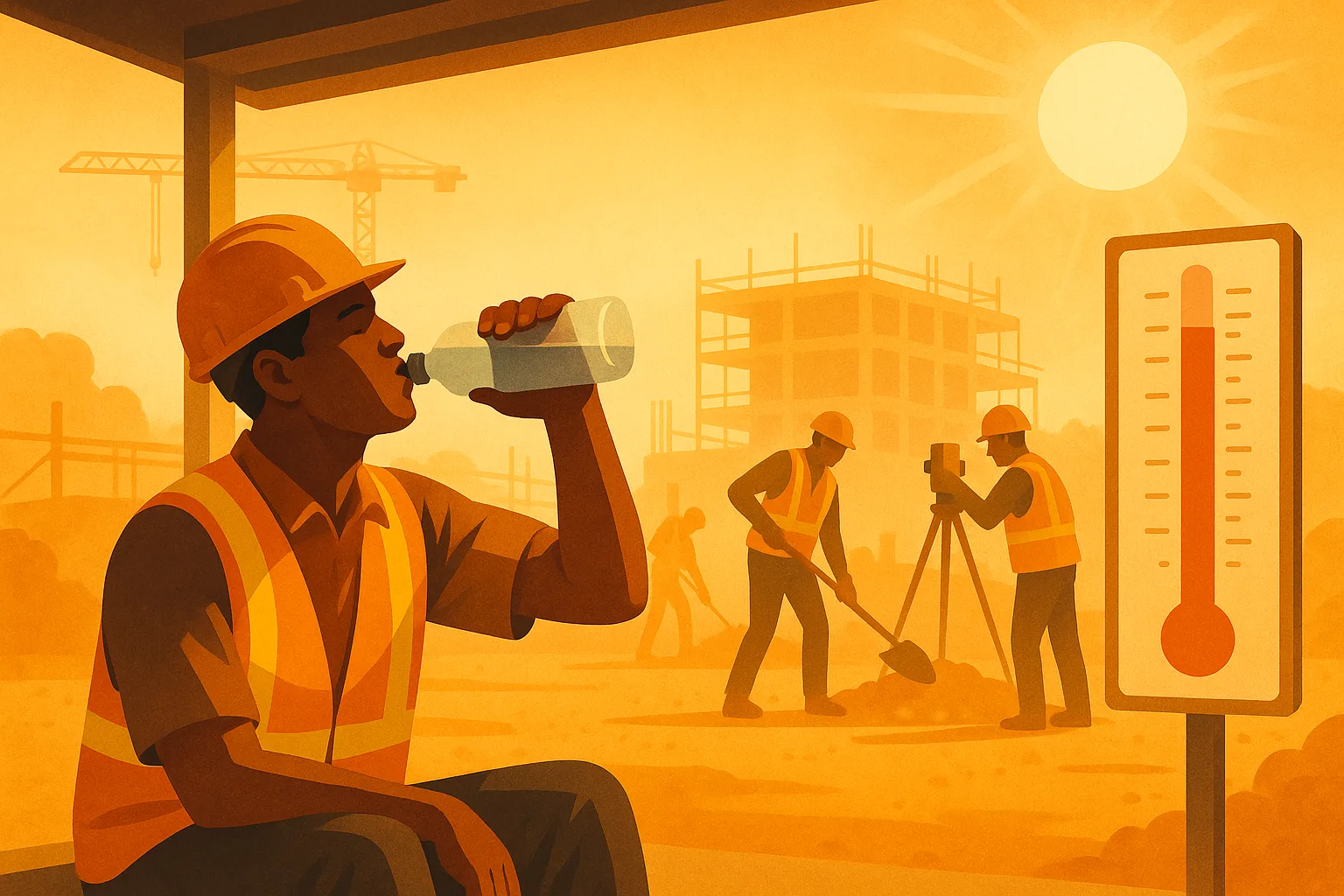

With temperatures already climbing across parts of the United States — Cal/OSHA issued its first excessive heat advisory of 2026 in March — the annual question of heat illness prevention is arriving earlier than usual. But 2026 is not a typical year for workplace heat safety. OSHA's proposed federal Heat Injury and Illness Prevention Standard is under active review, the agency's Heat National Emphasis Program (NEP) reaches its current expiration date on April 8, 2026, and several states have already moved ahead with their own enforceable heat standards.
For employers — particularly those in construction, agriculture, manufacturing, warehousing, and other industries with significant heat exposure risk — the time to prepare is now, not when the first heat wave hits.
The Scale of the Problem
Heat is one of the leading causes of weather-related death in the United States, and workplace heat exposure remains a persistent and underreported occupational health hazard. According to the Bureau of Labor Statistics, 48 workers died from exposure to environmental heat in 2024. In the 2023–2024 reporting period, there were approximately 7,100 nonfatal heat-related cases involving days away from work, job restriction, or transfer, with 5,280 cases specifically involving days away from work.
These numbers, while significant, almost certainly undercount the true burden. Heat-related illnesses are frequently misclassified or underreported on injury and illness logs, and heat can be a contributing factor in falls, equipment incidents, and other injuries that are recorded under different categories. Workers who are new to a job, returning from time off, or not yet acclimatized to hot conditions are at particularly high risk — NIOSH research has found that a disproportionate share of heat-related fatalities occur within a worker's first few days on the job.
The occupational health community has long called for stronger, more specific protections. That effort is now closer to reality than at any previous point.
OSHA's Proposed Federal Heat Standard
On August 30, 2024, OSHA published a Notice of Proposed Rulemaking (NPRM) for Heat Injury and Illness Prevention in Outdoor and Indoor Work Settings (89 FR 70698). If finalized, this would be the first comprehensive federal standard specifically addressing heat hazards in American workplaces.
The proposed standard would apply to all employers conducting outdoor and indoor work in general industry, construction, maritime, and agriculture where OSHA has jurisdiction, with limited exceptions for workplaces with climate control consistently below 80°F, short-duration exposures, telework, sedentary indoor office work, and certain emergency response activities.
Key Requirements of the Proposed Rule
The proposed standard establishes a two-tier trigger system based on heat index:
At 80°F heat index (initial heat trigger, for 15 or more minutes in a 60-minute period):
- Provide access to drinking water — at least one quart per worker per hour
- Provide access to a shaded or air-conditioned rest area
- Allow and encourage rest breaks for workers showing signs of heat stress
- Implement acclimatization procedures for new and returning workers
- Conduct hazard assessments and monitor environmental conditions
At 90°F heat index (high heat trigger):
- Implement mandatory work/rest schedules
- Provide air-conditioned cool-down areas where feasible
- Actively monitor workers for signs of heat illness
- Increase supervisor and buddy-system oversight
The Written Heat Injury and Illness Prevention Plan
A central requirement of the proposed rule is the development and maintenance of a written Heat Injury and Illness Prevention Plan (HIIPP). This plan must be site-specific and include:
- Identification of heat hazards in the workplace
- Description of control measures — including engineering controls, administrative controls, and personal protective equipment
- Acclimatization protocols for new employees and workers returning from extended absence
- Emergency response procedures for heat-related illness
- Designation of a Heat Safety Coordinator responsible for overseeing compliance
- Training requirements for all employees and supervisors
The plan must be reviewed and updated regularly and made accessible to workers.
Where the Rulemaking Stands
OSHA held an informal public hearing from June 16 through July 2, 2025, and the post-hearing comment period closed on October 30, 2025. The agency collected over 43,000 public comments in the rulemaking docket (OSHA-2021-0009). OSHA is now in the review phase, analyzing hearing testimony, post-hearing briefs, and public comments before preparing a final rule.
No official date has been announced for a final rule, but the rulemaking is considered one of OSHA's highest regulatory priorities. Employers should plan as though the standard could be finalized in 2026, with compliance requirements potentially taking effect within 150 days of publication.
Current Enforcement: The Heat NEP and the General Duty Clause
Even without a finalized federal heat standard, OSHA has not been waiting to address heat hazards. The agency's primary enforcement tools have been the General Duty Clause — Section 5(a)(1) of the OSH Act, which requires employers to provide a workplace free from recognized hazards likely to cause death or serious physical harm — and the Heat National Emphasis Program.
The Heat National Emphasis Program
OSHA launched its National Emphasis Program on Outdoor and Indoor Heat-Related Hazards (CPL 03-00-024) in April 2022 to focus enforcement and outreach on industries with the highest heat-related risks. The NEP directs OSHA compliance officers to proactively conduct inspections when the National Weather Service issues a heat advisory or warning, or when the heat index reaches 80°F or above.
Since the program's launch, OSHA has:
- Conducted nearly 7,000 heat-related inspections
- Issued 60 heat citations under the General Duty Clause
- Sent nearly 1,400 Hazard Alert Letters to employers
- Protected nearly 1,400 employees from hazardous heat exposure through direct intervention
The NEP was extended through April 8, 2026. While the program's formal expiration is imminent, employers should not assume enforcement will ease. OSHA is expected to either extend the NEP again or allow it to transition into enforcement under a final heat standard. Regardless, the General Duty Clause remains a permanent enforcement tool.
State Standards Already in Effect
Several states have moved ahead of the federal government in establishing specific, enforceable heat illness prevention standards. Employers operating in these states must comply with state requirements, which in some cases are more stringent than the proposed federal standard:
California
Cal/OSHA enforces the most comprehensive heat standards in the nation, covering both outdoor and indoor workplaces:
- Outdoor: Protections begin at 80°F, including water, shade, and cool-down rest breaks. At 95°F, additional high-heat procedures are required for certain industries including agriculture, construction, and landscaping.
- Indoor: Protections begin at 82°F, with requirements for water, cool-down areas, rest breaks, and training.
- Employers must maintain a written heat illness prevention plan and provide employee and supervisor training.
Cal/OSHA's March 2026 heat advisory — issued in response to an early-season heat wave affecting Southern California and Bay Area counties — underscored the importance of acclimatization, particularly for newer employees who may not yet be adapted to high temperatures.
Oregon
Oregon OSHA's permanent heat rule, in effect since 2022, covers both outdoor and indoor workplaces. Protections are triggered at 80°F, with enhanced requirements at 95°F including more frequent breaks and direct worker monitoring.
Washington
Washington's outdoor heat exposure rules require protections starting at 80°F, with more substantial requirements at 89°F. The state is continuing to update its standards in response to increasing climate risks.
Maryland
Maryland's heat illness prevention standard, effective since 2024, requires employers to maintain written heat illness prevention programs covering hazard assessments, exposure monitoring, water and rest provisions, and employee training for both indoor and outdoor workers.
Minnesota
Minnesota OSHA addresses heat illness primarily in indoor environments, mandating engineering controls such as ventilation and cooling, rest breaks, water access, acclimatization procedures, and worker training.
What Employers Should Do Now
With summer approaching and regulatory requirements expanding, now is the time for employers to evaluate and strengthen their heat illness prevention programs. The following steps align with both the proposed federal standard and existing state requirements:
1. Develop or Update a Written Heat Illness Prevention Plan
If you don't have a written plan, create one. If you do, review and update it. Your plan should address:
- All tasks and work areas with potential heat exposure
- Specific control measures for each scenario — including water access, shade or cooling, rest breaks, and acclimatization
- Emergency response procedures for heat-related illness
- Roles and responsibilities, including a designated Heat Safety Coordinator
- Training schedules and documentation
2. Establish Acclimatization Protocols
Acclimatization is one of the most critical — and most commonly overlooked — elements of heat illness prevention. NIOSH guidelines recommend:
- New workers: Gradually increase workload and heat exposure over a period of 7 to 14 days
- Returning workers (absent 1 week or more): Follow a re-acclimatization schedule, especially if the worker was away during cooler weather
- All workers: Monitor closely during the first days of a heat wave or seasonal temperature increase
3. Provide Water, Rest, and Shade
These three elements form the foundation of any heat illness prevention program:
- Water: Provide cool, potable drinking water in sufficient quantity — at least one quart per worker per hour — in accessible locations near the work area
- Rest: Allow and encourage preventive cool-down rest breaks, particularly when temperatures are high. Under the proposed federal standard, mandatory work/rest cycles would apply at a 90°F heat index
- Shade or cooling: Ensure shaded or air-conditioned rest areas are available. For outdoor work, shade structures should be in place before temperatures reach trigger thresholds
4. Train Employees and Supervisors
Effective training should cover:
- How to recognize symptoms of heat exhaustion, heat stroke, and other heat-related illnesses
- What to do if a coworker shows signs of heat illness — including when to call 911
- How to use monitoring equipment and environmental heat indicators
- The employer's specific heat illness prevention plan and emergency procedures
- The importance of hydration, rest breaks, and reporting symptoms early
Supervisors need additional training on how to monitor workers, enforce rest breaks, and respond to emergencies.
5. Monitor Environmental Conditions
Track heat index values at your worksite daily during warm months. Options include:
- Checking the National Weather Service heat index forecast for your area
- Using on-site heat monitoring devices such as wet bulb globe temperature (WBGT) meters
- Subscribing to OSHA's heat safety tool app for real-time heat index calculations
When conditions reach trigger temperatures, activate the corresponding protections in your plan immediately.
6. Know Your State Requirements
If you operate in California, Oregon, Washington, Maryland, Minnesota, or another state with specific heat standards, make sure your program meets or exceeds state requirements. State standards may have lower temperature thresholds, more specific documentation requirements, or industry-specific provisions that go beyond what the proposed federal rule would require.
7. Document Everything
Maintain records of:
- Heat illness prevention plan reviews and updates
- Environmental monitoring data
- Training attendance and content
- Acclimatization schedules for new and returning workers
- Any heat-related incidents, near-misses, and corrective actions
Thorough documentation demonstrates good faith compliance and can be critical in the event of an OSHA inspection or a heat-related incident.
Use OSHA's Free Resources
OSHA provides several free tools and programs to help employers address heat hazards:
- OSHA-NIOSH Heat Safety Tool: A mobile app that provides real-time heat index data and risk levels based on your location
- OSHA's On-Site Consultation Program: Free, confidential safety and health advice for small and medium-sized businesses — consultation visits are separate from enforcement and do not result in citations
- OSHA Heat Illness Prevention Campaign: Educational materials, fact sheets, and training resources in English and Spanish organized around the "Water. Rest. Shade." framework
- NIOSH Criteria for Occupational Exposure to Heat: The authoritative scientific document on heat stress recommendations for employers and occupational health professionals
Looking Ahead
The regulatory landscape for workplace heat safety is shifting rapidly. The expiration of OSHA's Heat NEP on April 8, 2026, does not signal a reduction in enforcement — it signals a transition. Whether through a renewed emphasis program, a finalized federal standard, or continued General Duty Clause enforcement, OSHA has made clear that heat illness prevention is a lasting priority.
Meanwhile, state-level heat standards continue to expand. Employers operating in multiple jurisdictions face an increasingly complex compliance environment that rewards proactive preparation.
The most important step any employer can take right now is simple: don't wait for the final rule. The proposed standard outlines clear expectations. State standards already enforce many of the same requirements. And the General Duty Clause provides OSHA with enforcement authority today. Employers who build their heat illness prevention programs now — with written plans, acclimatization procedures, water and rest provisions, and documented training — will be positioned to protect their workers and meet compliance requirements as they evolve.
Summer is coming. The question is whether your workplace is ready.
Sources
- Heat Injury and Illness Prevention in Outdoor and Indoor Work Settings — Proposed Rule (Federal Register, August 30, 2024)
- OSHA Heat Injury and Illness Prevention Rulemaking
- OSHA National Emphasis Program — Outdoor and Indoor Heat-Related Hazards (CPL 03-00-024)
- OSHA Heat Illness Prevention Campaign — Water. Rest. Shade.
- Bureau of Labor Statistics — Injuries, Illnesses, and Fatalities
- National Safety Council — Exposure to Environmental Heat (Injury Facts)
- NIOSH Criteria for a Recommended Standard: Occupational Exposure to Heat and Hot Environments (2016-106)
- Cal/OSHA Advises Employers to Protect Workers from Heat Illness (DIR News Release 2026-24)
- Cal/OSHA Heat Illness Prevention Standards
- Cal/OSHA Indoor Heat Illness Prevention Standard
- OSHA General Duty Clause — Section 5(a)(1) of the OSH Act
- OSHA On-Site Consultation Program
- OSHA-NIOSH Heat Safety Tool
Tags
Frequently Asked Questions
OSHA's proposed Heat Injury and Illness Prevention in Outdoor and Indoor Work Settings standard (89 FR 70698) would require employers to develop a written Heat Injury and Illness Prevention Plan, provide drinking water and rest breaks, implement acclimatization procedures for new and returning workers, train employees on heat hazards, and designate a Heat Safety Coordinator. The rule was proposed on August 30, 2024, and is currently under review following a public hearing that concluded in July 2025.
Under the proposed federal standard, basic protections such as access to drinking water, shade or cool-down areas, and rest breaks would be triggered when the heat index reaches 80°F for 15 or more minutes in a 60-minute period. Enhanced protections — including mandatory work/rest schedules and active monitoring of workers — would apply when the heat index reaches 90°F.
According to Bureau of Labor Statistics data, 48 workers died from exposure to environmental heat in 2024. In the 2023–2024 period, there were approximately 7,100 nonfatal heat-related cases involving days away from work, job restriction, or transfer. Experts believe these numbers significantly undercount actual heat-related incidents due to underreporting and misclassification.
As of 2026, California, Oregon, Washington, Maryland, and Minnesota have enforceable heat illness prevention standards. California's standards are the most comprehensive, covering both indoor (triggered at 82°F) and outdoor (triggered at 80°F) workplaces, with additional high-heat procedures required at 95°F in certain industries.
Yes. Even without a finalized federal heat standard, OSHA can and does cite employers under the General Duty Clause — Section 5(a)(1) of the OSH Act — which requires employers to provide a workplace free from recognized hazards likely to cause death or serious physical harm. Since launching the Heat National Emphasis Program in 2022, OSHA has conducted nearly 7,000 heat-related inspections and issued 60 citations under the General Duty Clause.