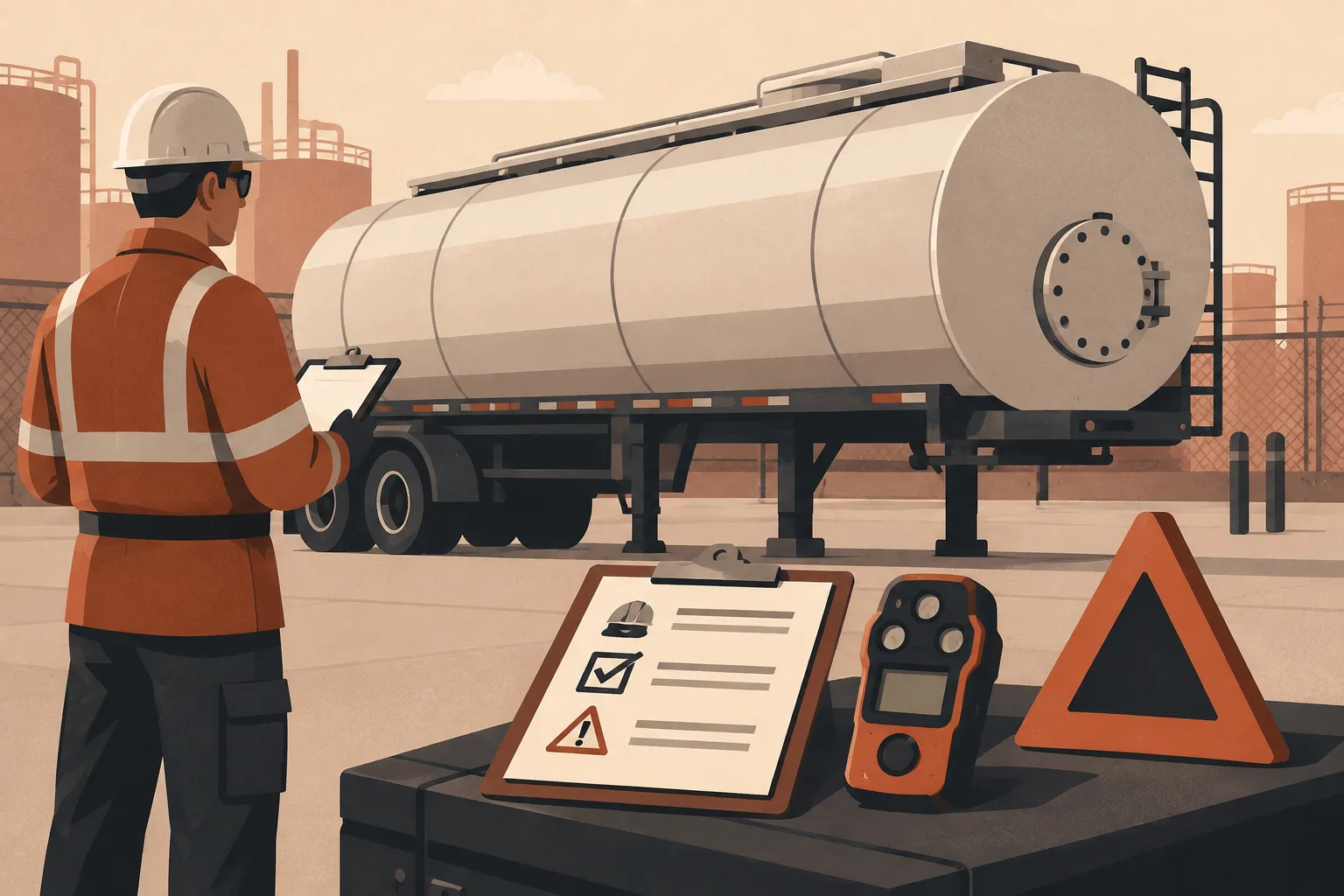
NIOSH’s 2026 Design Award: Preventing Exposure Before Workers Enter Tanks
NIOSH’s 2026 Prevention through Design award highlights robotic tank inspections. Learn how employers can prevent exposure while maintaining OSHA safeguards.
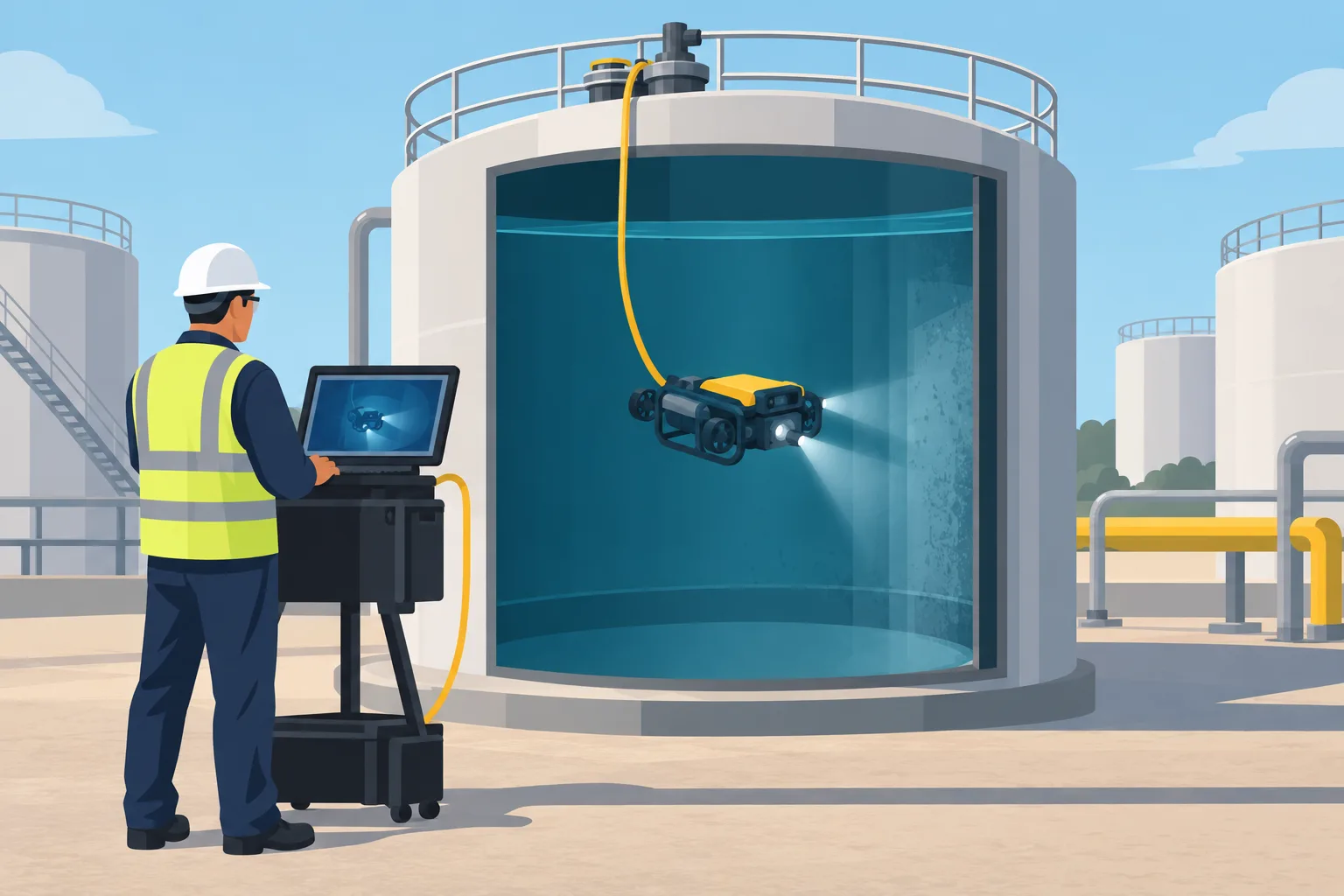

The strongest occupational health intervention may be the one that makes a hazardous task unnecessary. For employers managing industrial storage tanks, a recent NIOSH award offers a concrete example: inspect the tank without sending a worker inside.
In its September 15, 2026 announcement, the National Institute for Occupational Safety and Health (NIOSH) named Square Robot, Inc. the recipient of the 2026 Prevention through Design award. Health, Safety & Environment Review’s September 18 coverage brought further attention to the approach: submersible robots inspect industrial tanks while people remain outside.
For occupational health teams reviewing their programs this September, the important question is broader than whether to buy a robot. Can a change in equipment, layout, or work method prevent exposure before a worker needs protective equipment, medical clearance, or rescue? That question connects engineering decisions directly to employee health.
What NIOSH Recognized
NIOSH and its partners presented the award at the National Safety Council Safety Congress and Expo in Indianapolis. The award is a collaboration involving NIOSH, the American Industrial Hygiene Association, the American Society of Safety Professionals, and the National Safety Council.
According to the agency announcement, Square Robot’s autonomous technology eliminates the need for workers to enter above-ground tanks storing industrial liquids for the inspections it performs. The tanks remain sealed and in service during inspection.
That is a specific achievement, not a finding that every tank task can be automated. Inspection, cleaning, repair, equipment retrieval, and emergency response are different activities. A method that avoids entry for one activity does not establish that entry will never be necessary for another.
The announcement is also an award, not a new OSHA rule, equipment approval, or exemption from existing requirements. Employers should evaluate whether a proposed method fits their tanks, contents, inspection needs, and operating conditions rather than treating recognition as a substitute for a site-specific assessment.
Why This Is an Occupational Health Story
Confined-space work is not only an accident-prevention concern. OSHA’s permit-required confined-space standard recognizes hazardous atmospheres, engulfment, and other serious safety or health hazards. Depending on the tank and its contents, entering can expose workers to toxic substances or oxygen-deficient conditions.
Avoiding entry can remove the worker from that exposure pathway. It also changes the starting point for occupational health planning: instead of asking only whether a person can safely tolerate a demanding task with protection, ask whether the task can be redesigned.
NIOSH’s hierarchy of controls ranks controls in this order:
- Elimination: Remove the hazard.
- Substitution: Replace it with a safer alternative.
- Engineering controls: Prevent the hazard from reaching workers.
- Administrative controls: Change work practices to reduce exposure.
- Personal protective equipment: Protect the individual worker.
In a remote inspection, the hazardous material may still exist inside the tank even though human entry for that task has been eliminated. Employers should describe that distinction accurately. “No inspection entry required” is not the same as “no hazardous atmosphere exists.”
NIOSH cautions that employers should not rely on PPE alone when other effective options are available. PPE and training remain important, but they should not end the search for a more protective work method.
Existing OSHA Duties Still Matter
Evaluate the space, not just the inspection technology
For general industry, 29 CFR 1910.146 requires employers to evaluate workplaces for permit-required confined spaces. If employees will not enter permit spaces, paragraph (c)(3) requires effective measures to prevent entry. If employees will enter, paragraph (c)(4) generally requires a written permit-space program, subject to the standard’s specified alternative procedures and reclassification provisions.
Installing inspection technology does not, by itself, satisfy the conditions for reclassifying a permit space. Nor does it justify abandoning hazard communication, access controls, or procedures for work that still involves entry.
The definition of entry matters during deployment and retrieval: under paragraph (b), entry occurs as soon as any part of a person’s body breaks the plane of an opening into the permit space. A procedure described as “remote” should therefore be reviewed from setup through completion, not just while the robot is operating.
This standard covers general industry and expressly excludes agriculture, construction, and shipyard employment. Employers must identify the requirements applicable to the actual work, including relevant State Plan requirements, rather than assume one standard covers every site.
Keep respiratory protection aligned with remaining duties
OSHA’s respiratory-protection standard, 29 CFR 1910.134, prioritizes preventing atmospheric contamination through feasible engineering measures. Where respirators remain necessary, employers must maintain the applicable respiratory-protection program.
For required respirator use, medical evaluation must occur before fit testing or use. Tight-fitting respirators require fit testing before initial use and at least annually, with additional testing in specified circumstances. Automating an inspection does not cancel those obligations for workers whose other duties still require respiratory protection.
Occupational health staff should review changed job demands with safety personnel and the evaluating clinician. Do not discontinue required services solely because a purchase order describes a process as automated.
What Employers Should Do
The following steps are practical recommendations based on NIOSH’s Prevention through Design approach, not new regulatory deadlines.
1. Select an exposure-prone task for review
Bring operations, maintenance, occupational health, industrial hygiene, procurement, and workers together. Start with a recurring task involving entry, chemical handling, awkward access, or another significant exposure.
Document how the work actually happens:
- Who performs setup, the main task, cleanup, and maintenance?
- Which steps place people near the hazard?
- What exposure information and incident reports are available?
- When do workers deviate from the planned method, and why?
An inspection may be the visible task while preparation or cleanup accounts for important residual risks. Include contractors in the review rather than shifting exposure out of the direct workforce and calling it eliminated.
2. Evaluate the full operating cycle
Ask suppliers to explain the method’s limitations, not just its normal operation. For tank inspection, a qualified technical review should address compatibility with tank contents, operating conditions, deployment arrangements, and inspection coverage.
Plan for foreseeable failures before a trial:
- What happens if equipment stops or becomes stuck?
- Can retrieval occur without human entry?
- Who can stop the job when conditions change?
- How will cleaning and maintenance protect the people handling the equipment afterward?
Do not allow a failed remote task to become an improvised entry. Any subsequent entry needs a separate assessment and the applicable protective procedures. Where contractor entry is involved, OSHA’s host-employer and contractor provisions address information exchange and coordination.
3. Update occupational health coordination
Translate the revised hazard assessment into current job and service requirements. Confirm which workers still need respirator medical evaluation, fit testing, or other exposure-specific services under applicable standards.
For the operational side, BlueHive’s Occupational Health Network Strategy Guide recommends verifying actual clinic capabilities, establishing backup options, and assigning responsibility for following orders through completion. Those practices can help when changed duties require different services.
The guide is a supplementary workflow resource, not a regulatory authority. Use the applicable standard and qualified clinical advice to determine what is required; use coordination processes to ensure it gets done.
4. Measure exposure reduction, not just speed
A faster inspection is not necessarily a safer overall process. Establish a baseline and compare:
- Number of human entries needed for the defined task.
- Worker time spent on exposure-prone steps.
- Relevant industrial hygiene measurements where exposure remains possible.
- Unplanned interventions, retrieval attempts, and maintenance problems.
- Worker feedback on whether the new method introduces other hazards.
NIOSH recommends regular evaluation of controls to check effectiveness and identify improvements. A successful trial should demonstrate that risk was reduced across the work cycle, not simply moved to another team.
Make Prevention Part of Purchasing Decisions
The lesson from the 2026 award is not that every employer needs autonomous inspection equipment. It is that occupational health belongs in design and procurement decisions, before work methods become fixed.
NIOSH identifies equipment selection and process development as opportunities for stronger controls. Employers can apply that principle to the next tank project, maintenance contract, or equipment replacement.
Start with one task, assess the whole operating cycle, and verify the result. Keep protections for remaining exposures in place. The objective is not fewer safety documents—it is fewer occasions when a worker must encounter a hazard at all.
Sources
- NIOSH: 2026 Prevention through Design Award announcement, September 15, 2026
- Health, Safety & Environment Review: Square Robot wins 2026 Prevention through Design award, September 18, 2026
- NIOSH: About Prevention through Design
- NIOSH: Hierarchy of Controls
- OSHA: 29 CFR 1910.146—Permit-required confined spaces
- OSHA: 29 CFR 1910.134—Respiratory protection
- BlueHive: The Occupational Health Network Strategy Guide
Tags
Frequently Asked Questions
NIOSH and its partners presented the 2026 award to Square Robot, Inc. The agency’s September 15 announcement recognizes robotic technology that inspects above-ground industrial liquid storage tanks without workers entering them.
NIOSH describes Prevention through Design as anticipating and designing out workplace hazards in facilities, equipment, processes, and work methods. Employers can apply it by changing how a task is performed so workers avoid exposure, rather than relying only on training or protective equipment.
Not automatically. Under OSHA’s general-industry standard, employers must evaluate permit spaces and prevent unauthorized entry; avoiding entry for one inspection does not eliminate the tank’s hazards or establish that it qualifies for reclassification.
If remaining duties require respirator use, applicable OSHA respiratory-protection requirements still apply. Under 29 CFR 1910.134, medical evaluation precedes fit testing or required use, and tight-fitting respirators require fit testing before initial use and at least annually.
Following NIOSH’s recommendation to evaluate controls regularly, employers can compare entry frequency, time spent on exposure-prone tasks, and relevant exposure measurements before and after a change. Include setup, cleaning, maintenance, and equipment failures rather than measuring only normal operation.