NIOSH's Updated Worker Well-Being Questionnaire: A Free Tool Every Employer Should Know About
NIOSH updated its Worker Well-Being Questionnaire (WellBQ) in early 2026, giving employers a free, science-based tool to measure workforce health across five domains. Here's how to use it and why it matters.

With 55 percent of the U.S. workforce reporting burnout symptoms and employers losing an estimated $5 million per 1,000 employees annually to burnout-related productivity losses, the question is no longer whether worker well-being matters — it's how to measure and improve it. In February 2026, the National Institute for Occupational Safety and Health (NIOSH) updated its Worker Well-Being Questionnaire (WellBQ), a free, validated tool that gives employers a structured way to assess workforce health across five key domains.
Unlike traditional employee satisfaction surveys, the WellBQ takes a holistic approach rooted in NIOSH's Total Worker Health framework. It measures not just workplace conditions but the full spectrum of factors that influence whether workers can thrive — including their physical health, mental well-being, and circumstances outside of work.
For employers looking to move beyond compliance-driven safety programs toward genuinely supporting their workforce, the WellBQ represents one of the most practical and evidence-based starting points available in 2026.
What Is the NIOSH WellBQ?
The NIOSH Worker Well-Being Questionnaire is a comprehensive assessment instrument developed by NIOSH in collaboration with the RAND Corporation. Originally published in 2021, it was updated in February 2026 with refinements and a new Spanish-language translation.
What makes it unique is its scope. Rather than measuring only "workplace" well-being, the WellBQ measures "worker" well-being as a holistic construct. This distinction matters because research consistently shows that occupational hazards interact with personal health factors — a worker managing chronic pain, for example, faces different safety risks than one who is not.
The Five Domains
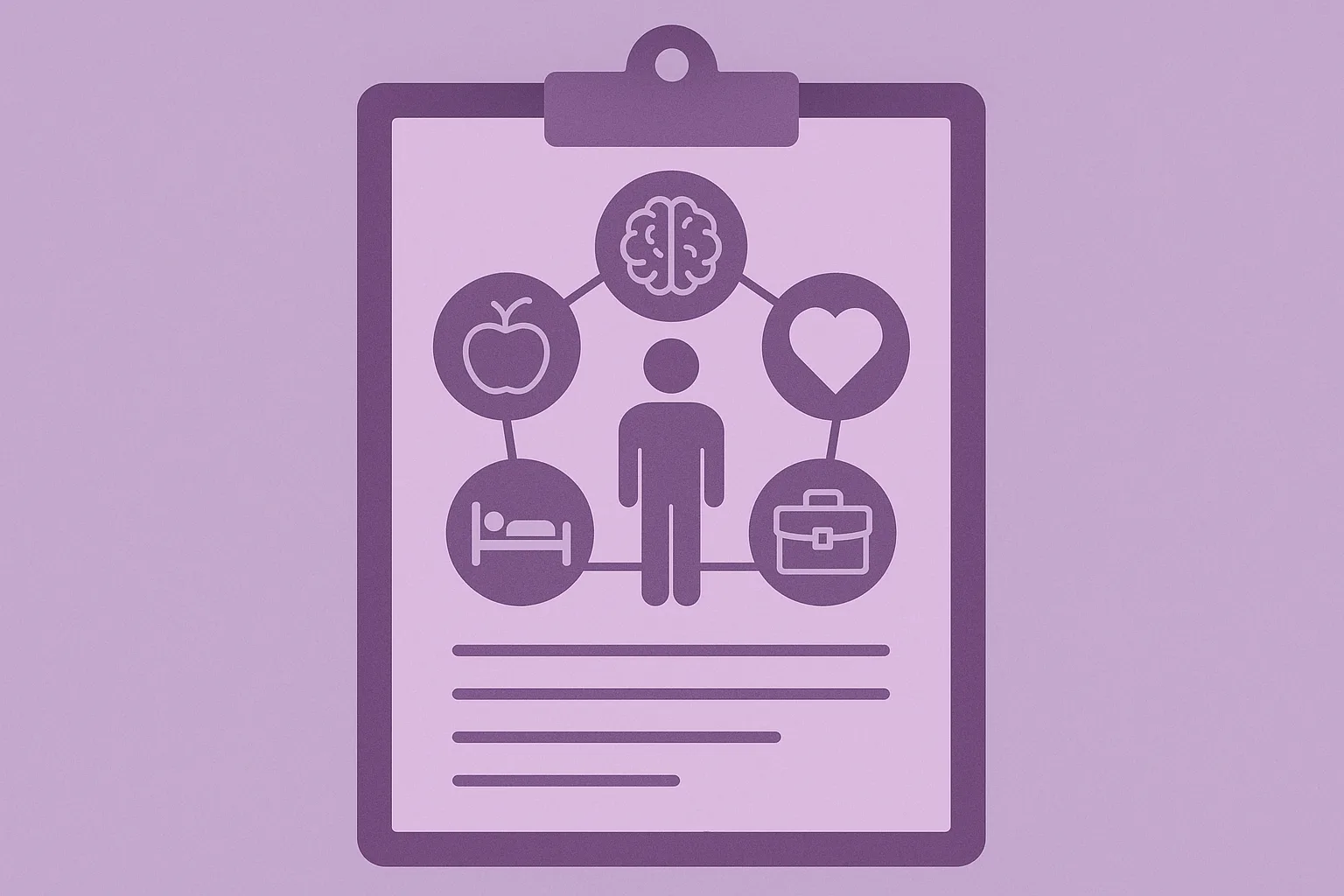
The WellBQ assesses well-being across five interconnected domains:
- Work Evaluation and Experience — How workers perceive their jobs, including engagement, meaning, autonomy, and job satisfaction
- Workplace Policies and Culture — Organizational factors such as management support, fairness, communication, and work-life balance policies
- Workplace Physical Environment and Safety Climate — Physical conditions, safety practices, and workers' perceptions of how seriously their employer takes safety
- Health Status — Self-reported physical and mental health, including chronic conditions, sleep quality, and overall vitality
- Home, Community, and Society — External circumstances that influence worker well-being, including financial security, social connections, and community resources
This five-domain approach means the WellBQ can surface issues that traditional safety audits miss entirely — such as a workforce experiencing high rates of financial stress or poor sleep, both of which are strongly associated with higher injury rates.
Why This Matters Now
Several converging trends make 2026 a critical year for employers to adopt structured well-being measurement:
The Burnout Crisis Has Intensified
According to research cited by the CDC, burnout costs employers between $3,999 and $20,683 per employee per year. Critically, 89 percent of this cost comes from presenteeism — workers who show up but cannot perform at full capacity — rather than absenteeism. Traditional sick-day tracking completely misses this enormous productivity drain.
Federal Agencies Are Signaling a Broader View of Worker Health
NIOSH's Total Worker Health program, the U.S. Surgeon General's Framework for Workplace Mental Health and Well-Being, and the International Labour Organization's dedication of World Day for Safety and Health at Work 2026 to psychosocial risks all point in the same direction: regulators and public health agencies expect employers to think beyond physical hazards.
Data-Driven Programs Outperform Guesswork
Employers who measure before they intervene see better outcomes. The WellBQ provides baseline data that allows organizations to target their wellness investments where they will have the greatest impact — rather than offering generic programs that may not address their workforce's actual needs.
How to Use the WellBQ in Your Organization
The WellBQ is free to use and can be administered without licensing fees. Here is a practical implementation roadmap:
Step 1: Download and Review the Instrument
Access the full questionnaire and scoring guide from the NIOSH WellBQ page. Review the items to determine which optional modules (such as demographic questions) are appropriate for your organization's size and context.
Step 2: Plan for Anonymity
NIOSH strongly recommends that employers protect participant anonymity throughout the process. Do not collect names or potentially identifying information alongside WellBQ responses. For smaller organizations where demographic data could identify individuals, consider omitting optional demographic items entirely.
Step 3: Choose Your Administration Method
You have two primary options:
- Self-administration: Download the PDF instrument and administer it internally through your existing survey platform
- HERO Clearinghouse: The Health Enhancement Research Organization (HERO) offers a free online portal where employers can register, receive a unique survey link, and obtain de-identified summary reports. Organizations can also opt to contribute anonymized data for benchmarking against other employers.
Step 4: Score and Interpret Results
Domain scores are calculated by averaging item scores within each domain, with higher scores indicating better well-being. The WellBQ scoring guide provides detailed instructions for reverse-coding negatively worded items and handling missing data. Results are intended to guide workplace interventions rather than rank employees.
Step 5: Act on Findings
The value of assessment lies in action. Use domain-level results to prioritize interventions:
- Low scores in Work Evaluation and Experience may indicate a need for job redesign, increased autonomy, or better communication about organizational purpose
- Low scores in Workplace Policies and Culture suggest reviewing management practices, flexibility policies, or fairness perceptions
- Low scores in Health Status point toward expanded wellness programming, EAP utilization campaigns, or chronic disease management support
- Low scores in Physical Environment and Safety Climate warrant traditional safety program improvements
- Low scores in Home, Community, and Society may call for financial wellness benefits, community resource referrals, or schedule flexibility
Connecting WellBQ to NIOSH's Impact Wellbeing Campaign
For healthcare employers specifically, the WellBQ pairs naturally with NIOSH's Impact Wellbeing Guide, released in partnership with the Dr. Lorna Breen Heroes' Foundation. The Impact Wellbeing Guide provides hospital leaders with six evidence-informed actions to improve healthcare worker well-being at the operational level:
- Conduct a review of hospital operations for professional well-being support
- Build a dedicated well-being team
- Remove barriers to seeking mental health care (including eliminating intrusive questions on credentialing applications)
- Develop communication tools for staff engagement
- Integrate well-being measures into quality improvement processes
- Create a 12-month advancement plan
The WellBQ can serve as the baseline assessment in Action 3 and provide ongoing measurement data for Action 5. Together, these tools give healthcare organizations a complete, evidence-based roadmap from assessment through sustained improvement.
What Employers Should Do
Whether you operate in healthcare, construction, manufacturing, or professional services, here are concrete steps to take now:
- Download the WellBQ from NIOSH's official page and review its five domains against your current wellness programming
- Pilot the assessment with a single department or location before organization-wide rollout
- Communicate transparently with employees about why you are measuring well-being, how their anonymity is protected, and how results will be used
- Set a baseline — administer the WellBQ now so you can measure improvement over time
- Link findings to existing programs — connect WellBQ results to your EAP, safety committee, wellness benefits, and management training
- Re-assess annually to track progress and identify emerging concerns before they become crises
- Consider the HERO Clearinghouse for benchmarking data that shows how your workforce compares to similar organizations
Beyond Assessment: Building a Culture of Well-Being
The WellBQ is a tool, not a solution in itself. Organizations that see the greatest impact from well-being measurement are those that treat the results as a genuine call to action. This means leadership engagement, resource allocation, and a willingness to change policies — not just adding a meditation app to the benefits package.
As the BlueHive white paper "Beyond Compliance" notes, compliance keeps your organization legal, but it will not guarantee a healthy, resilient workforce. The WellBQ gives employers the data they need to move from minimum requirements to meaningful investment in the people who drive their organizations forward.
The Bottom Line
The NIOSH WellBQ is free, validated, available in English and Spanish, and designed to be practical for organizations of all sizes. In a year when burnout affects more than half the workforce and federal agencies are increasingly focused on holistic worker health, there is no good reason for employers not to measure what matters.
The organizations that thrive in 2026 and beyond will be those that treat worker well-being not as a soft benefit but as a core operational metric — measured rigorously, acted on decisively, and improved continuously.
Sources
- NIOSH. "NIOSH Worker Well-Being Questionnaire (WellBQ)." Centers for Disease Control and Prevention. https://www.cdc.gov/niosh/twh/php/wellbq/index.html
- NIOSH. "NIOSH Worker Well-Being Questionnaire (WellBQ) — Full Document." Centers for Disease Control and Prevention. https://www.cdc.gov/niosh/docs/2021-110/
- NIOSH. "Impact Wellbeing Guide: Taking Action to Improve Healthcare Worker Wellbeing." Centers for Disease Control and Prevention. https://www.cdc.gov/niosh/healthcare/impactwellbeingguide/index.html
- NIOSH. "Total Worker Health." Centers for Disease Control and Prevention. https://www.cdc.gov/niosh/twh/
- CDC. "Providing Support for Worker Mental Health." Centers for Disease Control and Prevention. https://www.cdc.gov/mental-health/caring/providing-support-for-workers-and-professionals.html
- U.S. Surgeon General. "Framework for Workplace Mental Health and Well-Being." U.S. Department of Health and Human Services. https://www.hhs.gov/surgeongeneral/priorities/workplace-well-being/index.html
- International Labour Organization. "World Day for Safety and Health at Work 2026." https://www.ilo.org/topics-and-sectors/safety-and-health-work/world-day-safety-and-health-work-2026
- Gallup. "State of the Global Workplace Report." https://www.gallup.com/workplace/349484/state-of-the-global-workplace.aspx
- HERO. "Worker Well-Being Clearinghouse." Health Enhancement Research Organization. https://hero-health.org/hero-worker-well-being-clearinghouse/
- BlueHive. "Beyond Compliance: How Prioritizing Employee Well-Being Builds Stronger Workforces." https://bluehive.com/white-papers/beyond-compliance-how-prioritizing-employee-well-being-build/
Tags
Frequently Asked Questions
The NIOSH WellBQ is a free, validated assessment tool developed by the National Institute for Occupational Safety and Health and the RAND Corporation. It measures worker well-being across five domains: work evaluation and experience, workplace policies and culture, workplace physical environment and safety climate, health status, and home/community/society. Updated in February 2026 with a new Spanish translation, it is designed to help employers, researchers, and practitioners understand and improve workforce well-being.
The NIOSH WellBQ is completely free to use. It may be freely reproduced, reprinted, and distributed without licensing fees. Employers can download the instrument directly from the CDC/NIOSH website or use the HERO Worker Well-Being Clearinghouse online platform for free administration and de-identified summary reporting.
The WellBQ measures five interconnected domains: (1) Work Evaluation and Experience, covering job engagement and satisfaction; (2) Workplace Policies and Culture, covering management support and fairness; (3) Workplace Physical Environment and Safety Climate; (4) Health Status, including physical and mental health; and (5) Home, Community, and Society, covering external factors like financial security and social connections.
NIOSH strongly recommends that employers do not collect names or other potentially identifying information alongside WellBQ responses. For smaller organizations where demographic data could identify individuals, employers should consider omitting optional demographic items entirely. The HERO Clearinghouse platform provides de-identified summary reports to help maintain anonymity.
Yes. While NIOSH also offers specialized tools like the Impact Wellbeing Guide for healthcare settings, the WellBQ itself is designed for use across all industries and organization sizes. It is applicable to construction, manufacturing, professional services, healthcare, and any other sector where employers want to assess and improve worker well-being.