OSHA's Updated Hazard Communication Standard: The May 19 Deadline Is Here — What Employers Need to Know
The first major compliance deadline for OSHA's updated Hazard Communication Standard arrives May 19, 2026. Here's what changed, who must act, and how employers should prepare for the new GHS Revision 7 requirements.
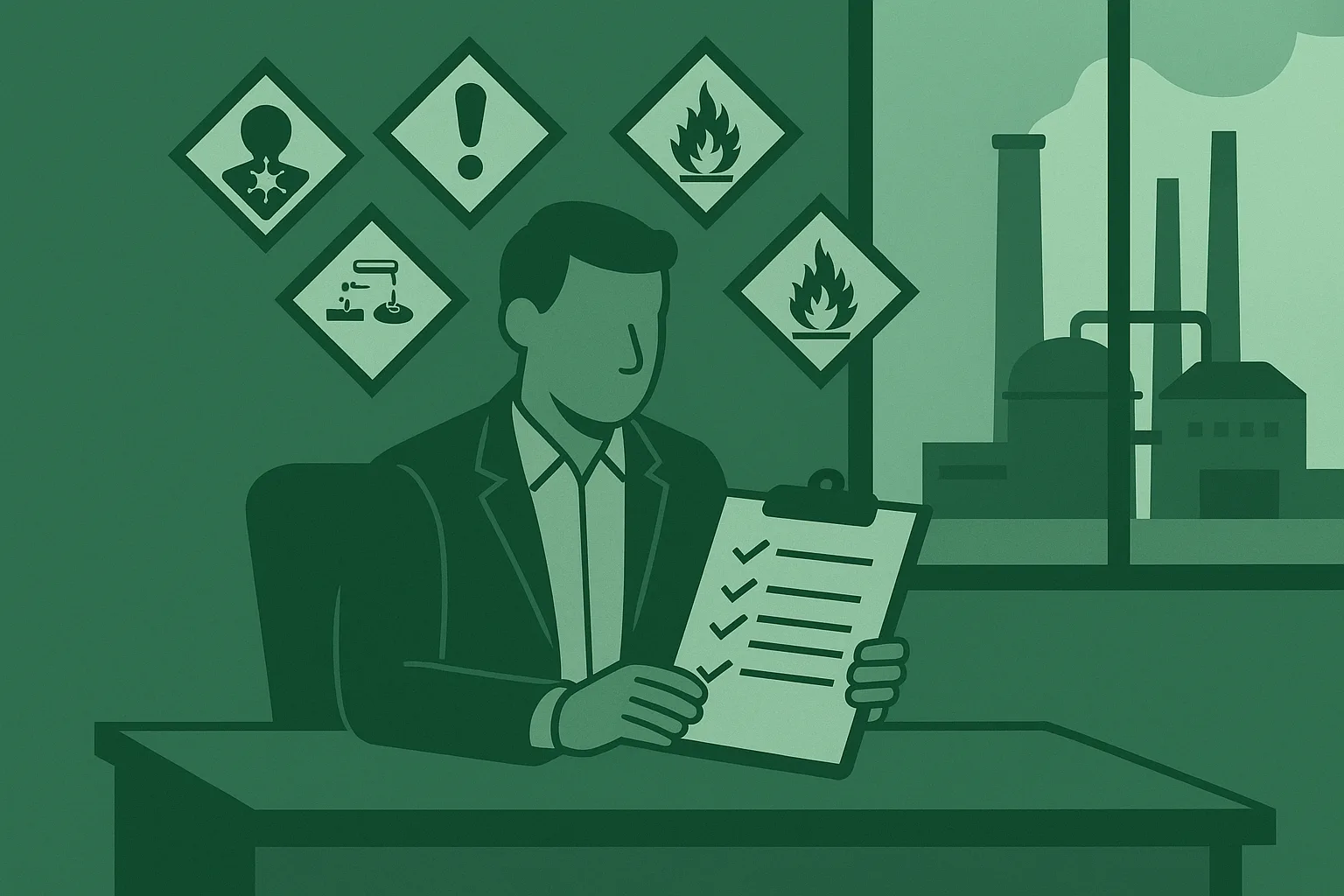

On May 19, 2026, the first major compliance deadline for OSHA's updated Hazard Communication Standard takes effect. Chemical manufacturers, importers, and distributors must have their substances evaluated, classified, and labeled under the revised standard, which aligns U.S. requirements with the 7th revision of the United Nations' Globally Harmonized System of Classification and Labelling of Chemicals (GHS).
For employers who use hazardous chemicals in the workplace — which is nearly every industry — this deadline marks the start of a compliance timeline that will reshape how chemical hazards are communicated across American workplaces. Employers who handle chemicals have until November 20, 2026, to update their own programs, labels, and training for substances. Now is the time to act.
What Changed: The 2024 HazCom Final Rule
On May 20, 2024, OSHA published a final rule updating the Hazard Communication Standard (29 CFR 1910.1200), which took effect on July 19, 2024. The update is the most significant revision to the HazCom Standard since OSHA's 2012 alignment with GHS Revision 3.
The key changes include:
New and Revised Hazard Classifications
- Desensitized explosives — a new hazard class for chemicals that have been treated to reduce sensitivity to ignition or detonation
- Chemicals under pressure — a new class addressing gases dissolved or liquefied under pressure that do not meet the existing compressed gas criteria
- Flammable gases — expanded to include two new categories: pyrophoric gases and chemically unstable gases
- Updated criteria for skin corrosion/irritation and serious eye damage/eye irritation, incorporating non-animal testing methods from GHS Revision 8
Safety Data Sheet (SDS) Updates
- Section 2 must now include information on hazardous chemical reaction products from known or anticipated uses
- Section 9 requires particle characteristics for solid chemical products
- Section 11 includes updated health hazard information requirements
- Concentration ranges for trade secret chemicals must use OSHA-prescribed ranges, ensuring the narrowest possible disclosure
Labeling Changes
- New small container labeling provisions allow abbreviated labels for containers of 100 mL or less, and minimal labeling for containers of 3 mL or less
- Chemicals released for shipment before new hazard information is known do not require relabeling, but updated labels must accompany subsequent shipments
- Bulk shipment coordination with DOT labeling — if a DOT label already appears on a bulk container, a duplicate OSHA pictogram is not required
The Compliance Timeline: Key Dates
OSHA originally set the first compliance date for January 19, 2026. However, on January 15, 2026, the agency published a compliance date extension notice in the Federal Register, pushing all deadlines back by four months. OSHA stated the extension was necessary to allow additional time to "publish guidance materials for the regulated community."
Here are the updated compliance dates:
| Deadline | Who Must Comply | Requirements |
|---|---|---|
| May 19, 2026 | Chemical manufacturers and importers | Evaluate and classify substances; update SDSs and labels |
| May 19, 2026 | Distributors | Ensure compliant SDSs and labels for substances are passed along before distribution |
| November 20, 2026 | All employers | Update workplace labels, written HazCom programs, and employee training for substances |
| November 19, 2027 | Chemical manufacturers and importers | Evaluate and classify mixtures; update SDSs and labels |
| November 19, 2027 | Distributors | Ensure compliant SDSs and labels for mixtures are passed along before distribution |
| May 19, 2028 | All employers | Update workplace labels, written HazCom programs, and employee training for mixtures |
Until each respective deadline, employers may comply with the previous 2012 standard, the updated 2024 standard, or both. After the deadline passes, only the revised standard applies.
Why This Matters: HazCom Is One of OSHA's Most-Cited Standards
The Hazard Communication Standard is not a niche regulation. It is consistently among the most frequently cited OSHA standards every year. In fiscal year 2025, HazCom violations ranked as the second most cited standard overall — and the most cited standard for general industry — with 2,546 citations issued.
Common violations include:
- No written hazard communication program — Employers are required to maintain a written plan that describes how they will implement HazCom requirements
- Inadequate employee training — Workers must be trained on the hazards of chemicals they work with, how to read labels and SDSs, and protective measures
- Missing or improper labels — All containers of hazardous chemicals must bear proper labels with the required elements
- Safety Data Sheets not accessible — SDSs must be readily available to workers during their shifts
With penalties reaching up to $16,550 per serious violation and $165,514 per willful or repeat violation in 2026, the financial stakes for noncompliance are significant.
What Employers Should Do Now
Even though the May 19 deadline applies directly to manufacturers, importers, and distributors, downstream employers should not wait until November 2026 to begin preparing. Updated SDSs and relabeled chemical containers will begin arriving at workplaces immediately after May 19. Here is a practical compliance checklist:
1. Audit Your Chemical Inventory
Conduct a thorough inventory of all hazardous chemicals used, stored, or handled at your workplace. Identify which chemicals will be affected by the updated classifications, and flag any new hazard categories that may apply to chemicals already onsite.
2. Review Incoming Safety Data Sheets
As manufacturers and importers update their SDSs, employers will begin receiving revised versions. Establish a process to:
- Compare new SDSs against existing ones to identify changes
- Update your SDS management system or binder promptly
- Flag any chemicals that have been reclassified into a higher hazard category
3. Update Your Written Hazard Communication Program
Your written HazCom program must reflect the updated standard. Key items to revise include:
- References to the updated 29 CFR 1910.1200 standard
- Descriptions of new hazard classes (desensitized explosives, chemicals under pressure)
- Updated procedures for labeling, SDS management, and employee notification
- Roles and responsibilities for managing the transition
4. Plan Employee Training
Workers must be trained on any new hazards they may encounter. Training should cover:
- New GHS pictograms, signal words, and hazard statements they may see on updated labels
- How to read updated SDS sections, particularly changes in Sections 2, 9, and 11
- New hazard classes and what they mean for workplace safety
- Emergency procedures for newly classified hazards
5. Update Workplace Labels
Secondary container labels in your facility must be updated to match the revised hazard information. Coordinate with your chemical suppliers to understand the timeline for when relabeled products will arrive.
6. Document Everything
Maintain records of your compliance activities — chemical audits, SDS updates, training sessions, program revisions — as evidence of good-faith compliance. If OSHA inspects your facility, documented efforts to implement the updated standard will demonstrate proactive safety management.
Resources for Employers
OSHA has published several resources to help employers navigate the updated standard:
- OSHA's HazCom page — the central hub for the updated standard, guidance documents, and FAQs
- OSHA Fact Sheet on the 2024 HazCom Final Rule — a summary of the major changes
- OSHA Questions & Answers on the HCS Update — detailed answers to common employer questions
- BlueHive's 2026 OSHA Changes White Paper — a comprehensive overview of all major OSHA regulatory changes affecting employers in 2026, including the HazCom update
Looking Ahead
The May 19, 2026 deadline is only the first step in a multi-year compliance transition. Employers who act now — auditing chemical inventories, establishing SDS review processes, and planning training — will be well positioned for the November 2026 employer deadline and the mixture-related deadlines in 2027 and 2028.
The Hazard Communication Standard exists to ensure that every worker who handles hazardous chemicals has access to clear, accurate information about the risks they face and how to protect themselves. With the updated standard bringing U.S. requirements into closer alignment with global practices, employers have an opportunity to strengthen their safety programs while meeting their regulatory obligations.
The deadline is here. The time to prepare is now.
Sources
- OSHA Hazard Communication Standard page
- OSHA News Release: Final Rule Updating the Hazard Communication Standard (May 20, 2024)
- Federal Register: Hazard Communication Standard Final Rule (May 20, 2024)
- OSHA HCS 2024 Compliance Date Extension Notice
- Federal Register: HCS Compliance Date Extension (January 15, 2026)
- OSHA Fact Sheet: Final Rule Modifying the HCS (OSHA 4437)
- OSHA Questions & Answers on the HCS Update
- OSHA Top 10 Most Frequently Cited Standards
- Safety+Health Magazine: OSHA Reveals Final 'Top 10' Data for FY 2025
- BlueHive: 2026 OSHA Changes White Paper
Tags
Frequently Asked Questions
May 19, 2026 is the deadline for chemical manufacturers, importers, and distributors to evaluate and classify substances, update Safety Data Sheets, and revise labels under OSHA's updated Hazard Communication Standard aligned with GHS Revision 7.
Employers must update their written hazard communication programs, workplace labels, and employee training for substances by November 20, 2026. A second deadline for mixtures falls on May 19, 2028.
The 2024 update aligns the HazCom Standard with GHS Revision 7, introducing new hazard classes like desensitized explosives and chemicals under pressure, expanded Safety Data Sheet requirements, revised labeling rules for small containers, and updated hazard classification criteria.
OSHA extended the deadline by four months on January 15, 2026, to allow the agency additional time to publish guidance documents that help manufacturers, importers, distributors, and employers implement the revised standard correctly.
Serious HazCom violations can result in penalties up to $16,550 per violation, while willful or repeat violations can reach $165,514 per violation. Hazard Communication was the second most cited OSHA standard in fiscal year 2025, with 2,546 citations issued.