Personnel File Access Laws Are Expanding in 2026: What HR Teams Need to Know
New state laws in California, Illinois, and Washington are broadening employee access to personnel records and training documentation. Here's what HR teams should do to stay compliant.
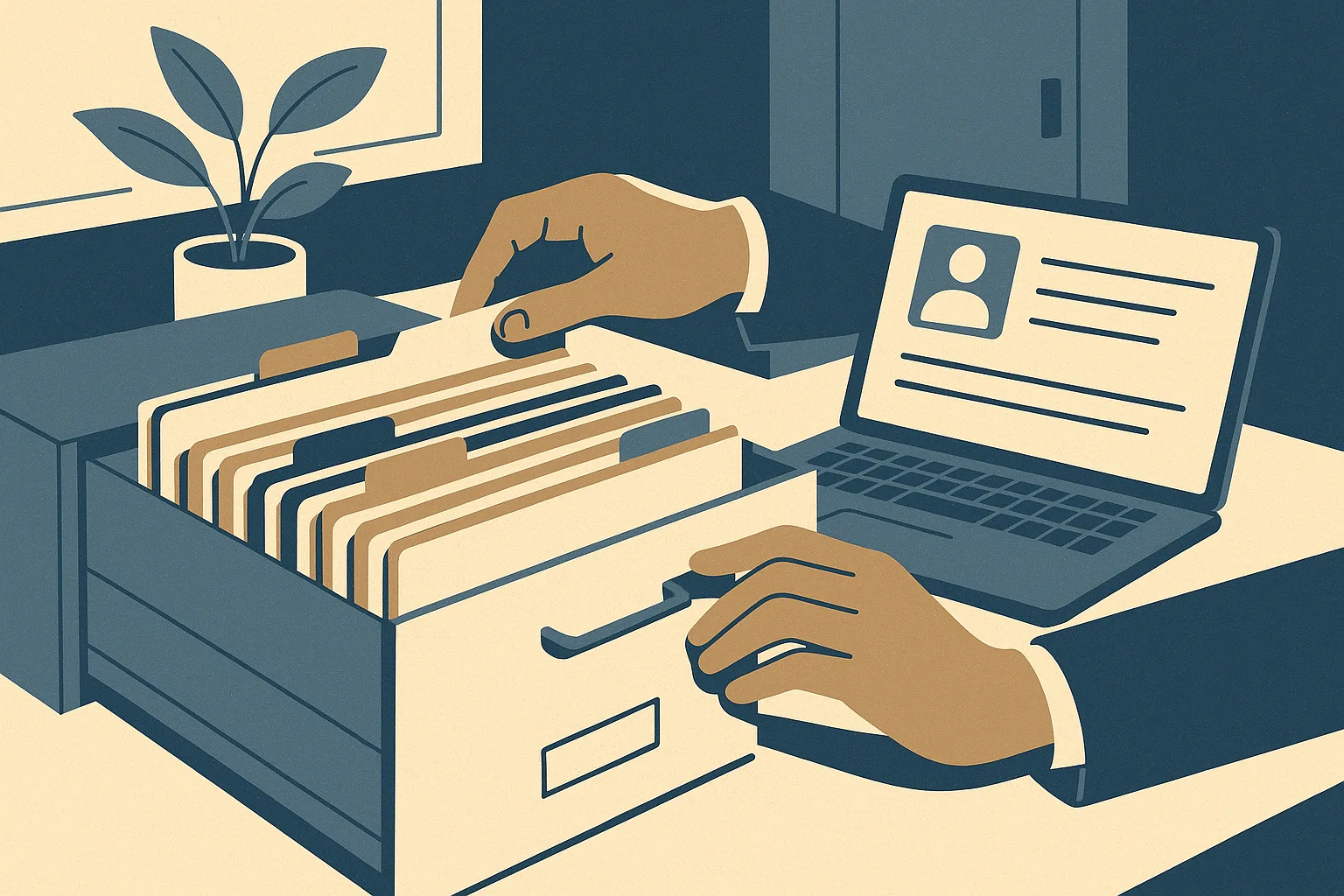

If an employee walked into HR today and asked to see their personnel file, would your team know exactly what to hand over, how quickly to respond, and which records are now legally required to be included?
For a growing number of employers, the honest answer is: probably not.
That is becoming a bigger problem. Multiple states have recently expanded the scope of employee personnel file access laws, adding new categories of records that must be disclosed, tightening response timelines, and introducing penalties for noncompliance. The changes are not theoretical — they are already in effect, and they apply to training documentation, employment contracts, and other records that many HR teams have not traditionally managed with the same rigor as a standard personnel file.
The most significant of these changes is California's Senate Bill 513, which took effect on January 1, 2026. But California is not alone. Illinois and Washington have also updated their personnel records laws, and the trend points toward broader employee access rights nationwide.
For HR operations teams, the message is clear: if your recordkeeping processes have not been updated to reflect these changes, now is the time.
California SB 513: Training Records Are Now Personnel Records
California's SB 513 amends Labor Code Section 1198.5 to explicitly include education and training records within the definition of personnel records that employees have a right to inspect and copy.
Before SB 513, the statute gave current and former employees the right to inspect records "relating to the employee's performance or to any grievance concerning the employee." Training records occupied a gray area — some employers included them in the personnel file, others stored them separately in a learning management system (LMS) or manager's files, and many did not track them with the detail that a formal personnel record requires.
SB 513 eliminates that ambiguity. As Littler Mendelson noted, the law "quietly but significantly expands what California employers must track in personnel files and share with employees."
What Training Records Must Include
If an employer maintains education or training records, those records must now contain all of the following under the amended Section 1198.5(a)(2):
- The name of the employee
- The name of the training provider
- The duration and date of the training
- The core competencies of the training, including skills in equipment or software
- The resulting certification or qualification
This applies to every type of training an employer tracks — compliance training such as sexual harassment prevention and workplace violence, safety training required by Cal/OSHA, onboarding programs, leadership development, software training, and any other education or skills programs the employer records.
What SB 513 Does Not Require
An important clarification: SB 513 does not require employers to start maintaining training records if they do not already do so. As the California Chamber of Commerce explained, "SB 513 does NOT require employers to begin retaining records, nor does it require employers to create training records that do not currently exist."
However, there is a catch. Employers are already legally required to maintain certain training records under existing law — sexual harassment prevention training records under Government Code Section 12950.1, workplace violence prevention training under SB 553, and Cal/OSHA safety training documentation. For any training records an employer already keeps, whether required by law or maintained voluntarily, SB 513 now dictates the format, content, and access rules.
Response Timelines and Penalties
The existing timelines under Labor Code Section 1198.5 continue to apply:
- Employers must respond to a written personnel records request within 30 calendar days, extendable to 35 days by mutual written agreement.
- Former employees may make one request per year.
- Employers may charge the actual cost of reproduction for copies.
- Employers may require the use of an employer-provided request form, which must be made available upon verbal request.
The penalty for noncompliance is $750 per violation under Section 1198.5(k). Employees may also seek injunctive relief and recover costs and reasonable attorney's fees.
Illinois: Electronic Requests and Broader Scope
California is not the only state tightening personnel file access rules. Illinois amended its Personnel Records Review Act (PRRA) to modernize how employees request access to their files.
Key changes in the updated PRRA include:
- Electronic requests are now explicitly permitted. Employees can submit requests for personnel records via email, text message, or other electronic communication — not just on paper.
- Expanded scope of accessible records. The law now explicitly includes handbooks and employment contracts as part of the personnel file that employees may request.
- Format flexibility. Employers must provide records in a reasonable format requested by the employee, including electronic copies.
- Seven-day response window. Employers must comply within seven working days of receiving a request, with a possible extension of seven additional working days.
- Two requests per year. Employers must permit at least two requests per calendar year from each employee.
For HR teams managing multi-state workforces, the Illinois changes introduce a significantly shorter compliance window than California's 30-day standard.
Washington: Shorter Deadlines
Washington State has also tightened its rules. Employers now have 21 calendar days to produce personnel files upon request — replacing what was previously a less-defined "reasonable time" standard. The shorter, fixed deadline creates a measurable compliance obligation and reduces the room for ambiguity that previously existed.
The Bigger Picture: A National Trend
There is no federal law requiring private employers to give employees access to their personnel files. But the state-by-state landscape is shifting steadily toward greater transparency and access.
According to ADP's 2026 state compliance overview, dozens of states now have some form of personnel file access requirement on the books, and several are expanding these requirements:
- More record categories are being covered. Training records (California), handbooks and contracts (Illinois), and pay data documentation are increasingly treated as part of the personnel file.
- Response timelines are getting shorter. States are moving from vague "reasonable time" standards to fixed-day deadlines.
- Electronic access is becoming the norm. Employees increasingly expect — and the law increasingly permits — digital requests and digital delivery of records.
- Penalties are becoming more specific. Fixed per-violation penalties (like California's $750 fine) give employees a clear enforcement mechanism.
For multi-state employers, the patchwork nature of these laws creates operational complexity. A process that complies with California's 30-day window may violate Illinois's seven-day requirement. A training record format that satisfies one state's requirements may be incomplete under another's.
What Employers Should Do Now
The expanding scope of personnel file access laws requires HR teams to treat recordkeeping as active compliance infrastructure, not a back-office afterthought. Here are the practical steps to take:
1. Audit Your Training Records
If you operate in California, review every category of training your organization tracks — compliance, safety, onboarding, skills development, leadership — and confirm that each record includes the five data points required by SB 513: employee name, training provider, date and duration, core competencies, and any resulting certification.
If your records are stored across multiple systems (an LMS, spreadsheets, manager files, paper folders), this is the time to centralize them.
2. Update Your Request-Response Process
Map out how your organization handles personnel file requests today. Key questions to answer:
- Who receives the request?
- What is the current average response time?
- Do you have a standard request form?
- Can you produce records within the shortest applicable deadline (seven working days in Illinois, 21 days in Washington, 30 days in California)?
- Do you have a process for electronic requests and electronic delivery?
If the answer to any of these is "I'm not sure," that is the compliance gap you need to close first.
3. Know Your State-Specific Requirements
Do not assume that a single recordkeeping policy covers all your locations. Build a matrix of personnel file access requirements for every state where you have employees, including:
- Which records are covered
- Who can request access (current employees, former employees, authorized representatives)
- Response timelines
- Allowable fees for copies
- Penalties for noncompliance
4. Train Your HR Staff
Front-line HR staff and managers need to know that personnel file requests have legal deadlines. They also need to know what records are now covered — training documentation is no longer optional to include if it exists. Designate a point person or team responsible for fulfilling requests, and document the process.
5. Review Your Retention Policies
California requires personnel records, including training records, to be retained for at least three years after an employee's separation. Other states have their own retention periods. If you do not have a documented retention schedule, or if your schedule has not been updated to reflect the expanded definition of personnel records, prioritize this.
For HR teams looking for a structured approach to compliance audits and year-end recordkeeping readiness, BlueHive's white paper The Year-End Compliance Reset: What HR Needs in Place Before 2026 Arrives offers a practical framework and checklist for closing documentation gaps before they become compliance risks.
The Process Improvement Opportunity
Expanded personnel file access laws are a compliance obligation, but they are also an opportunity to modernize HR recordkeeping. Organizations that respond to these changes by centralizing records, digitizing paper files, standardizing training documentation, and building repeatable request-response workflows will not only reduce their legal exposure — they will also build a more efficient, transparent HR operation.
The alternative is waiting for an employee request, a Labor Commissioner complaint, or a $750 penalty to expose the gaps.
Sources
- California Labor Code Section 1198.5 (as amended by SB 513) — Official statute text
- California Senate Bill 513 — Bill Navigation — Official bill text and legislative history
- Littler Mendelson — "California Employers, Heads Up: Senate Bill 513 Just Changed the Rules on Personnel Files" — Legal analysis of SB 513
- CalChamber — "New Law Prescribes How to Maintain Existing Training Records" — Employer guidance on SB 513
- Illinois Department of Labor — Personnel Records Review Act FAQ — Official FAQ on Illinois PRRA
- HR Works — "Illinois Updates Its Personnel File Access Law" — Summary of Illinois PRRA amendments
- ADP — "48 State-Specific HR Compliance Changes for 2026" — Multi-state compliance overview
- BlueHive — The Year-End Compliance Reset: What HR Needs in Place Before 2026 Arrives — White paper on compliance recordkeeping framework
Tags
Frequently Asked Questions
No. California SB 513 does not require employers to begin creating training records that do not currently exist. However, if an employer already maintains education or training records, those records must now include specific information — the employee's name, the training provider, date and duration, core competencies covered, and any resulting certification — and must be made available to employees as part of their personnel file under Labor Code Section 1198.5.
Under California Labor Code Section 1198.5, employers must make personnel records available for inspection or provide copies within 30 calendar days of receiving a written request. The employer and employee may agree in writing to extend the deadline up to 35 calendar days. Failure to comply can result in a penalty of $750 per violation.
There is no federal law requiring private employers to grant personnel file access. However, many states have enacted their own requirements, including California, Illinois, Washington, Massachusetts, Connecticut, Maine, Minnesota, Oregon, and others. The specific rules — including which records are covered, response timelines, and copying fees — vary significantly by state.
Illinois amended its Personnel Records Review Act to explicitly allow electronic requests for personnel records via email or other electronic communication. The updated law also clarifies what employees must include in their request and expands the scope of accessible records to include handbooks and employment contracts. Employers must respond within seven working days.
Under California Labor Code Section 1198.5(k), an employer who fails to permit inspection or provide copies of personnel records within the required timeframe may face a penalty of $750 per violation. Employees can also seek injunctive relief and recover costs and reasonable attorney's fees.