Tick Bite ER Visits Hit a 10-Year High in Parts of the U.S.: What Employers Must Do to Protect Outdoor Workers
CDC data show emergency room visits for tick bites in 2026 are the highest for this time of year since 2017 in most regions. NIOSH's July 2026 guidance urges employers to protect outdoor workers from Lyme disease, alpha-gal syndrome, and other tickborne illnesses. Here's what employers need to know.

If your workforce includes anyone who spends time outdoors — on construction sites, along utility corridors, in parks, or on farmland — the 2026 tick season demands your attention. The numbers coming out of federal health agencies this summer are alarming, and they carry real implications for employer liability, workplace safety programs, and OSHA recordkeeping.
In July 2026, NIOSH Director John Howard used his column in the agency's monthly eNews bulletin to focus on one topic: protecting workers from tickborne diseases. That emphasis was not arbitrary. The CDC's Tick Bite Data Tracker shows emergency room visits for tick bites are at a 10-year high in some parts of the country, and a CDC media statement confirmed that weekly ER visits for tick bites are higher than usual in 2026 — the highest for this time of year since 2017 in every region except the South Central United States.
For occupational health professionals and employers, this is not just a public health story. It is a workplace safety issue with regulatory consequences.
Why 2026 Is an Unusually Heavy Tick Season
The surge in tick activity this year has been building since early spring. CDC's April 23, 2026 statement reported that weekly rates of ER visits for tick bites were running at their highest level for that point in the year since 2017 across most regions. The trend is not limited to traditionally high-risk areas: tick populations are expanding geographically, driven by milder winters, warmer early springs, and shifting land use patterns that create more habitat for ticks and their hosts.
An estimated 31 million Americans are bitten by ticks each year. Among the diseases they transmit, Lyme disease remains the most common, with approximately 476,000 patients treated annually — far higher than the more than 80,000 cases that are formally reported to the CDC each year. The gap reflects persistent underreporting and underdiagnosis that has long complicated the public health picture.
But Lyme disease is no longer the only tickborne threat making headlines.
Alpha-Gal Syndrome: A Growing Occupational Health Risk
One of the most striking developments in tickborne disease research is the rapid rise of alpha-gal syndrome (AGS), a potentially life-threatening allergic reaction to red meat triggered primarily by bites from the lone star tick. Unlike most food allergies, AGS symptoms — which can include hives, gastrointestinal distress, and anaphylaxis — typically appear several hours after eating meat, making it exceptionally difficult to diagnose.
The numbers are striking. Researchers at Virginia Commonwealth University documented a roughly 100-fold increase in positive alpha-gal antibody test results in the United States between 2013 and 2024, in findings the researchers describe as preliminary. The CDC estimates that as many as 450,000 Americans may be affected, with more than 110,000 suspected cases identified between 2010 and 2022.
For employers, AGS is not simply a dietary concern. Workers with undiagnosed alpha-gal syndrome may experience severe allergic reactions on the job, particularly in work environments where meals or break-time food include red meat. The condition can affect workplace productivity, increase absenteeism, and create potential liability if the underlying tick exposure occurred at work. As the lone star tick's range expands beyond the Southeast into the Northeast and Midwest, the pool of workers at risk continues to grow.
Who Is at Risk: The Outdoor Workforce
NIOSH's July 2026 column underscores that tickborne diseases are fundamentally an occupational health issue. According to Bureau of Labor Statistics data cited by NIOSH, about 33% of U.S. workers have routine outdoor exposure as part of their job. That places millions of people in high-risk occupations, which NIOSH's tickborne disease page lists as including:
- Construction
- Landscaping and grounds maintenance
- Forestry and logging
- Farming and agriculture
- Park and wildlife management
- Highway and road maintenance
- Utility line installation and repair
- Oil field operations
- Railroad work
- Land surveying
The CDC and NIOSH also highlight a significant equity dimension. Nearly half of U.S. outdoor workers identify as Hispanic, and research suggests that Hispanic workers may face increased risk of work-related tick exposure due to the types of outdoor work they perform and potential language barriers that can limit access to safety training.
Tick Bites as Recordable Work-Related Injuries
One of the most important — and frequently overlooked — points in the NIOSH guidance is that tick bites occurring on the job are considered reportable work-related injuries. OSHA's tickborne disease control and prevention page says the same: tick bites that occur within the work environment are work-related injuries and must be recorded when they meet the recording criteria. Under OSHA's recordkeeping standard (29 CFR Part 1904), employers must evaluate whether a tick bite or resulting illness meets the criteria for recording on the OSHA 300 Log.
Specifically, a tickborne illness is recordable if:
- The tick bite occurred in the work environment (i.e., during the performance of work duties or at the worksite).
- The resulting illness requires medical treatment beyond first aid (such as prescription antibiotics), causes days away from work, or results in restricted duty or job transfer.
This means that a landscaping worker who develops Lyme disease after a tick bite on the job, and who is prescribed a course of doxycycline, has an OSHA-recordable case. OSHA's tickborne disease standards page points to a 2014 letter of interpretation confirming that prescribing antibiotics prophylactically after a work-related tick bite is medical treatment, which makes the case recordable. Employers who fail to record such cases risk citations for recordkeeping violations.
The Broader OSHA Framework
No OSHA standard is specific to ticks, but several general requirements apply to outdoor tick exposure:
- General Duty Clause (Section 5(a)(1)) — employers must furnish a workplace free from recognized hazards likely to cause death or serious physical harm; OSHA lists tickborne disease among the hazards this clause can reach.
- 29 CFR 1910.132 — where PPE such as protective clothing is used to control a hazard, the employer must assess the hazard and ensure the PPE is adequate and maintained.
- 29 CFR 1904.39 — a work-related fatality must be reported to OSHA within 8 hours, and an in-patient hospitalization within 24 hours; a severe tickborne illness or anaphylaxis from alpha-gal syndrome could trigger this duty.
- Section 11(c) and 29 CFR 1904.35 — workers who report tick bites or symptoms are protected from retaliation.
What Employers Should Do Now
NIOSH and OSHA provide clear, actionable guidance for protecting outdoor workers from tickborne diseases. Here is what employers should be doing during this record-setting tick season:
1. Reduce Tick Habitats at Worksites
Where possible, modify the work environment to minimize tick exposure:
- Remove leaf litter from work areas.
- Mow or cut back tall grass and brush around job sites.
- Discourage deer activity near work zones, as deer are primary hosts for blacklegged ticks.
- Avoid scheduling work in heavily wooded or overgrown areas during peak tick season when alternatives exist.
2. Provide Protective Clothing and Repellents
Employers should supply or require:
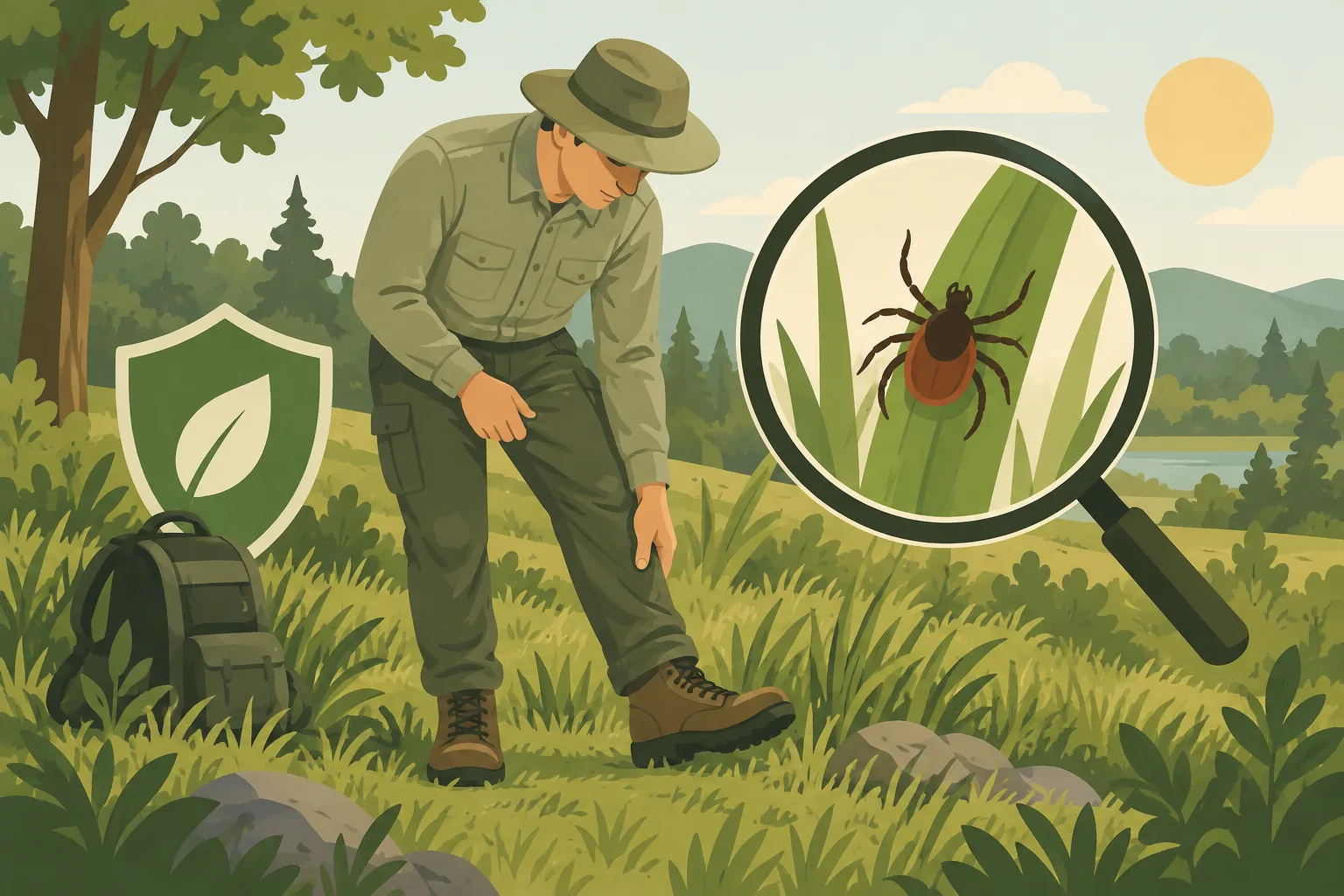
- Light-colored, long-sleeved shirts and long pants (tucked into boots or socks) to make ticks easier to spot and reduce skin exposure.
- EPA-registered insect repellents containing DEET (OSHA suggests at least 20%), picaridin, IR3535, oil of lemon eucalyptus, or 2-undecanone.
- Permethrin (0.5%) for treating clothing and gear. Permethrin kills ticks on contact but must not be applied directly to skin.
- Hats for workers in wooded or brushy environments.
3. Train Workers on Tickborne Disease Risks
Training should be accessible, provided in workers' primary languages, and cover:
- How tickborne diseases are transmitted.
- Which tickborne diseases are prevalent in the local region.
- How to recognize symptoms of Lyme disease, Rocky Mountain spotted fever, alpha-gal syndrome, and other conditions.
- Proper tick removal techniques.
- The importance of reporting tick bites to supervisors.
NIOSH offers a Fast Facts card, Protecting Yourself from Ticks and Mosquitoes, in multiple languages, and its tickborne disease page is available in Spanish; both can be incorporated into existing safety training programs.
4. Make Tick Checks and Removal Part of the Routine
Encourage workers to:
- Conduct full-body tick checks at the end of each outdoor work shift, focusing on the hair, underarms, and groin.
- Shower or bathe within two hours of outdoor exposure.
- Remove attached ticks immediately using fine-tipped tweezers, grasping the tick close to the skin and pulling straight out.
- Report any tick bites to their supervisor and seek medical attention if a rash, fever, or other symptoms develop.
Employers should keep tick removal kits (fine-tipped tweezers, antiseptic wipes, sealable bags for tick identification) readily available at outdoor worksites.
5. Update OSHA Recordkeeping Procedures
Ensure that supervisors and safety managers understand that work-related tick bites resulting in medical treatment, lost time, or restricted duty must be recorded on the OSHA 300 Log. Update internal incident reporting procedures to explicitly include tickborne disease exposures, and train first-line supervisors to recognize when a tick bite meets recording criteria.
Looking Ahead: A Changing Risk Landscape
The 2026 tick season is not an anomaly. Climate scientists and entomologists have been warning for years that rising temperatures and shifting ecosystems are expanding tick habitats into areas where these pests were once rare. The geographic range of both the blacklegged tick (the primary vector for Lyme disease) and the lone star tick (the primary vector for alpha-gal syndrome) has steadily moved northward and westward.
For employers, this means that tickborne disease prevention can no longer be treated as a concern limited to the Northeast or rural areas. Construction crews in the Midwest, utility workers in the Mid-Atlantic, and even grounds maintenance teams in suburban environments now face meaningful exposure risks.
Integrating tickborne disease prevention into existing workplace safety programs — alongside heat illness prevention, sun protection, and other outdoor hazard controls — is the most practical path forward. The cost of prevention is minimal compared to the cost of a recordable illness, a workers' compensation claim, or a serious medical event like anaphylaxis from undiagnosed alpha-gal syndrome.
As NIOSH Director John Howard wrote in the July 2026 eNews: ticks may be small, but they pack a mighty bite. Employers who take that warning seriously — and act on it now — will be better positioned to protect their workers and their organizations through an unusually heavy tick season.
Sources
- NIOSH eNews, July 2026: Tick Talk — Protecting Workers From Tickborne Diseases
- NIOSH — Tickborne Diseases in Workers
- CDC — Tick Bite Data Tracker
- CDC Media Release — CDC Data Show Weekly ER Visits for Tick Bites Higher than Usual (2026)
- CDC — About Alpha-Gal Syndrome
- CDC — About Lyme Disease
- CDC — Lyme Disease Facts and Statistics
- CDC — Where Ticks Live
- CDC — After a Tick Bite
- CDC — Permethrin-Treated Clothing and Gear
- NIOSH Fast Facts Card — Protecting Yourself from Ticks and Mosquitoes (2010-119)
- OSHA — Tickborne Disease Safety and Health Topics
- OSHA — Tickborne Disease: Control and Prevention
- OSHA — Tickborne Disease: Standards
- OSHA — Recordkeeping Standard, 29 CFR Part 1904
- EPA — Find the Repellent That Is Right for You
- Bureau of Labor Statistics — Outdoor Workers (2024)
- VCU Health — Explosive Rise in Tick-Linked Meat Allergy Across the U.S.
- BlueHive — 2026 OSHA Changes: What Has Taken Effect, What Is Coming
Tags
Frequently Asked Questions
Yes. According to NIOSH and OSHA recordkeeping standards under 29 CFR Part 1904, tick bites that occur while an employee is performing work duties are considered reportable work-related injuries. If the resulting illness requires medical treatment beyond first aid, days away from work, or restricted duty, it must be recorded on the employer's OSHA 300 Log.
Outdoor workers in landscaping, construction, forestry, farming, park and wildlife management, utility line work, highway maintenance, oil field work, and railroad work face the highest risk. According to the Bureau of Labor Statistics, about 33% of U.S. workers have routine outdoor exposure, and nearly half of outdoor workers identify as Hispanic, placing them at increased risk.
Alpha-gal syndrome is a potentially life-threatening allergic reaction to red meat triggered by bites from the lone star tick. The CDC estimates as many as 450,000 Americans may be affected, and Virginia Commonwealth University researchers report a roughly 100-fold increase in positive alpha-gal antibody test results between 2013 and 2024 (preliminary data). Symptoms appear hours after eating red meat, making it difficult to diagnose. Outdoor workers are at elevated risk due to frequent tick exposure.
NIOSH recommends employers reduce tick habitats at worksites by mowing tall grass and removing leaf litter, provide workers with EPA-registered insect repellents and permethrin for clothing, supply protective clothing such as light-colored long-sleeved shirts and long pants, train workers on regional tickborne disease risks and symptoms, and make tick removal supplies readily available.
CDC reported in April 2026 that, in every region except the South Central United States, weekly rates of emergency room visits for tick bites were the highest for that time of year since 2017, and NIOSH's July 2026 eNews says ER visits are at a 10-year high in some parts of the country. CDC estimates about 31 million people are bitten by a tick each year.