Workers' Memorial Day 2026: What the Latest Fatality Data Tells Employers About the State of Workplace Safety
As OSHA marks Workers' Memorial Day on April 28 with its first-ever candlelight vigil, new BLS data shows 5,070 workers died on the job in 2024. Here's what the numbers reveal about persistent risks and what employers should do now.

Every April 28, the occupational health community pauses to remember the workers who went to their jobs and never came home. Workers' Memorial Day — observed on the anniversary of the Occupational Safety and Health Act of 1970 taking effect — is both a solemn remembrance and a call to action. In 2026, that call carries particular urgency.
The most recent data from the Bureau of Labor Statistics shows that 5,070 workers died from on-the-job injuries in 2024 — roughly one death every 104 minutes. While the numbers represent a modest improvement from the year before, they also make clear that the pace of progress in reducing workplace fatalities has slowed to a crawl, even as enforcement resources continue to shrink.
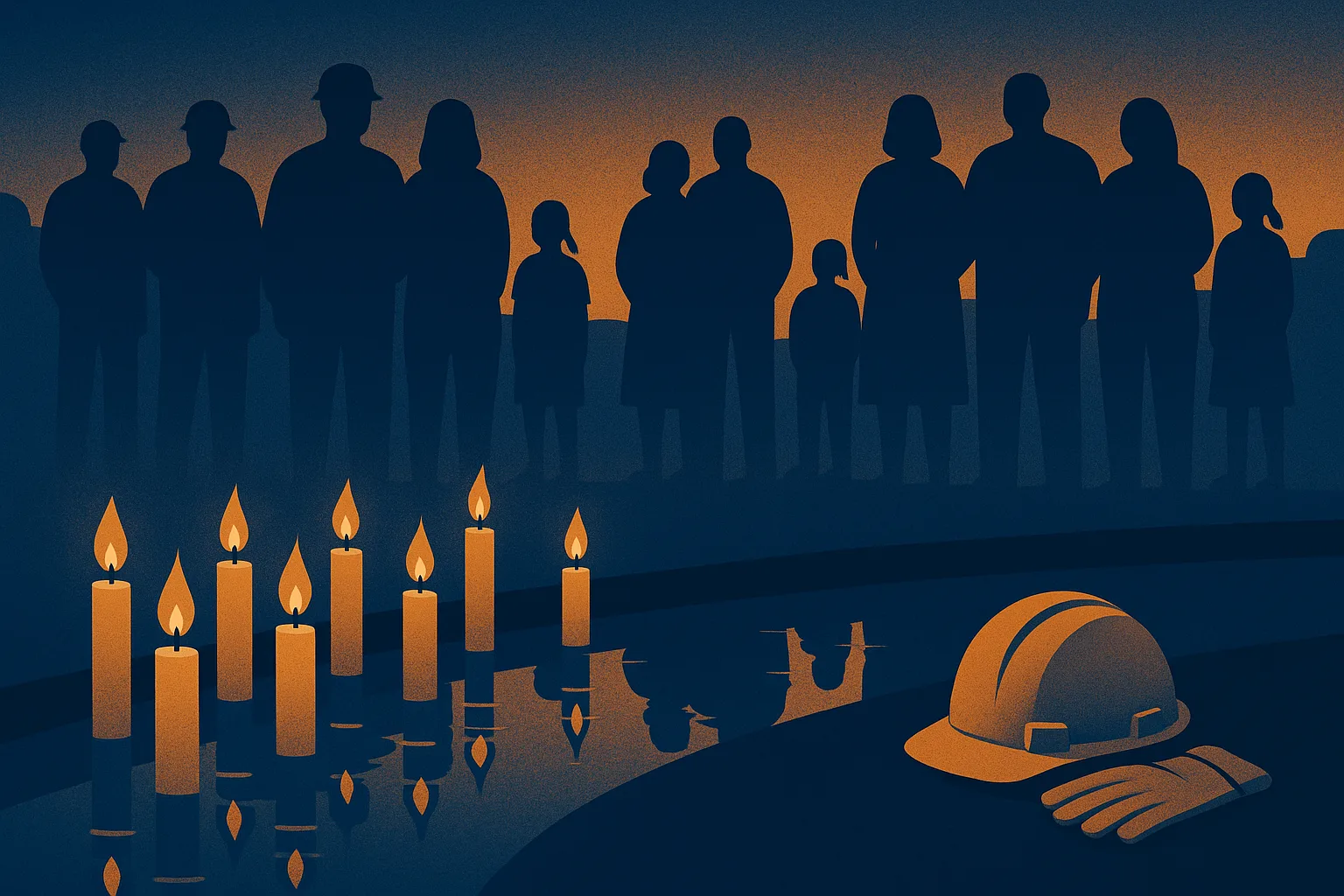
OSHA is marking the occasion with an unprecedented week of events from April 20 through 24, culminating in the agency's first-ever candlelight vigil at the Lincoln Memorial Reflecting Pool. For employers, the week should serve as more than a moment of reflection — it should prompt a serious look at what the latest data says about where workers are dying, why, and what can be done about it.
The 2024 Fatality Numbers: A Modest Decline, Not a Victory
The BLS Census of Fatal Occupational Injuries for 2024, released in February 2026, recorded 5,070 fatal work injuries — a 4% decrease from the 5,283 deaths reported in 2023. The fatal injury rate dropped to 3.3 per 100,000 full-time equivalent (FTE) workers, down from 3.5 in 2023.
Those numbers sound like progress, and in absolute terms they are. But context matters. The long-term trend in workplace fatality rates has essentially flatlined over the past two decades, after dramatic declines in the 1970s and 1980s following the creation of OSHA. In the early 1970s, the workplace fatality rate was approximately 14 per 100,000 workers. Today, it hovers between 3.3 and 3.7 — a remarkable achievement historically, but one that has stalled.
And the raw numbers tell a blunt story: more than 5,000 American workers are still dying on the job every year. As the AFL-CIO's 2025 "Death on the Job" report documented, when occupational diseases are included, the toll climbs to an estimated 135,304 workers who die annually from job-related causes — approximately 385 deaths every day.
Where Workers Are Dying: Persistent Patterns
The 2024 BLS data reveals that the leading causes of workplace death have remained stubbornly consistent:
- Transportation incidents remain the number-one killer, accounting for 38.2% of all fatal work injuries (1,937 deaths). Roadway incidents involving motorized land vehicles accounted for 1,146 of those deaths, down 8.5% from 2023. However, pedestrian incidents involving vehicles rose 19%, to 369 fatalities.
- Falls, slips, and trips claimed 844 lives, a 4.6% decrease from 885 in 2023. Falls remain the leading cause of death in construction and extraction occupations, which recorded 1,032 total fatalities — 370 of them from falls.
- Exposure to harmful substances or environments accounted for 687 deaths, a notable 16.2% decline driven largely by a decrease in workplace drug and alcohol overdose deaths (410 in 2024, down from 512 in 2023).
- Violence and other injuries by persons or animals resulted in 733 deaths, including 470 homicides and 263 suicides.
Demographic Disparities Persist
The data also highlights ongoing disparities in who is most at risk:
- Hispanic and Latino workers accounted for 1,229 fatalities, with a fatality rate of 4.3 per 100,000 FTE workers — well above the national average of 3.3. Notably, 68.5% of Hispanic or Latino worker fatalities involved foreign-born workers.
- Black or African American workers saw a decrease in both the number and rate of fatalities compared to 2023, but the rate (3.4 per 100,000) remains above the overall national average.
- Women accounted for 413 workplace fatalities (8.1% of the total) but represented 15.3% of all workplace homicides (72 deaths), a persistent pattern that underscores the outsized risk of workplace violence for women.
OSHA's Enforcement Gap
The fatality data takes on additional weight when considered alongside the state of OSHA's enforcement capacity.
As a BlueHive compliance timeline notes, OSHA's fiscal year 2026 budget reflects approximately $50 million in cuts and roughly 233 fewer staff, with enforcement expected to shift further toward high-hazard industries. Federal OSHA inspector ranks dropped to 629 compliance officers by the end of September 2025 — down from 812 at the close of fiscal year 2024 and 878 in fiscal year 2023.
Combined federal and state OSHA programs are projected to field approximately 1,720 inspectors covering 144 million workers in 2026, a ratio of roughly one inspector for every 84,000 workers. At current staffing levels, it would take over a century to inspect every workplace under OSHA's jurisdiction just once.
The practical implication is clear: the vast majority of American workplaces will never see an OSHA inspector in any given year. As BlueHive's 2026 OSHA changes white paper observes, this reality places greater responsibility for compliance on employers themselves, particularly in industries that fall outside of OSHA's highest-priority enforcement targets.
Federal OSHA fatality investigations also declined in 2024, with the agency investigating 826 worker deaths — down 11% from 928 in 2023. While targeted enforcement programs, including the Heat National Emphasis Program and fall prevention campaigns, have contributed to measurable declines in specific categories, the overall enforcement footprint continues to contract.
OSHA's 2026 Workers' Memorial Day Observance
Against this backdrop, OSHA's 2026 Workers' Memorial Day observance is both a remembrance and a renewed call for workplace safety commitment. On April 14, the Department of Labor announced a week of events honoring workers who lost their lives on the job:
- April 20–22: Stand Up for Safety and Health training sessions, available both in-person at the Department of Labor in Washington, D.C., and virtually
- April 21–22: Workers Memorial Safety Summit, featuring exhibits, agency discussions, and conversations with families of fallen workers
- April 23: Workers Memorial Day ceremony and wreath-laying at the Department of Labor (1:00–3:30 p.m. ET), followed by the agency's first-ever candlelight vigil at the Lincoln Memorial Reflecting Pool (7:00–8:00 p.m. ET)
- April 24: "Voices of Those Left Behind" panel discussion with families affected by workplace fatalities
This year's observance features Christopher Pabon, who will share the story of his stepfather, Angel Luis Rivera, who died in 2023 after a workplace fall. U.S. Secretary of Labor Lori Chavez-DeRemer emphasized the day's significance: "Every American deserves a safe work environment…We honor the lives of those who went to work and did not return safely home and reaffirm our unwavering commitment to safety in the workplace."
What This Means for Employers
Workers' Memorial Day is not just a federal observance — it is an opportunity for every employer to take stock of their own safety programs, look honestly at their data, and recommit to protecting the people who show up every day to do the work.
Here is what the 2024 fatality data and the current enforcement landscape should prompt employers to do:
1. Review Your Fatality and Serious Injury Data
Do you know your company's recordable incident rate? Your experience modification rate? Whether your serious injuries cluster in specific departments, shifts, or job tasks? The BLS data shows where workers are dying nationally. Your own OSHA 300 logs and near-miss reports tell you where the risks are in your workplace. Use Workers' Memorial Day as a prompt to conduct a thorough review.
2. Prioritize the "Fatal Four" Hazards
Falls, struck-by incidents, caught-in/between hazards, and electrocutions consistently account for the majority of construction fatalities, and transportation incidents dominate across all industries. If your workers are exposed to any of these hazards, verify that your controls — engineering controls, administrative procedures, PPE, and training — are current, enforced, and effective.
3. Address Transportation Risks
With transportation incidents killing nearly 2,000 workers in 2024, employers with driving employees should evaluate fleet safety programs, distracted driving policies, vehicle maintenance protocols, and driver training. The 19% increase in pedestrian vehicular incidents is a warning sign for employers in warehouse, logistics, and construction settings where workers operate near moving vehicles.
4. Close the Compliance Gap Proactively
With OSHA's inspector-to-worker ratio at historic lows, employers who rely on the threat of inspection to drive compliance are operating on borrowed time. Build a safety management system that functions independently of enforcement — because for most workplaces, enforcement will not arrive until after something goes wrong. As BlueHive's 2026 OSHA regulatory overview recommends, 2026 is a year to tighten basic compliance across chemical hazard communication, heat prevention, injury reporting, and fall protection.
5. Support Vulnerable Worker Populations
The persistent overrepresentation of Hispanic, Latino, and foreign-born workers in fatality statistics demands targeted action. Ensure that safety training is delivered in languages workers actually understand, that communication barriers do not prevent workers from reporting hazards, and that new and temporary workers receive the same level of orientation and protection as long-term employees.
6. Recognize Workers' Memorial Day in Your Workplace
Consider holding a moment of silence, sharing the day's significance at a safety meeting, or inviting workers to visit OSHA's virtual Workers Memorial wall. These gestures may seem small, but they send a signal that your organization takes workplace safety — and the lives of workers — seriously.
The Road Ahead
The 4% decline in workplace fatalities from 2023 to 2024 is a step in the right direction, but it is not a reason for complacency. More than 5,000 workers still died on the job. An estimated 135,000 more died from occupational diseases. Millions of others suffered injuries or illnesses that changed their lives.
Workers' Memorial Day exists to ensure that those numbers are not abstractions — that behind every statistic is a person who left for work one morning and did not come home. For occupational health professionals and employers alike, the day is a reminder that workplace safety is not a solved problem. It is an ongoing commitment that requires vigilance, investment, and the willingness to act before tragedy strikes, not after.
As the candlelight vigil at the Lincoln Memorial Reflecting Pool will remind us on the evening of April 23: every one of those lights represents a life. The work of preventing the next one falls to all of us.
Sources
- Bureau of Labor Statistics. "Census of Fatal Occupational Injuries Summary, 2024." February 2026. https://www.bls.gov/news.release/cfoi.nr0.htm
- Bureau of Labor Statistics. "Census of Fatal Occupational Injuries — 2024." February 2026. https://www.bls.gov/news.release/archives/cfoi_02192026.pdf
- U.S. Department of Labor. "Department of Labor Encouraged by Decline in Worker Death Rate." November 4, 2024. https://www.dol.gov/newsroom/releases/osha/osha20241104-0
- OSHA. "2026 Workers Memorial Day." https://www.osha.gov/workers-memorial-day
- OSHA. "US Department of Labor Honors Fallen Workers with National Workers Memorial Ceremonies and Vigil." April 14, 2026. https://www.osha.gov/news/newsreleases/osha-national-news-release/20260414
- OSHA. "Workers Memorial." https://www.osha.gov/workers-memorial
- OSHA. "Heat Injury and Illness Prevention National Emphasis Program." CPL 03-01-024. https://www.osha.gov/sites/default/files/enforcement/directives/CPL-03-01-024.pdf
- AFL-CIO. "Death on the Job: The Toll of Neglect, 2025." https://aflcio.org/reports/dotj-2025
- Bloomberg Law. "Drop in Work Safety Inspectors to Undermine Enforcement Efforts." https://news.bloomberglaw.com/daily-labor-report/drop-in-work-safety-inspectors-to-undermine-enforcement-efforts
- BlueHive. "2026 OSHA Changes: What Has Taken Effect, What Is Coming, What Employers Should Do Now." https://bluehive.com/white-papers/2026-osha-changes/
- BlueHive. "2026 Occupational Health Compliance Timeline and Checklist." https://bluehive.com/white-papers/2026-occupational-health-compliance-timeline/
Tags
Frequently Asked Questions
Workers' Memorial Day is observed annually on April 28, the anniversary of the Occupational Safety and Health Act taking effect in 1971. It honors workers who have been killed, injured, or made ill by their jobs. OSHA, the AFL-CIO, labor unions, and safety organizations hold ceremonies and events to remember fallen workers and recommit to preventing future workplace tragedies.
According to the Bureau of Labor Statistics Census of Fatal Occupational Injuries, 5,070 workers died from work-related injuries in 2024. This represents a 4% decrease from 5,283 fatalities in 2023 and a fatal injury rate of 3.3 per 100,000 full-time equivalent workers, meaning a worker died approximately every 104 minutes.
Transportation incidents remain the leading cause, accounting for 38.2% of all workplace fatalities in 2024 with 1,937 deaths. Falls, slips, and trips are the second-leading cause with 844 fatalities, followed by exposure to harmful substances or environments with 687 deaths. Violence and other injuries by persons or animals accounted for 733 deaths, including 470 homicides and 263 suicides.
As of 2026, there are approximately 1,720 combined federal and state OSHA inspectors covering roughly 144 million workers, a ratio of about one inspector for every 84,000 workers. At this staffing level, it would take over a century to inspect every workplace under OSHA's jurisdiction just once.
OSHA is hosting a week of events from April 20-24, 2026, including Stand Up for Safety and Health training sessions, a Workers Memorial Safety Summit, a ceremony and wreath-laying at the Department of Labor on April 23, and — for the first time — a candlelight vigil at the Lincoln Memorial Reflecting Pool on the evening of April 23. Virtual participation is available for most events.