The Hidden Mental Health Costs of Workplace Injuries: What Employers Need to Know in 2026
New research shows workplace injuries trigger sharper mental health declines than off-the-job injuries. Employers who ignore anxiety, depression, and PTSD after on-the-job incidents face longer recovery times, higher costs, and greater turnover.


When an employee suffers a workplace injury, the response is almost always the same: treat the physical damage, file the workers' compensation claim, and start the clock on return-to-work. Broken bones get casted. Lacerations get stitched. Sprains get braced. The recovery timeline is measurable, the compliance requirements are clear, and the process is well understood.
What is far less understood — and far less managed — is what happens inside the injured worker's mind.
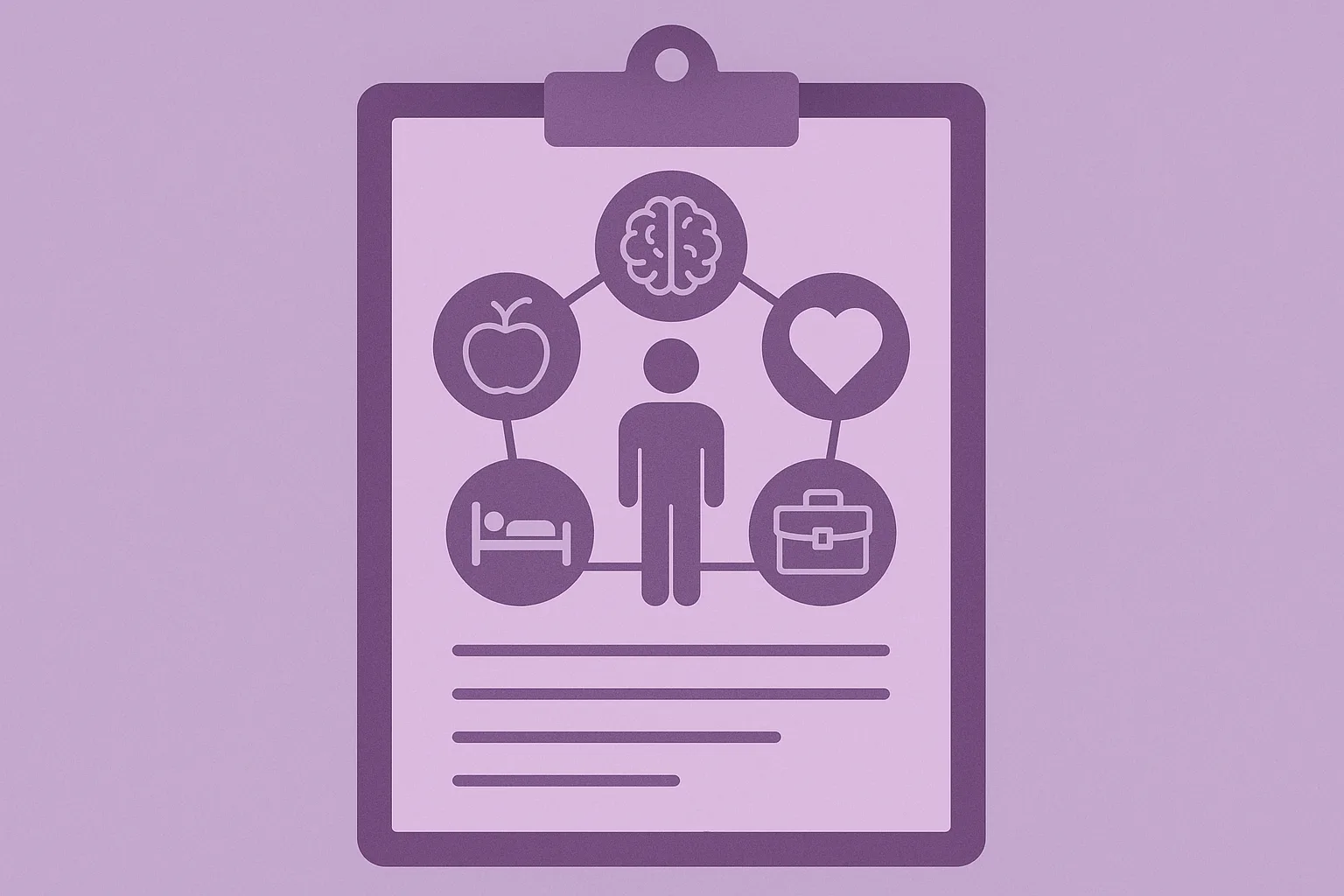
A growing body of research is revealing that workplace injuries carry a significant and often overlooked mental health burden. Workers may experience anxiety about returning to the task that caused the injury, depression during long recovery periods, and post-traumatic stress that replays the incident on loop. These psychological consequences can persist long after the physical wounds have healed, quietly undermining productivity, extending disability, and driving up costs that never appear on an OSHA log.
In 2024, a landmark cohort study published in JAMA Network Open provided some of the strongest evidence yet that workplace injuries produce worse mental health trajectories than comparable injuries sustained off the job. For employers managing a workforce in 2026 — with 2.5 million nonfatal workplace injuries and illnesses reported in the most recent Bureau of Labor Statistics data — the implications are significant and actionable.
What the Research Shows
The JAMA Network Open study, led by researchers at the University of Manitoba, examined mental health outcomes for more than 7,500 individuals who sustained traumatic workplace injuries requiring surgery, compared against nearly 29,000 matched individuals who suffered similar injuries outside the workplace. The study followed both groups over a two-year period using population-based administrative health data from 2002 to 2018.
The findings were striking. Before their injuries, workers hurt on the job actually had lower rates of mental health disorders — including anxiety, depression, and substance use — than those injured elsewhere. But after the injury, the workplace group experienced a sharper relative decline in mental health. Rates of anxiety and overall mental disorder diagnoses rose more steeply, effectively erasing the pre-injury advantage.
The researchers pointed to several factors unique to workplace injuries that may explain the disparity: the stress of navigating workers' compensation systems, the psychological difficulty of returning to the physical location where the injury occurred, financial insecurity during recovery, and the disruption of workplace social connections that often serve as a support network.
This study adds to a pattern visible across multiple data sources. Sedgwick's 2025 report on mental health in workers' compensation found that while mental health claims represent less than 2% of total workers' compensation cases nationally, they are disproportionately complex, with longer disability durations and higher costs per claim. Critically, the report also found that early behavioral health intervention — within the first 90 days of a claim — can reduce claim duration by 60 to 70 percent.
The Scale of the Problem
According to the Bureau of Labor Statistics, private-industry employers reported approximately 2.5 million nonfatal workplace injuries and illnesses in 2024, with 888,100 of those cases involving days away from work. The median number of days away from work was eight.
Behind each of those cases is a worker who may be dealing with more than physical recovery. Research published in Occupational & Environmental Medicine has shown that injured workers are at elevated risk for depression, anxiety disorders, and PTSD — conditions that can extend time away from work, reduce productivity upon return, and increase the likelihood of permanent disability.
The financial costs are substantial. The National Safety Council estimates that the total cost of work injuries in the United States — including wage and productivity losses, medical expenses, and administrative costs — exceeded $167 billion in 2023. What those figures do not fully capture is the cost of untreated psychological injury: extended workers' compensation claims, higher healthcare utilization, increased absenteeism, and the replacement costs when injured workers leave rather than return.
Why Mental Health After Workplace Injury Gets Overlooked
Despite the evidence, most employers still treat workplace injuries as purely physical events. There are several reasons for this gap.
Workers' Compensation Systems Are Designed for Physical Injury
Most state workers' compensation frameworks were built around physical injuries with clear medical diagnoses and objective evidence. Mental health claims — particularly "mental-mental" claims where psychological injury occurs without a physical injury — face higher evidentiary thresholds in many jurisdictions. Even "physical-mental" claims, where a physical injury triggers subsequent psychological distress, are often underreported because workers fear stigma or do not recognize that their anxiety or depression is connected to the workplace incident.
Stigma Remains a Barrier
A 2025 poll by the Harvard T.H. Chan School of Public Health and the de Beaumont Foundation found that 60% of employees with chronic health conditions have not formally disclosed their conditions to their employer. Workers cited fear of stigma, missed promotion opportunities, and negative performance reviews. The stigma around mental health is even more pronounced: workers recovering from a physical injury may not feel comfortable saying, "I'm also struggling with anxiety about coming back."
Occupational Health Programs Focus on Physical Metrics
Return-to-work programs typically track physical milestones — range of motion, lifting capacity, medical clearance. Psychological readiness is rarely assessed with the same rigor. An employee may be medically cleared to return while still experiencing intrusive thoughts, sleep disruption, or hypervigilance at the work site.
The Legislative Landscape Is Shifting
Employers should be aware that the legal environment around mental health and workers' compensation is evolving rapidly. According to Risk & Insurance, at least seven states have recently enacted or are considering legislation that creates a presumption of work-relatedness for PTSD among certain worker populations — primarily first responders, but increasingly extending to healthcare workers, teachers, and in some states, all employees.
A 2025 jurisdictional review by Washington State's Department of Labor & Industries found wide variation in how states handle PTSD claims but noted a clear trend toward broader coverage. These changes mean that employers who do not proactively address the mental health consequences of workplace injuries may face growing liability in addition to the human cost.
The U.S. Department of Labor has also expanded its resources on mental health at work, emphasizing that conditions like major depression, PTSD, and anxiety disorders may qualify as disabilities under the Americans with Disabilities Act, requiring reasonable accommodations.
What Employers Should Do
Addressing the mental health dimensions of workplace injuries does not require building a new program from scratch. It requires integrating psychological awareness into existing occupational health and return-to-work processes. The following steps provide a practical framework.
1. Screen for Psychological Distress After Every Recordable Injury
Do not wait for workers to self-report mental health struggles. Incorporate brief, validated screening tools — such as the PHQ-2 for depression or the GAD-2 for anxiety — into your post-injury follow-up protocols. The NIOSH Worker Well-Being Questionnaire offers a broader framework for assessing worker well-being beyond physical symptoms.
2. Intervene Early
Sedgwick's data shows that early behavioral health intervention dramatically improves outcomes. Partner with your Employee Assistance Program (EAP) provider or occupational health service to ensure that mental health referrals are initiated within the first weeks after a significant workplace injury — not months later when problems have become entrenched.
3. Train Supervisors to Recognize Warning Signs
Frontline managers are often the first to notice when a returning worker is struggling. Train supervisors to recognize common signs of post-injury psychological distress — withdrawal, irritability, difficulty concentrating, reluctance to perform certain tasks — and to respond with support rather than discipline. OSHA's workplace stress guidance provides practical tips for building a supportive management culture.
4. Redesign Return-to-Work Programs to Include Psychological Readiness
Medical clearance should not be the only threshold for return. Build psychological readiness assessments into your return-to-work process. This may include gradual re-exposure to the task or environment where the injury occurred, modified duties that reduce psychological triggers, and check-ins during the first weeks back. The WHO Guidelines on Mental Health at Work recommend a collaborative approach involving the worker, employer, and occupational health professionals.
5. Address the Work Environment, Not Just the Worker
NIOSH's Total Worker Health framework emphasizes that individual interventions are less effective when the work environment itself is contributing to psychological harm. After a serious injury, assess whether workplace conditions — production pressure, inadequate staffing, insufficient safety controls — contributed to the incident and may be contributing to the worker's psychological distress. Fixing the system prevents both future injuries and the mental health fallout they produce.
6. Remove Barriers to Mental Health Support
Ensure that your benefits design supports mental health treatment. Review your health plan for adequate behavioral health coverage, eliminate unnecessary preauthorization requirements for therapy, and promote awareness of your EAP. The U.S. Surgeon General's Framework for Workplace Mental Health and Well-Being identifies five essentials — protection from harm, connection, work-life harmony, mattering at work, and opportunity for growth — that employers can use to build a culture where seeking mental health support is normal rather than stigmatized.
7. Track Mental Health Outcomes Alongside Physical Recovery
Measure what matters. Track not just days away from work and medical costs, but also indicators of psychological recovery: EAP utilization rates after injuries, employee-reported well-being scores, re-injury rates (which can indicate a worker returning before they are psychologically ready), and voluntary turnover among recently injured workers. The CDC Worksite Health ScoreCard can help benchmark your organization's current approach to integrated worker health.
The Business Case for Whole-Person Recovery
The evidence is clear that investing in the mental health of injured workers produces measurable returns. Early intervention reduces claim duration. Psychologically supported return-to-work programs reduce re-injury. Supportive workplace cultures reduce turnover among workers who have experienced traumatic events.
The World Health Organization estimates that for every dollar invested in treating common mental health conditions like depression and anxiety, employers see a four-dollar return in improved health and productivity. For workplace injuries specifically, addressing the psychological dimension means shorter disability durations, lower total claim costs, and workers who return not just physically present but genuinely ready to perform.
As BlueHive's white paper on The Hidden Mental Health Costs of Workplace Injuries puts it, employers who shift to a whole-person recovery approach — one that considers both the body and the mind — see faster healing, stronger employee loyalty, and healthier workplace cultures.
Looking Ahead
With 2.5 million nonfatal workplace injuries occurring annually, the mental health consequences of those injuries represent one of the largest unmanaged risks in occupational health today. The research from JAMA Network Open makes clear that workplace injuries are not just physically harder on workers — they are psychologically harder, too, in ways that the workers' compensation system and most employer return-to-work programs are not designed to address.
For occupational health professionals and HR leaders, the path forward requires treating every significant workplace injury as both a physical and a psychological event. Screen early. Intervene quickly. Train your managers. Fix your systems. And measure the outcomes that matter — not just the ones that appear on an OSHA form.
The workers who are quietly struggling after their injuries are not going to tell you. It is on you to ask.
Sources
- Turcotte, R.E., et al. "Workplace Injury and Mental Health Outcomes." JAMA Network Open, 2024. https://jamanetwork.com/journals/jamanetworkopen/fullarticle/2830225
- Sedgwick. "Mental Health in Workers' Compensation: Data-Driven Insights from Sedgwick's 2025 Report." February 2025. https://www.sedgwick.com/blog/mental-health-in-workers-compensation-data-driven-insights-from-sedgwicks-2025-report/
- Bureau of Labor Statistics. "Employer-Reported Workplace Injuries and Illnesses, 2023–2024." https://www.bls.gov/news.release/osh.nr0.htm
- National Safety Council. "Work Injury Costs." Injury Facts. https://injuryfacts.nsc.org/work/costs/work-injury-costs/
- de Beaumont Foundation and Harvard T.H. Chan School of Public Health. "Poll: The Toll of Chronic Health Conditions on Employees and Workplaces." February 2025. https://debeaumont.org/news/2025/poll-the-toll-of-chronic-health-conditions-on-employees-and-workplaces/
- Risk & Insurance. "Workers' Compensation Faces Wave of Mental Health, Cancer Coverage Expansions in 2025." https://riskandinsurance.com/workers-compensation-faces-wave-of-mental-health-cancer-coverage-expansions-in-2025/
- Washington State Department of Labor & Industries. "Posttraumatic Stress Disorder (PTSD) Survey and Jurisdictional Review." 2025. https://www.lni.wa.gov/agency/_docs/2025PTSDsurveyJurisdictionalReviewReport.pdf
- U.S. Department of Labor. "Mental Health at Work." https://www.dol.gov/general/mental-health-at-work
- OSHA. "Workplace Stress — Guidance and Tips for Employers." https://www.osha.gov/workplace-stress/employer-guidance
- NIOSH. "About the Total Worker Health Approach." CDC. https://www.cdc.gov/niosh/twh/about/index.html
- NIOSH. "Worker Well-Being Questionnaire (WellBQ)." CDC. https://www.cdc.gov/niosh/twh/wellbq/default.html
- World Health Organization. "Mental Health at Work." Fact Sheet. https://www.who.int/news-room/fact-sheets/detail/mental-health-at-work
- World Health Organization. Guidelines on Mental Health at Work. 2022. https://www.who.int/publications/i/item/9789240053052
- U.S. Surgeon General. "Workplace Mental Health & Well-Being." HHS. https://www.hhs.gov/surgeongeneral/reports-and-publications/workplace-well-being/index.html
- NIOSH. "Total Worker Health Toolkit." CDC. https://www.cdc.gov/niosh/twh/php/toolkit/index.html
- BlueHive. "The Hidden Mental Health Costs of Workplace Injuries: What Employers Overlook." https://bluehive.com/white-papers/the-hidden-mental-health-costs-of-workplace-injuries-what-em/