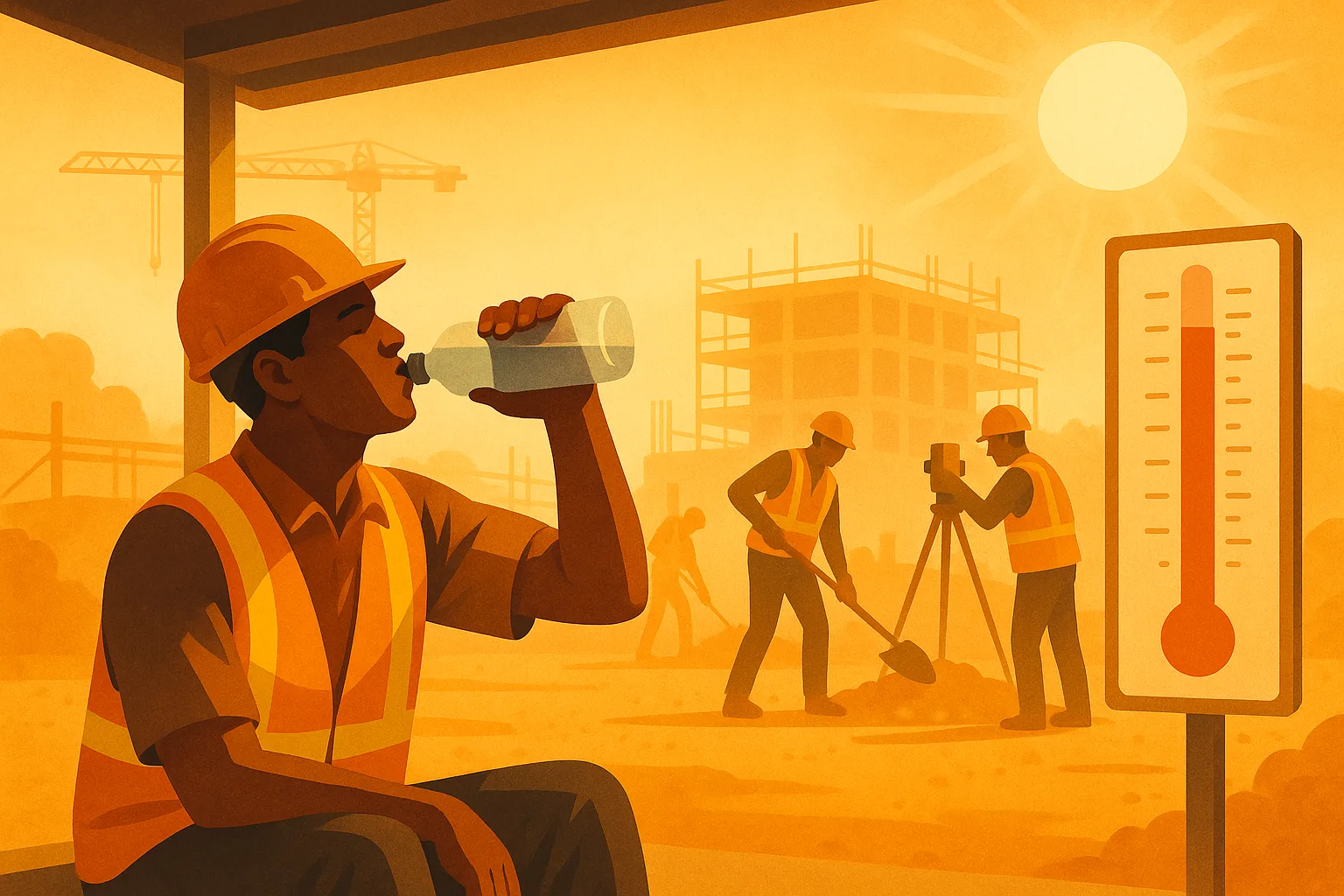
Heat Acclimatization for New and Seasonal Workers: Preventing First-Week Fatalities as Summer 2026 Begins
Over 70% of occupational heat deaths occur during a worker's first week on the job. With OSHA's updated Heat NEP and Heat Safety Week 2026 just concluded, employers must implement acclimatization protocols to protect new and seasonal hires this summer.
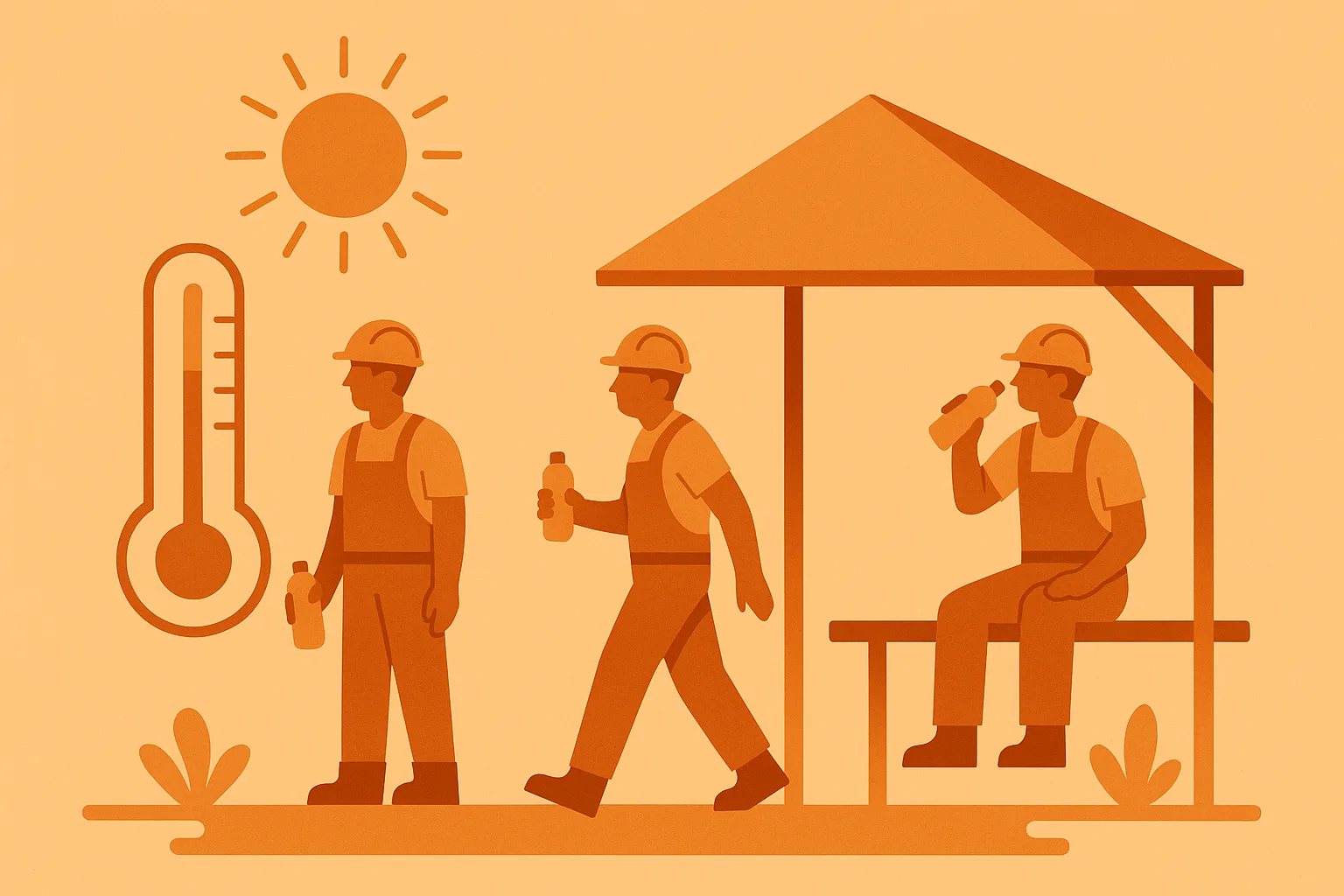

As temperatures climb across much of the United States and summer hiring accelerates in construction, agriculture, landscaping, and warehousing, employers face a critical occupational health challenge: protecting new and seasonal workers from heat-related illness and death during their first days on the job.
Heat Safety Week 2026 (May 18–22) just concluded, coinciding with OSHA's updated National Emphasis Program for heat-related hazards taking full effect this summer. The timing is urgent — research consistently shows that the vast majority of occupational heat fatalities strike workers who have not yet acclimated to hot working conditions.
Understanding heat acclimatization — and implementing structured protocols for every new hire and returning worker — is not just a best practice. It is increasingly a compliance requirement that OSHA evaluates during inspections.
The First-Week Problem: Why New Workers Die from Heat
The data is stark. According to OSHA's analysis of heat-related workplace fatalities, nearly 50% of workers who die from occupational heat exposure do so on their very first day at work. Over 70% of heat-related deaths occur within a worker's first week on the job.
These are not isolated incidents. They represent a consistent, well-documented pattern driven by a single physiological reality: the human body needs time to adapt to sustained heat stress. A worker who begins a physically demanding outdoor job in June without gradual exposure faces dramatically higher risk than a colleague who has been working in similar conditions for weeks.
The Bureau of Labor Statistics reports approximately 28,000 work injuries linked to hot weather annually, with 55 employment-related deaths due to environmental heat exposure recorded in 2023 alone. Experts believe these numbers significantly undercount actual incidents due to underreporting and misclassification of heat-related events.
What Is Heat Acclimatization?
Heat acclimatization is the body's gradual physiological adaptation to working in hot environments. According to CDC/NIOSH, when a person is progressively exposed to heat stress over 7 to 14 days, several measurable changes occur:
- Increased sweat rate and earlier onset of sweating — the body becomes more efficient at cooling itself
- Reduced heart rate during heat exposure — the cardiovascular system adapts to thermal load
- Lower core body temperature during exertion — internal temperature regulation improves
- Reduced electrolyte loss in sweat — the body conserves sodium more effectively
- Improved subjective comfort — workers perceive heat as less oppressive
These adaptations are significant. A fully acclimatized worker can perform the same task in the same heat with substantially lower physiological strain than an unacclimatized worker. Critically, these adaptations begin to reverse after just a few days away from heat exposure — which is why workers returning from vacation, illness, or extended absence are also at elevated risk.
NIOSH-Recommended Acclimatization Protocols
NIOSH's Criteria for a Recommended Standard on Occupational Exposure to Heat and Hot Environments provides specific acclimatization schedules that form the basis for current best practices and OSHA's enforcement expectations.
For New Workers (No Prior Heat Exposure)
Workers who have never been exposed to the specific hot working conditions should follow a gradual exposure schedule:
- Day 1: No more than 20% of the usual duration of work in hot conditions
- Day 2: No more than 40% exposure
- Day 3: No more than 60% exposure
- Day 4: No more than 80% exposure
- Day 5 and beyond: Full exposure, with continued monitoring
During this ramp-up period, new workers should receive increased rest breaks, enhanced access to water and shade, and close observation by trained supervisors or designated buddies.
For Returning Workers (Absent 7–14+ Days)
Workers who have previously been acclimatized but have been away from heat exposure for more than one week should follow an accelerated protocol:
- Day 1: Start at 50% of normal heat exposure
- Day 2: Increase to 60%
- Day 3: Increase to 80%
- Day 4: Return to full exposure
Workers absent for fewer than seven days may retain most of their acclimatization, but should still be monitored closely and given additional breaks during their first day back.
Key Principles for All Workers
- Never skip acclimatization for workers who are new, returning from absence, or transitioning to hotter conditions
- Monitor closely during the first two weeks — assign a buddy or supervisor to check in regularly
- Provide unlimited water — workers should drink at least one cup (8 oz) every 15–20 minutes
- Adjust for individual factors — age, fitness level, medications, chronic conditions, and prior heat illness all affect acclimatization speed
OSHA's Enforcement Framework in 2026
OSHA's revised Heat National Emphasis Program (CPL 03-00-024), effective April 10, 2026, provides the enforcement structure through which acclimatization practices are evaluated.
How OSHA Evaluates Acclimatization Programs
During heat-related inspections, OSHA compliance officers assess whether employers have:
- A written acclimatization procedure that addresses new and returning workers
- Documentation showing implementation — schedules, work assignments, and training records
- Supervisor training on recognizing heat illness symptoms in unacclimatized workers
- Evidence of actual use — not just a policy on paper, but demonstrated practice
The revised NEP's reorganized appendices provide standardized evaluation criteria for compliance officers, making it clearer than ever what OSHA expects from employers.
Inspection Triggers
Under the NEP, OSHA conducts programmed inspections in 55 targeted high-risk industries on "heat priority days" — any day the National Weather Service issues a heat advisory or warning. Industries include construction, agriculture, warehousing, manufacturing, food service, and landscaping.
Additionally, any complaint, referral, hospitalization, or observed heat hazard can trigger an inspection regardless of industry. A new worker suffering heat stroke during their first week is precisely the type of incident that prompts OSHA investigation — and the absence of an acclimatization protocol will be among the first things compliance officers examine.
General Duty Clause Citations
Without a finalized federal heat standard, OSHA continues to cite employers under the General Duty Clause — Section 5(a)(1) of the OSH Act. Since the Heat NEP launched in 2022, OSHA has conducted thousands of heat-related inspections and issued citations where employers failed to implement feasible controls for recognized heat hazards.
Heat Safety Week 2026: A Call to Action
Heat Safety Week (May 18–22, 2026), coordinated by the National Integrated Heat Health Information System (NIHHIS), OSHA, NIOSH, and the National Weather Service, focused this year on daily themes including recognizing heat illness, protecting vulnerable workers, and building heat-safe workplaces.
The campaign's timing — just as summer temperatures begin to climb and seasonal hiring peaks — is intentional. OSHA and NIOSH used the week to distribute updated toolkits, posters, and training materials, and to promote the OSHA-NIOSH Heat Safety Tool App, which provides real-time heat index calculations and location-specific risk guidance.
For employers, Heat Safety Week should serve as the annual starting signal for implementing or refreshing heat illness prevention programs — including acclimatization protocols for the wave of new and seasonal workers arriving through June.
What Employers Should Do Now
With summer 2026 underway and OSHA's enforcement program active, employers should take immediate action:
1. Implement a Written Acclimatization Protocol
Develop a documented acclimatization procedure that specifies:
- The gradual exposure schedule for new workers (20% daily increase)
- The returning worker protocol (starting at 50% after 14+ days away)
- Who is responsible for monitoring and enforcing the protocol
- How acclimatization progress is documented
2. Train Supervisors on First-Week Risks
Ensure every supervisor and team lead understands:
- Why new workers are at extreme risk during their first days
- How to recognize early symptoms of heat illness (heavy sweating, cramps, fatigue, dizziness, nausea)
- Emergency response procedures for heat stroke (confusion, loss of consciousness, hot dry skin)
- Their authority and responsibility to modify work assignments and enforce rest breaks
3. Establish a Buddy System
Pair new workers with experienced colleagues who can:
- Monitor for signs of heat distress throughout the shift
- Encourage hydration and rest break compliance
- Report concerns to supervisors immediately
- Model safe heat practices
4. Provide Engineering and Administrative Controls
- Ensure unlimited access to cool, potable drinking water at all work locations
- Provide shaded or air-conditioned rest areas within reasonable distance
- Schedule the most physically demanding tasks for cooler parts of the day
- Rotate workers through high-heat tasks to reduce individual exposure
- Use fans, misters, or cooling stations where feasible
5. Document Everything
Maintain records of:
- Each new worker's acclimatization schedule and completion
- Training provided to workers and supervisors
- Heat illness incidents, near-misses, and response actions
- Daily temperature/heat index monitoring during high-risk periods
Documentation demonstrates compliance to OSHA and protects employers in the event of an incident investigation.
6. Use Available Resources
- Download the OSHA-NIOSH Heat Safety Tool App for real-time risk assessments
- Review OSHA's Heat Illness Prevention Campaign materials and posters
- Consult NIOSH's workplace heat stress recommendations for science-based guidance
- Reference BlueHive's 2026 OSHA Changes white paper for a comprehensive compliance overview
Looking Ahead: The Proposed Federal Heat Standard
While the proposed Heat Injury and Illness Prevention Standard remains under review, its core requirements — including mandatory acclimatization protocols, written prevention plans, heat index triggers at 80°F and 90°F, and designation of heat safety coordinators — signal the direction of future compliance obligations.
Employers who implement robust acclimatization programs now will be well-positioned when the final rule takes effect. More importantly, they will protect their workers from preventable deaths during the most dangerous period of their employment: the first week.
Sources
- OSHA – Protecting New Workers from Heat
- CDC/NIOSH – Heat Stress Acclimatization Recommendations
- U.S. Department of Labor – OSHA Updates National Emphasis Program (April 10, 2026)
- OSHA – Heat Illness Prevention Campaign
- OSHA – National Emphasis Program Directive CPL 03-00-024
- Heat.gov – 2026 Heat Safety Week Social Media Campaign
- National Weather Service – 2026 Heat Safety Week
- OSHA-NIOSH Heat Safety Tool App
- Bureau of Labor Statistics – Injuries, Illnesses, and Fatalities
- BlueHive – 2026 OSHA Changes: What Has Taken Effect, What is Coming
- OSHA – General Duty Clause, Section 5(a)(1) of the OSH Act
- Proposed Rule: Heat Injury and Illness Prevention in Outdoor and Indoor Work Settings (89 FR 70698)
Tags
Frequently Asked Questions
According to OSHA, nearly 50% of heat-related workplace deaths occur on a worker's first day, and over 70% happen within the first week. New workers have not yet undergone physiological acclimatization — the body's gradual adaptation to working in hot conditions — making them far more vulnerable to heat stroke and heat exhaustion.
NIOSH recommends limiting new workers to no more than 20% of normal heat exposure on day one, increasing by 20% each subsequent day until full exposure is reached by day five or later. Workers returning after an absence of 14 or more days should start at 50% exposure and gradually increase over three to four days.
Yes. Under OSHA's revised Heat National Emphasis Program (CPL 03-00-024, effective April 10, 2026), compliance officers evaluate employer acclimatization procedures during inspections. Employers who fail to address heat hazards, including lack of acclimatization protocols, can be cited under the General Duty Clause, Section 5(a)(1) of the OSH Act.
OSHA conducts programmed heat inspections in 55 targeted high-risk industries on 'heat priority days' — any day the National Weather Service issues a heat advisory or warning for the local area. Complaints, referrals, hospitalizations, and observed heat hazards can also trigger inspections at any workplace.
According to CDC/NIOSH, early signs include heavy sweating, muscle cramps, fatigue, headache, dizziness, and nausea. More severe symptoms include confusion, slurred speech, loss of consciousness, hot dry skin, and seizures — which indicate heat stroke requiring immediate emergency medical attention.