OSHA's November 2026 HazCom Deadline Is Approaching: What Employers Must Do Now
The November 20, 2026 employer compliance deadline for OSHA's revised Hazard Communication Standard is just three months away. Learn what's required, what's changed, and how to prepare your workplace.
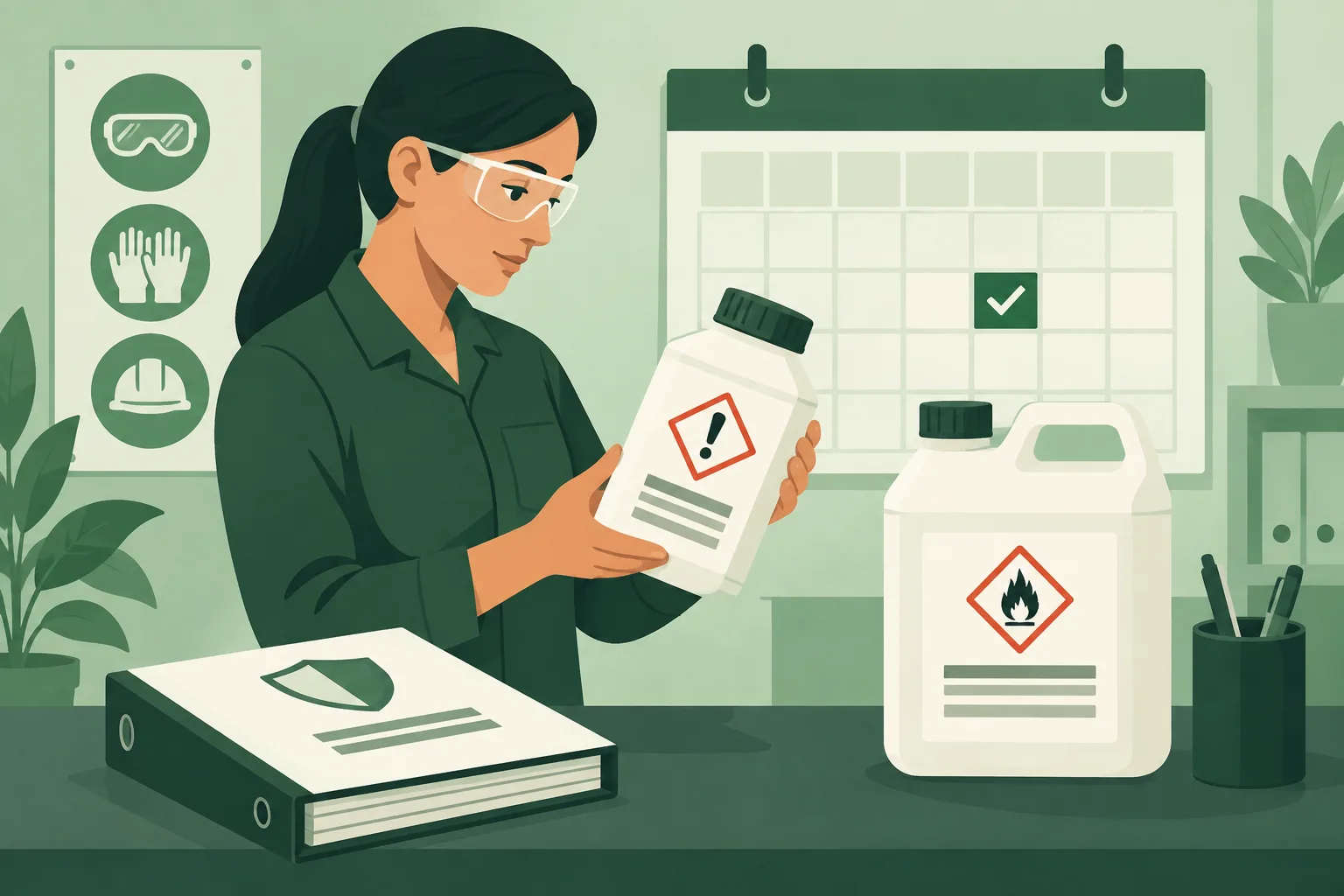

With just three months remaining before the November 20, 2026 compliance deadline, employers across all industries that use hazardous chemicals must finalize their preparations for OSHA's revised Hazard Communication Standard (HazCom, 29 CFR 1910.1200). The updated rule — published as a final rule on May 20, 2024 — aligns the U.S. standard with Revision 7 of the United Nations Globally Harmonized System of Classification and Labelling of Chemicals (GHS). The original employer deadline was July 20, 2026; OSHA extended every compliance date by four months in a January 15, 2026 notice (91 FR 1695), and the clock is now ticking for employers to update their programs, labels, safety data sheets, and training.
Hazard communication has appeared on OSHA's Top 10 Most Cited Violations list for decades, and enforcement is expected to intensify as the deadline approaches. Employers who haven't started updating their programs are running out of time.
What Changed in the Revised Standard
OSHA's 2024 final rule makes several significant changes to the HazCom standard that employers must understand:
New Hazard Classes and Categories
The revised standard adds hazard classes not previously included in OSHA's framework:
- Desensitized explosives — chemicals rendered less sensitive to shock but still hazardous
- Chemicals under pressure — a new physical hazard category
- Non-flammable aerosols — now classified separately from flammable aerosols
Criteria for existing hazard classes — including skin corrosion/irritation, eye damage, and flammable gases — have also been updated to reflect GHS Rev. 7 science.
Updated Safety Data Sheet Requirements
Sections 2, 3, 9, and 11 of the SDS format have been revised. Key changes include:
- More detailed hazard information for classified substances
- Prescribed concentration ranges when the exact concentration of an ingredient is claimed as a trade secret
- Harmonization with Canada's Workplace Hazardous Materials Information System (WHMIS)
Revised Labeling Rules
The standard introduces new flexibility and requirements for labels:
- Small container labeling provisions (containers as small as 3 mL)
- Updated precautionary statements and hazard pictogram assignments
- Clearer requirements for bulk shipment labeling
- New label elements for the added hazard classes
Trade Secret Provisions
Manufacturers and importers that withhold an ingredient's exact concentration as a trade secret must now disclose it within one of the prescribed concentration ranges in the standard rather than leaving concentration off the SDS altogether. Chemical identity can still be protected under the trade-secret provisions; the change standardizes how concentration is communicated.
The Compliance Timeline
The 2024 rule set a phased schedule, and OSHA's January 15, 2026 extension notice pushed every date back four months. The current dates are:
| Deadline | Who Must Comply | What's Required |
|---|---|---|
| May 19, 2026 | Manufacturers, importers, distributors | Evaluate and reclassify chemical substances |
| November 20, 2026 | Employers | Update labels, SDSs, written programs, and retrain workers for substances |
| November 19, 2027 | Manufacturers, importers, distributors | Evaluate and reclassify chemical mixtures |
| May 19, 2028 | Employers | Full compliance for mixtures |
The May 2026 deadline for manufacturers and distributors has already passed, meaning updated SDSs and labels for substances should already be flowing into workplaces. Employers now have until November 20, 2026, to implement these changes internally.
OSHA's Updated Enforcement Directive
OSHA has released an updated enforcement directive, CPL 02-02-079, which details how compliance safety and health officers (CSHOs) will conduct HazCom inspections. The American Society of Safety Professionals (ASSP) summarizes the directive's coverage of the rule changes, which map to the areas employers should expect inspectors to examine:
- Whether written HazCom programs have been updated to reflect the revised standard
- Adequacy and currency of SDSs maintained on-site
- Proper workplace labeling, including new hazard classes
- Documentation and quality of employee training
- Trade secret claims and concentration range disclosures
Employers should expect heightened scrutiny as the November deadline approaches and immediately after it passes.
What Employers Must Do by November 20, 2026
1. Update Your Written Hazard Communication Program
Review and revise your written HazCom program to address:
- New hazard classifications and categories added by the revised standard
- Updated procedures for obtaining and maintaining revised SDSs
- New labeling requirements, including small container provisions
- Revised emergency response information and trade secret procedures
2. Obtain and Verify Updated Safety Data Sheets
- Contact chemical suppliers to confirm they have provided GHS Rev. 7-compliant SDSs for all substances
- Replace outdated SDSs in your workplace files
- Verify that Sections 2, 3, 9, and 11 reflect the updated format
- Document when updated SDSs were received
3. Update Workplace Labels
- Ensure all container labels reflect new hazard classifications and pictograms
- Implement small container labeling where applicable
- Verify that precautionary statements match the revised standard
- Update labels for any newly classified hazards (e.g., desensitized explosives, chemicals under pressure)
4. Retrain All Affected Employees
OSHA requires retraining whenever new hazards are introduced or hazard information changes. Training must cover:
- New hazard classes and what they mean for worker safety
- Updated label elements and how to read revised SDSs
- Changes to safe handling, storage, and emergency procedures
- How to access updated SDSs and written program information
5. Document Everything
Maintain records of:
- Program revision dates and what was changed
- SDS update receipts and supplier correspondence
- Training completion dates, attendees, and content covered
- Any gap assessments or compliance audits conducted
Penalties for Non-Compliance
OSHA's 2026 penalty structure makes non-compliance expensive:
- Serious violations: Up to $16,550 per violation
- Willful or repeat violations: Up to $165,514 per violation
- Failure to abate: Up to $16,550 per day beyond the abatement date
With hazard communication historically among OSHA's most-cited standards, employers who miss the deadline face significant financial and legal exposure.
Industry-Specific Considerations
While the HazCom standard applies to virtually every employer with hazardous chemicals in the workplace, certain industries face heightened scrutiny:
- Construction: Silica, adhesives, coatings, and solvents require updated classification
- Manufacturing: Process chemicals and intermediates may fall under new hazard classes
- Healthcare: Cleaning agents, sterilants, and pharmaceutical compounds must be reclassified
- Agriculture: Pesticides and fertilizers subject to revised SDS and labeling requirements
Additional Resources for Compliance
BlueHive's white paper on 2026 OSHA Changes provides a comprehensive overview of this year's regulatory shifts, including the HazCom timeline and enforcement priorities. Their 2026 Occupational Health Compliance Timeline also offers a checklist-based approach to meeting key deadlines.
Employers should also access OSHA's free compliance resources at osha.gov/hazcom, including the full regulatory text, guidance documents, and publications explaining the revised standard.
The Bottom Line
The November 20, 2026 deadline is not optional and it is not likely to be extended again. Employers who use hazardous chemicals — which includes most workplaces in America — must take action now to update their hazard communication programs, obtain revised SDSs, relabel containers, and retrain their workers. With OSHA's updated enforcement directive already in effect, inspections targeting HazCom compliance are expected to increase in the coming months.
Start with a gap assessment today. Identify what SDSs still need updating, which labels need revision, and which employees need retraining. Three months may seem like plenty of time, but for organizations with large chemical inventories or multiple locations, it will go fast.
Sources
- OSHA Hazard Communication Standard Final Rule (Federal Register, May 20, 2024)
- OSHA Hazard Communication Standard — Extension of Compliance Dates (Federal Register, January 15, 2026, 91 FR 1695)
- OSHA HazCom Rulemaking — Compliance Date Extension
- OSHA Hazard Communication Rulemaking Page
- OSHA Hazard Communication Resources
- Department of Labor Final Rule Announcement (May 2024)
- OSHA Publication OSHA 4437 — HCS Final Rule Summary
- OSHA Enforcement Directive CPL 02-02-079
- OSHA Top 10 Most Cited Standards
- ASSP: OSHA Updates Hazard Communication Enforcement Directive
- BlueHive: 2026 OSHA Changes White Paper
- BlueHive: 2026 Occupational Health Compliance Timeline
Tags
Frequently Asked Questions
Employers must comply with OSHA's revised Hazard Communication Standard (29 CFR 1910.1200) by November 20, 2026, for chemical substances. This includes updating workplace labels, safety data sheets, written HazCom programs, and completing employee retraining.
The 2024 final rule aligns OSHA's HazCom standard with GHS Revision 7, adding new hazard classes like desensitized explosives and chemicals under pressure, updating label elements and SDS requirements, and introducing new trade secret concentration range rules.
Yes. OSHA requires employers to retrain all affected employees on new hazard classifications, updated label elements, revised SDS formats, and any changes to safe handling procedures before the November 20, 2026 deadline.
In 2026, OSHA penalties for serious violations are up to $16,550 per violation. Willful or repeat violations can reach $165,514 per violation. Hazard communication is consistently among OSHA's most-cited standards.
OSHA provides guidance materials, the full regulatory text, and compliance resources at osha.gov/hazcom. The final rule was published in the Federal Register on May 20, 2024, and OSHA's enforcement directive CPL 02-02-079 details inspection procedures.