OSHA Safe + Sound Week 2026: How Employers Can Strengthen Workplace Safety Programs
OSHA's Safe + Sound Week runs August 10–16, 2026. Learn how employers can use this annual event to build stronger safety cultures, engage workers, and prepare for upcoming heat illness prevention requirements.


Next week marks OSHA's Safe + Sound Week 2026, running August 10–16. Now in its tenth year — the campaign launched in 2017 — this annual event is more than a calendar item; it is a call to action for every employer to evaluate, strengthen, and celebrate their workplace safety and health programs. With OSHA's emphasis programs expanding in 2026 and a heat illness prevention rule still working through rulemaking, there has never been a more important time to invest in workplace safety infrastructure.
For occupational health professionals, Safe + Sound Week offers a structured opportunity to drive engagement, identify gaps, and demonstrate leadership commitment to worker well-being. Here is what employers need to know — and do — to make the most of this year's event.
What Is Safe + Sound Week?
Safe + Sound Week is a nationwide event organized by OSHA in partnership with the National Safety Council and other safety organizations. The campaign encourages businesses of all sizes and industries to celebrate their safety achievements, share best practices, and recommit to protecting workers.
The event is built around OSHA's Recommended Practices for Safety and Health Programs, which identify three core elements of effective workplace safety:
- Management leadership — Visible commitment from the top that safety is a core business value
- Worker participation — Engaging employees in hazard identification, reporting, and program development
- Finding and fixing hazards — A systematic approach to identifying workplace risks and eliminating or controlling them before injuries occur
The 2026 Theme: Recognizing Safety Champions
This year's Safe + Sound Week theme centers on Safety and Health Recognition Programs. OSHA is encouraging employers to formally acknowledge individuals and teams who actively contribute to workplace safety — whether by reporting hazards, completing training, participating in safety committees, or mentoring new workers on safe practices.
Research consistently shows that recognition reinforces positive safety behaviors. When workers see that their safety contributions are valued, they are more likely to continue reporting concerns and participating in prevention efforts. For employers, building recognition into safety programs creates a self-sustaining cycle of engagement and improvement.
Ideas for Recognition During Safe + Sound Week
- Award certificates or "Safety All-Star" designations to employees who identified hazards or near-misses
- Publicly acknowledge teams with zero recordable incidents during safety stand-downs
- Create a safety suggestion board and recognize the best actionable ideas
- Host a lunch-and-learn where workers share their safety experiences and lessons learned
- Post recognition on company communications channels with the #SafeAndSoundAtWork hashtag
Why This Matters in 2026
Enforcement Stakes Remain High
OSHA's penalty schedule sets maximum penalties of $16,550 per serious violation and $165,514 per willful or repeated violation. Those amounts are unchanged from 2025 — the Department of Labor did not apply an inflation adjustment for 2026, as OSHA's May 21, 2026 penalty memo confirms — but they remain substantial, and OSHA's enforcement data continue to show tens of thousands of federal inspections each year.
The agency's National Emphasis Programs have expanded, with renewed focus on warehouse and distribution center safety, heat hazards, fall protection, trenching, and silica exposure. Employers who lack documented safety programs are far more likely to face citations — and far less prepared to contest them.
The Coming Heat Illness Prevention Rule
Perhaps the most significant regulatory development on the horizon is OSHA's proposed Heat Injury and Illness Prevention in Outdoor and Indoor Work Settings rule. The informal public hearing concluded in July 2025 and the post-hearing comment period closed October 30, 2025; the rule is not yet finalized and remains at the proposed-rule stage on the Department of Labor's 2026 regulatory agenda, with a supplemental proposal widely reported as the next step. Meanwhile, OSHA is already enforcing heat protections under the General Duty Clause and its heat National Emphasis Program.
The proposed rule would require employers to:
- Identify and evaluate heat hazards in both indoor and outdoor work settings
- Implement a written Heat Illness Prevention Plan
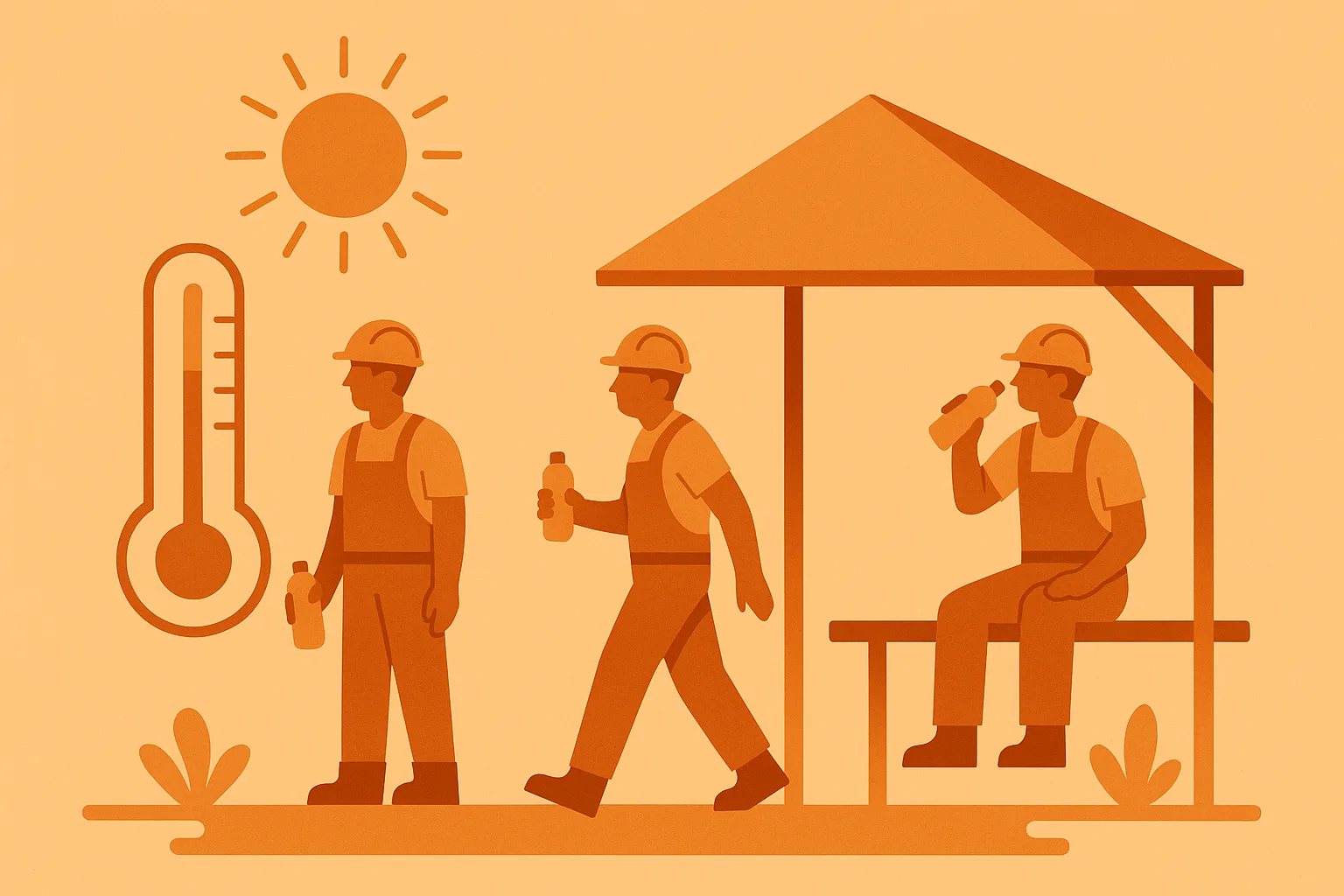
- Provide water, shade, and rest breaks at an initial heat index trigger of 80°F
- Implement enhanced monitoring, cool-down areas, and work/rest schedules at a high-heat trigger of 90°F
- Train all workers and supervisors on heat illness recognition and prevention
- Maintain documentation and emergency response procedures
States like California, Washington, and Oregon already enforce their own heat illness prevention standards. Multi-state employers should review these as best practices and begin aligning their programs now, as noted in BlueHive's 2026 OSHA Changes white paper.
How to Participate in Safe + Sound Week
OSHA makes participation straightforward. Employers can register their events on the OSHA website, access free toolkits and planning materials, and download completion certificates after the week concludes.
Suggested Activities
Safety Stand-Downs: Pause work to gather teams for focused discussions on workplace hazards, recent incidents or near-misses, and opportunities to improve safety procedures.
Facility Walkthroughs: Conduct inspection tours with both management and frontline workers. Look for slip/trip hazards, equipment safety concerns, ergonomic risks, and emergency preparedness gaps.
Program Reviews: Use the week to update written safety policies, review training records, and verify that hazard reporting systems are accessible and functioning.
Employee Engagement: Invite workers to participate in hazard identification exercises, safety committees, or suggestion programs. Consider hosting a "spot the hazard" challenge or safety quiz.
Heat Safety Focus: Given the current regulatory landscape, dedicate at least one day to reviewing your heat illness prevention practices. Assess water availability, shade structures, acclimatization protocols, and supervisor training on recognizing heat illness symptoms.
What Employers Should Do Now
Safe + Sound Week is an excellent catalyst, but effective safety programs require year-round commitment. Here are concrete steps employers should take this month:
Immediate Actions
- Register for Safe + Sound Week at osha.gov/safeandsoundweek and plan at least one activity for August 10–16
- Audit your written safety program — Ensure you have documented policies for your highest-risk hazards, including heat exposure, fall protection, and hazard communication
- Implement or update your Heat Illness Prevention Plan — Even without a final federal rule, OSHA's enforcement under the General Duty Clause means employers can be cited today
- Review your training records — Verify that all workers have received required safety training and that refresher sessions are scheduled
- Establish or reinvigorate a safety recognition program — Align with this year's theme by creating sustainable ways to acknowledge safety-positive behaviors
Building a Sustainable Safety Culture
- Make safety reporting easy and non-punitive — Workers must feel safe reporting hazards without fear of retaliation
- Include safety metrics in management performance reviews — What gets measured gets managed
- Invest in supervisor training — Front-line supervisors are the bridge between safety policy and daily practice
- Conduct regular program evaluations — Use leading indicators (near-miss reports, training completion rates, inspection findings) rather than relying solely on lagging indicators (injury rates)
- Engage occupational health providers — Partner with your occupational health network to integrate medical surveillance, injury prevention, and return-to-work programs into your overall safety strategy
Looking Ahead
The remainder of 2026 will bring continued regulatory activity. Employers should monitor OSHA's rulemaking calendar for updates on the heat illness prevention rule, the ongoing Hazard Communication Standard transition, and potential revisions to emergency response and walking-working surfaces standards.
Safe + Sound Week offers a low-barrier, high-impact opportunity to build momentum. Whether you are a small business conducting your first formal safety review or a large enterprise refining an established program, the week of August 10–16 is the time to demonstrate that worker safety and health remain at the center of how you do business.
Sources
- OSHA Safe + Sound Week 2026 — Official event page with registration, toolkits, and resources
- OSHA Recommended Practices for Safety and Health Programs — Core framework for effective workplace safety programs
- OSHA Heat Injury and Illness Prevention Rulemaking — Proposed rule status and regulatory documents
- OSHA Enforcement — Enforcement statistics and inspection data
- OSHA Penalties — Current maximum penalty amounts for OSHA violations
- OSHA National Emphasis Programs — Active enforcement emphasis programs
- National Safety Council — Safe + Sound Week — Partner resources and participation guides
- 2026 OSHA Changes: What Has Taken Effect, What is Coming — BlueHive white paper on 2026 regulatory developments
- OSHA Hazard Communication Standard — HazCom requirements and transition timeline
Tags
Frequently Asked Questions
OSHA Safe + Sound Week 2026 runs from August 10–16, 2026. It is an annual nationwide event that recognizes workplace safety and health programs and encourages all organizations to participate.
The 2026 theme focuses on Safety and Health Recognition Programs, encouraging employers to acknowledge workers who report hazards, complete safety training, and contribute to a safer workplace culture.
Employers can participate by holding safety stand-downs, conducting facility inspections, updating safety procedures, hosting recognition events for safety-minded employees, and registering their participation at osha.gov/safeandsoundweek.
According to OSHA, the three core elements are management leadership, worker participation, and a systematic approach to finding and fixing hazards before they cause injuries or illnesses.
Yes. Although the federal heat illness prevention rule is not yet finalized, OSHA is already citing employers under the General Duty Clause for heat-related hazards. Employers should implement heat illness prevention plans, provide water, shade, and rest breaks, and train workers on heat safety now.