Agentic AI Is Reshaping HR Compliance: What Employers Need to Know About the Mid-2026 Platform Surge
Major HR technology vendors are launching agentic AI compliance platforms that autonomously monitor regulations, flag risks, and execute multi-step workflows. Here's what employers should understand about this shift and how to evaluate these tools.
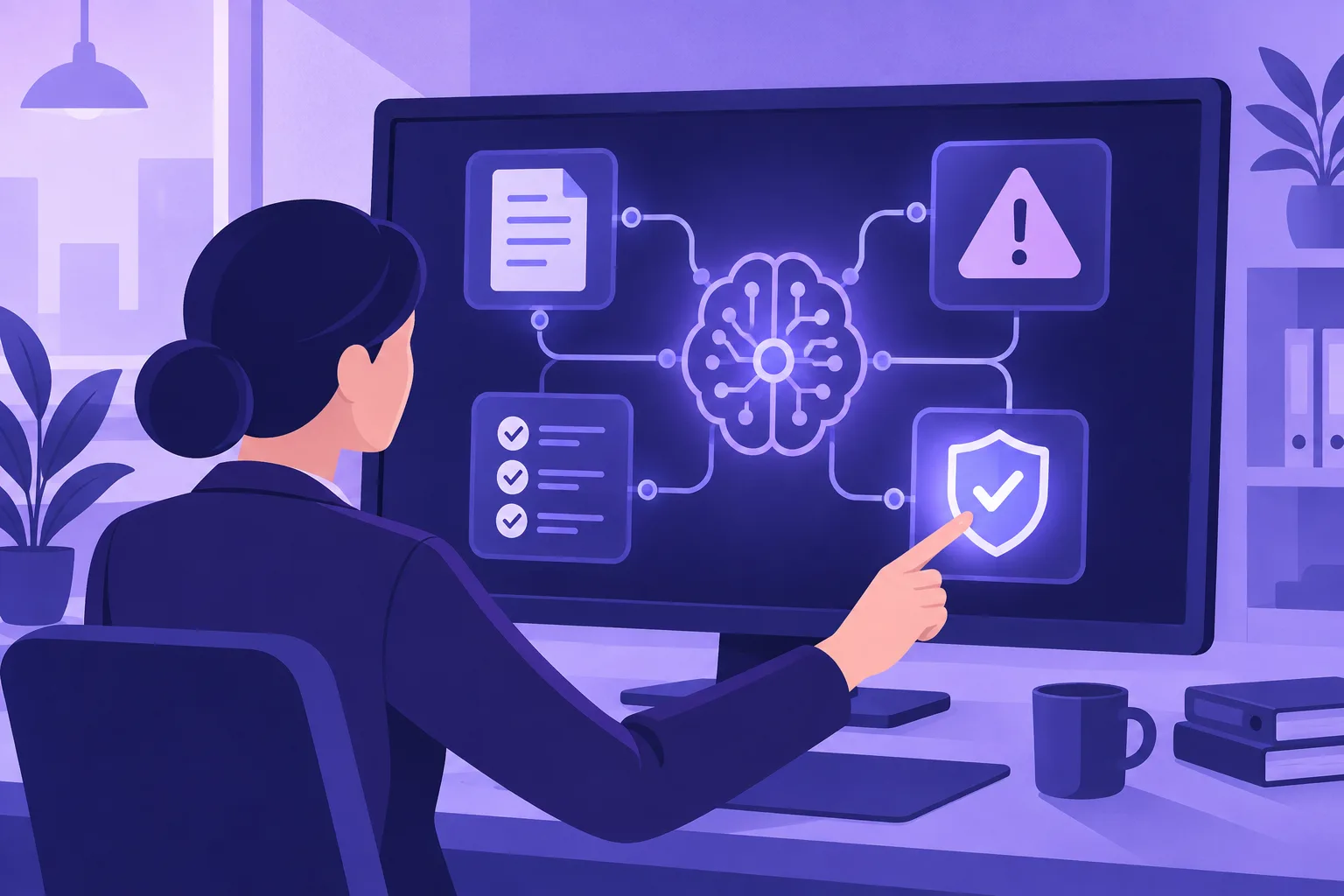

The compliance technology market is undergoing its most significant transformation in years. In the span of a few weeks this summer, two of the largest HR technology vendors — ADP and Workday — announced major agentic AI capabilities designed to automate compliance workflows that have traditionally consumed significant HR staff time. These announcements arrive as employers face an increasingly complex regulatory environment, from new state AI governance laws to OSHA's expanding data-driven enforcement programs.
For HR leaders, the shift from task-level automation to autonomous, outcome-driven AI agents represents both an opportunity and a governance challenge. Understanding what these platforms can do — and what guardrails they require — is essential for any organization considering adoption.
What Is Agentic AI, and Why Does It Matter for Compliance?
Agentic AI refers to AI systems capable of planning, executing, and completing multi-step tasks with minimal human intervention. Unlike traditional rule-based automation or chatbots that respond to discrete queries, agentic AI agents can:
- Monitor regulatory changes across multiple jurisdictions and flag relevant updates
- Execute compliance workflows end-to-end, such as generating OSHA electronic recordkeeping submissions or updating employee classification records when regulations change
- Identify and escalate risks proactively, rather than waiting for human-initiated audits
- Maintain audit trails documenting every action taken, providing the documentation regulators increasingly expect
This is a meaningful departure from the compliance automation tools many HR teams adopted over the past five years. Where earlier platforms digitized manual processes — moving paper forms to electronic submissions, for example — agentic systems aim to handle the decision-making and execution layers that previously required trained compliance staff.
The June 2026 Platform Announcements
ADP SmartCompliance AI Enhancements
In June 2026, ADP announced significant AI and data enhancements to its SmartCompliance platform. The updated platform unifies compliance data from HR, IT, and finance systems into a single environment, powered by what ADP calls a "policy intelligence engine."
Key capabilities include:
- Real-time regulatory adaptation. The policy intelligence engine tracks regulatory changes and adjusts compliance workflows automatically, reducing the lag between a new rule taking effect and an organization updating its processes.
- Lifecycle-wide compliance monitoring. AI-driven insights analyze events across the entire employee lifecycle — from hire to retire — identifying compliance risks and financial opportunities such as tax credit eligibility.
- Cross-system integration. The platform works with both ADP and non-ADP human capital management (HCM) systems, and ADP says it connects to government entities, tax authorities, and banking institutions across its presence in 140 countries.
For employers managing multi-state or multinational compliance, the significance is practical: instead of maintaining separate workflows for federal, state, and local requirements, the platform aims to consolidate monitoring and response into a single system that adapts as regulations change.
Workday's Agent Development Platform and Agent Passport
At Workday DevCon in June 2026, Workday introduced three capabilities that directly address how organizations build and govern AI agents for HR and compliance:
-
Developer Agent allows organizations to build custom AI agents for Workday using natural language prompts, integrated with development tools like Claude Code, Cursor, and Google Antigravity. This lowers the barrier for creating compliance-specific agents — for example, an agent that alerts finance when a department is trending over budget on overtime costs.
-
Agent-Ready Tools provide controlled, guardrailed access to sensitive HR and finance data through the Model Context Protocol (MCP). This means third-party or custom-built agents can interact with Workday data without direct database access, reducing the risk of data leakage or unauthorized access.
-
Agent Passport is perhaps the most significant announcement for compliance teams. Workday describes it as a digital verification record confirming that an AI agent — whether built by Workday, a partner, or a customer — has been tested against major security frameworks, including:
- OWASP LLM Top 10 (AI/LLM security risks)
- NIST AI Risk Management Framework (AI governance)
- MITRE ATLAS (adversarial threat landscape)
Agent Passport is designed to support continuous post-deployment monitoring and to let organizations restrict or revoke agent access if vulnerabilities are discovered. Cisco is the launch partner, contributing its AI Defense testing, so verification is not purely vendor self-certification. Workday says Agent Passport will be available to early-access customers in the second half of 2026, so it is a roadmap item to evaluate, not a control employers can rely on today.
Why Now: The Regulatory Drivers
These platform investments are not happening in a vacuum. Several regulatory developments are increasing both the complexity and the stakes of compliance management.
OSHA's Data-Driven Enforcement
OSHA's electronic recordkeeping rule now requires establishments with 100 or more employees in high-hazard industries to submit detailed injury and illness data from Forms 300 and 301 through the Injury Tracking Application (ITA). OSHA uses this data for site-specific targeting and risk profiling, and operates a Non-Responder Enforcement Program that cross-references inspection and submission records to identify establishments that have failed to report.
For employers, this means compliance is no longer just about completing forms — the data itself determines enforcement priority. Automated systems that ensure accurate, timely submissions and flag data anomalies before they attract regulatory attention are becoming essential. (For a deeper look at how OSHA's data-driven enforcement is shaping compliance platforms, see our April analysis of AI-powered compliance platforms.)
The Evolving State AI Governance Landscape
Employers using AI tools for hiring, performance evaluation, or workforce management face a rapidly shifting patchwork of state regulations:
-
Colorado repealed and reenacted the original Colorado AI Act (CAIA) through SB26-189, signed May 14, 2026. The new Automated Decision-Making Technology in Consequential Decisions Act drops the CAIA's impact-assessment and risk-management program mandates in favor of a transparency-focused framework built on notice at the point of interaction, plain-language explanations of adverse decisions, and a right to request human review. Developer and deployer duties start January 1, 2027, with Attorney General enforcement. (See our SB26-189 employer guide for details.)
-
California's Civil Rights Council regulations on automated decision systems (ADS), effective October 1, 2025, apply FEHA's anti-discrimination rules to AI-driven hiring tools, treat evidence of anti-bias testing as relevant to an employer's defense, and extend employment-record retention to four years.
-
New York City's Local Law 144 continues to require annual independent bias audits of automated employment decision tools (AEDTs), with candidate notification requirements and published audit summaries.
This regulatory fragmentation is precisely the kind of challenge that agentic compliance platforms are designed to address — tracking requirements across jurisdictions, adjusting workflows when laws change, and maintaining the documentation that different regulators require.
Federal Pressure on State AI Laws
At the federal level, Executive Order 14365 (December 11, 2025) points in the opposite direction from the states. It directs the Attorney General to establish an AI Litigation Task Force to challenge state AI laws deemed inconsistent with a "minimally burdensome national policy framework," orders the Commerce Department to identify "onerous" state laws, and calls for a legislative recommendation that would preempt conflicting state statutes — singling out Colorado's algorithmic-discrimination law by name. For employers, the practical effect is uncertainty: state obligations remain in force unless and until they are struck down or preempted, so compliance programs must track both the state requirements and the federal challenges to them.
What This Means for Employers
The convergence of agentic AI platforms and increasing regulatory complexity creates both opportunity and risk. Here is what HR and compliance leaders should consider:
Immediate Actions
-
Audit your current compliance technology stack. Identify where manual processes, spreadsheet tracking, or disconnected systems create gaps. The highest-value use cases for agentic AI are typically in areas with high regulatory volume, multi-jurisdictional requirements, or frequent deadline pressure — such as OSHA recordkeeping, wage and hour compliance, or AI governance documentation.
-
Inventory your AI-enabled HR tools. Before evaluating new compliance platforms, catalog every AI system currently influencing employment decisions — resume screening, scheduling, performance monitoring, benefits administration. This inventory is foundational for complying with emerging state AI governance laws and for configuring compliance platforms to monitor the right systems.
-
Establish AI governance policies now. Don't wait for a platform to define your governance framework. Determine which employment decisions require human review, how you will document AI system use, and what notification procedures you will follow for candidates and employees affected by automated decisions. As BlueHive's white paper on compliance automation and HR burnout notes, automating compliance processes is most effective when organizations have clear policies that the technology enforces, rather than relying on the technology to define the policy.
Evaluation Criteria for Agentic Platforms
When assessing agentic AI compliance platforms, prioritize:
-
Regulatory breadth and update speed. How quickly does the platform incorporate new federal, state, and local requirements? Can it handle the specific regulatory domains your organization needs — OSHA, DOT, EEOC, state wage and hour, AI governance?
-
Integration depth. Does the platform connect with your existing HRIS, payroll, and time-tracking systems? Compliance errors most often occur at system boundaries, where data transfers manually or incompletely.
-
Audit trail quality. Regulators increasingly expect detailed documentation of compliance actions. The platform should log every automated action, the regulatory basis for it, and any human review that occurred.
-
Governance and security controls. Workday's Agent Passport model — independent verification of AI agent behavior against recognized frameworks — represents a promising practice, even though it is not yet generally available. Ask vendors how they test, monitor, and constrain their AI agents, and whether verification is self-certified or independently attested.
-
Human-in-the-loop design. For high-stakes compliance decisions — termination eligibility, accommodation determinations, safety incident classification — the system should require human review rather than autonomous execution.
The Build vs. Buy Decision
Some organizations will be tempted to build custom compliance agents using general-purpose AI platforms. While this is increasingly feasible — Workday's Developer Agent tools, for example, are designed to make this accessible — most HR teams should start with vendor-supported solutions for core compliance workflows. Custom agents are best reserved for organization-specific needs that established platforms don't address.
As BlueHive's ongoing compliance management white paper emphasizes, compliance is a continuous journey that requires systematic processes and reliable infrastructure — not a one-time technology deployment.
Looking Ahead
The agentic AI compliance market is moving fast. ADP and Workday are the largest vendors to announce agentic compliance capabilities so far, and employers should expect competing HCM platforms to follow.
For employers, the practical question is not whether to adopt these tools, but how quickly and with what governance framework. The regulatory environment is only growing more complex — OSHA's data-driven enforcement is expanding, state AI laws continue to change, and the federal government is actively contesting some of them. Organizations that invest in both the technology and the governance structures to deploy it responsibly will be best positioned to manage compliance efficiently while avoiding the risks that poorly governed AI systems can create.
The platforms announced this summer represent a genuine capability leap. But technology alone is not a compliance strategy. The most effective approach combines automated monitoring and execution with clear human accountability, documented governance policies, and a willingness to maintain oversight even as the tools become more capable.
Sources
- ADP Makes SmartCompliance Even Smarter with More Powerful AI — ADP Media Center
- ADP Makes Enhancements to SmartCompliance Platform — CPA Practice Advisor
- Workday Launches New Tools for Developers to Build, Connect, and Verify AI Agents — Workday Newsroom
- Workday Launches Agent Passport to Test, Verify, and Continuously Monitor Every AI Agent — Workday Newsroom
- OSHA Final Rule to Improve Tracking of Workplace Injuries and Illnesses — OSHA
- OSHA ITA Non-Responder Enforcement Program Memo — OSHA
- Colorado SB26-189: Automated Decision-Making Technology in Consequential Decisions — Colorado General Assembly
- Colorado Moves to Replace AI Law's Bias Audit Requirements — Fisher Phillips
- AI in Hiring: Emerging Legal Developments and Compliance Guidance for 2026 — Akerman LLP
- Navigating the AI Employment Landscape: 2026 Considerations and Best Practices — National Law Review
- Executive Order 14365: Ensuring a National Policy Framework for Artificial Intelligence — Federal Register
- NYC Automated Employment Decision Tools — NYC Department of Consumer and Worker Protection
- OWASP Top 10 for Large Language Model Applications
- NIST AI Risk Management Framework
- The HR Burnout Epidemic: How Automating Compliance Can Help — BlueHive
- From Onboarding to Ongoing: Building a Health Compliance Journey — BlueHive
Tags
Frequently Asked Questions
Agentic AI refers to autonomous AI systems that can plan, execute, and complete multi-step compliance workflows without continuous human direction. Unlike traditional chatbots or rule-based automation, agentic AI agents can monitor regulatory changes, update documentation, flag risks, and generate compliance reports independently — while keeping a human in the loop for high-stakes decisions.
ADP's SmartCompliance platform, enhanced in June 2026, uses a policy intelligence engine that adapts to real-time regulatory changes across HR, payroll, and tax compliance. It unifies data from HR, IT, and finance systems to proactively identify compliance risks and opportunities — such as potential eligibility for tax credits — across the entire employee lifecycle.
Workday's Agent Passport, announced at DevCon in June 2026, is a planned digital verification record showing that an AI agent has been tested against security frameworks including the OWASP LLM Top 10 and the NIST AI Risk Management Framework, with continuous monitoring and the ability to restrict or revoke agent access. Workday says it will reach early-access customers in the second half of 2026, so employers should treat it as a governance model to evaluate rather than a shipped control.
Colorado repealed and reenacted the original Colorado AI Act (SB24-205) through SB26-189, signed May 14, 2026. The new Automated Decision-Making Technology in Consequential Decisions Act replaces the earlier impact-assessment and risk-management program mandates with a transparency-focused framework built on notice, plain-language explanations of adverse decisions, and a right to request human review. Its developer and deployer duties start January 1, 2027.
Employers should assess agentic AI platforms based on regulatory coverage breadth, integration with existing HRIS and payroll systems, audit trail capabilities, security and governance controls, the ability to provide human review for high-stakes decisions, and vendor transparency about how AI models are trained and updated. Starting with a focused pilot in one compliance domain is recommended.